Aloe Vera
Aloe barbadensis miller
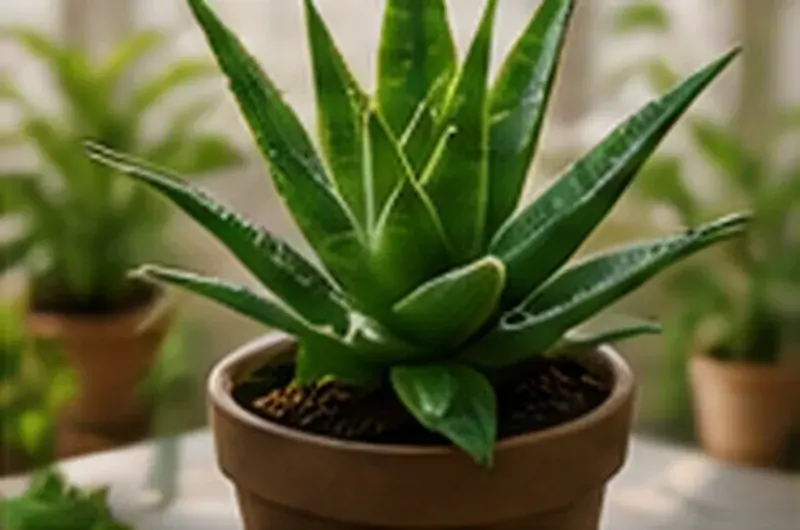
Aloe vera is a stemless succulent with thick, fleshy leaves full of clear gel. It needs very little care, thrives on a sunny windowsill or balcony, and produces offsets (pups) that are easy to pot up and share.
Essential Care Requirements
Light
Full sun, Bright indirect light
Watering
Low
Water deeply only when the soil is completely dry, roughly every two to three weeks in summer and once a month or less in winter. Overwatering is the most common cause of death.
Soil
A fast-draining cactus and succulent mix, or potting soil mixed half and half with coarse sand or perlite. Terracotta pots help the soil dry out.
Temperature and humidity
7–40 °C · Low humidity
Feeding
Feed once or twice in spring and summer with a diluted cactus fertilizer. It does not need feeding in winter.
Pruning and propagation
Propagate by offsets
Remove dried or damaged outer leaves at the base. Separate pups when they have a few leaves and their own roots.
The latex just under the skin (aloin) can cause vomiting and diarrhoea in cats and dogs. The inner gel is used on skin by people; do not eat it without proper preparation.
Top Cultivation Tips
Move gradually into full sun to avoid sunburn.
Brown, mushy leaves mean too much water.
Thin, curling leaves mean it needs water.
Shelter it from the heaviest monsoon rain.
Common problems
Mealybugs
White, cottony insects that hide in leaf joints and under leaves, weakening plants and spreading easily to neighbours.
How to treat it →DiseaseOverwatering
Too much water, or water that cannot drain away, starves roots of air and is the most common cause of houseplant death.
How to treat it →DiseaseRoot rot
Roots decay in waterlogged soil, so the plant wilts and yellows even though the soil is wet.
How to treat it →DiseaseRoot-bound plants
When roots have filled a pot and circle the inside, so the plant dries out fast, grows slowly and cannot take up water and nutrients.
How to treat it →PestScale insects
Immobile, shell-covered insects that cling to stems and leaves, draining sap and weakening trees and houseplants.
How to treat it →