Camellia
Camellia japonica and C. sasanqua
Camellias are evergreen shrubs with glossy leaves and rose-like flowers in white, pink and red from autumn to spring. They need acidic soil and some shade, and grow well in pots of ericaceous compost.
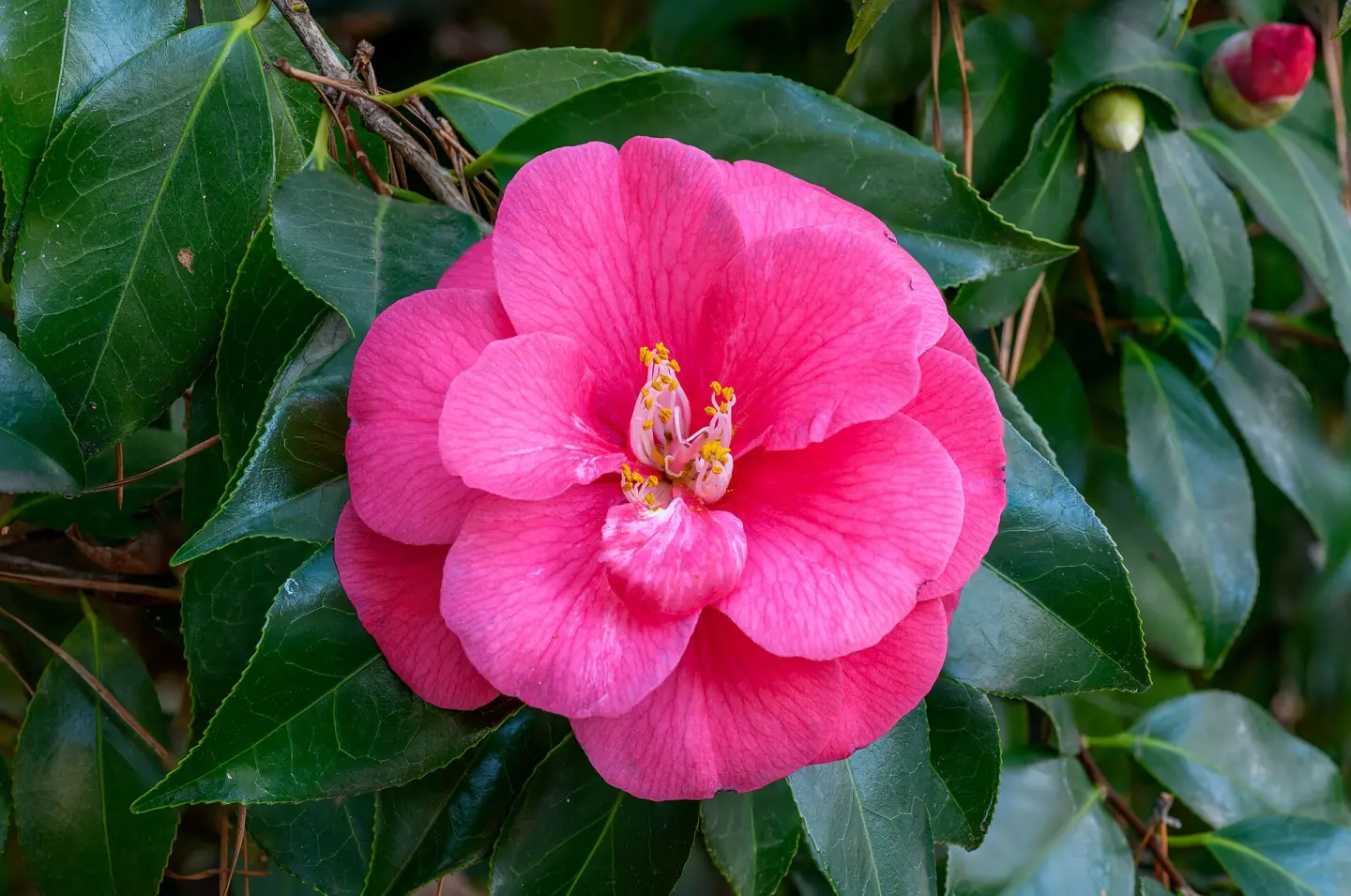
Photo: PumpkinSky · CC BY-SA 3.0, via Wikimedia Commons
Essential Care Requirements
Light
Partial sun
Watering
Moderate
Keep the soil evenly moist with rainwater, especially from late summer when buds form; dry spells cause bud drop.
Soil
Acidic, humus-rich, well-drained soil; pH 5.0–6.5.
Temperature and humidity
-15–32 °C · Moderate humidity
Feeding
Feed in spring with an ericaceous fertilizer.
Pruning and propagation
Propagate by stem cuttings, layering, grafting
Prune lightly straight after flowering.
Camellias are not toxic to people or pets. The tea plant is a close relative.
Top Cultivation Tips
Avoid east-facing spots where morning sun scorches frozen buds.
Mulch with leaf mould or pine needles.
Yellow leaves mean the soil is too alkaline.
Sasanquas tolerate more sun.
Common problems
Bud drop
Flower buds yellow and fall before opening, usually because the plant has been stressed by changes in water, light or temperature.
How to treat it →DiseaseIron chlorosis
Young leaves turn yellow while the veins stay green, usually because alkaline soil stops the plant taking up iron.
How to treat it →PestScale insects
Immobile, shell-covered insects that cling to stems and leaves, draining sap and weakening trees and houseplants.
How to treat it →DiseaseSooty mould
A black, powdery fungal coating that grows on the sticky honeydew left by sap-sucking insects, blocking light from leaves.
How to treat it →PestVine weevil
Adult beetles notch leaf edges at night, while their soil-dwelling grubs eat roots, often killing container plants before you notice.
How to treat it →