Crape Myrtle
Lagerstroemia indica and hybrids
Crape myrtle is a small tree or shrub with crinkled flowers in pink, red, purple or white through hot summers, smooth peeling bark, and good autumn colour. It loves heat and is widely planted in warm temperate and subtropical regions.
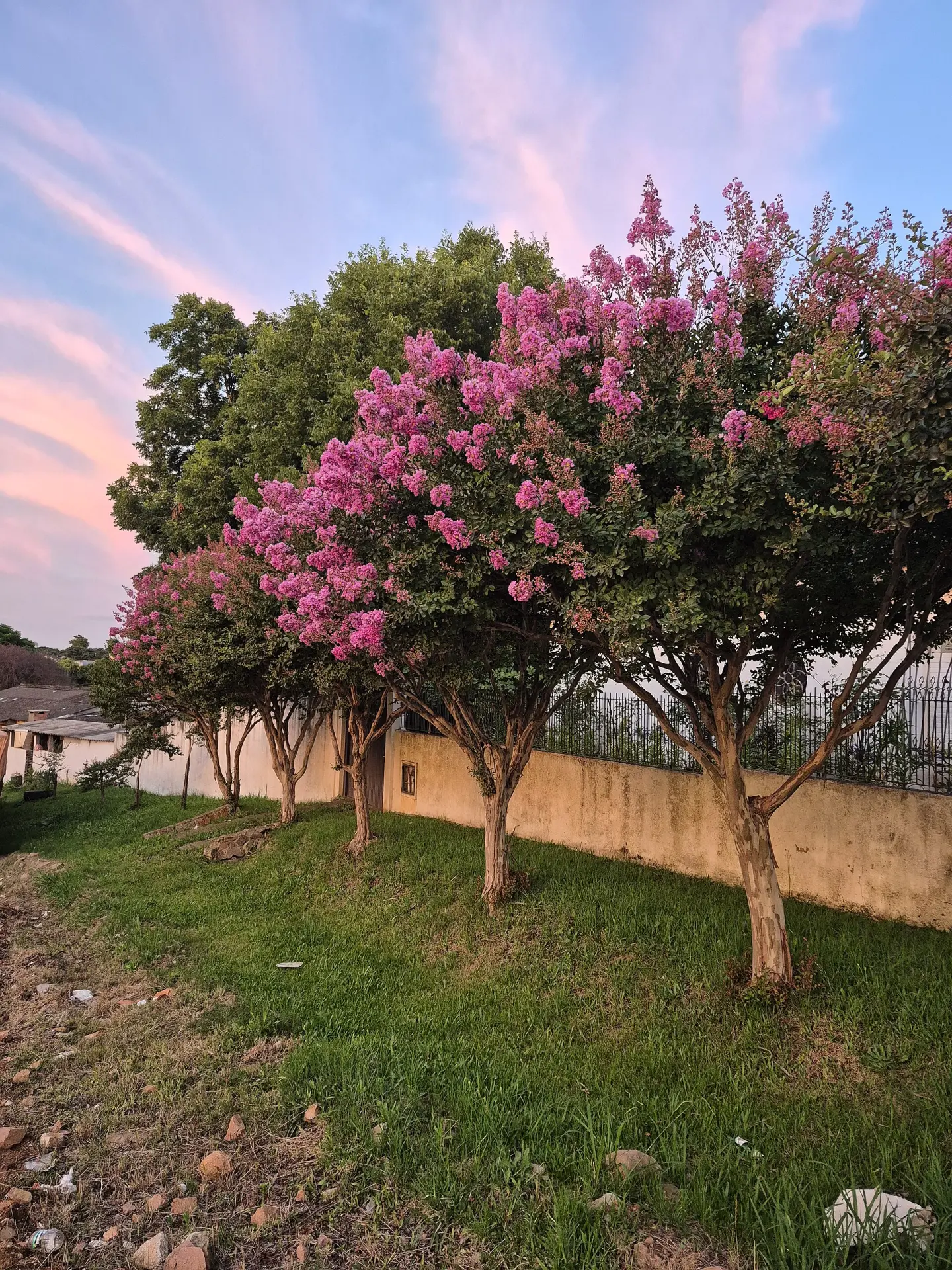
Photo: Gabriel Collares · CC BY 4.0, via Wikimedia Commons
Essential Care Requirements
Light
Full sun
Watering
Moderate
Water young plants regularly; established trees tolerate drought.
Soil
Well-drained soil; pH 5.5–7.5.
Temperature and humidity
-15–42 °C · Moderate humidity
Feeding
Feed lightly in spring.
Pruning and propagation
Propagate by stem cuttings, seed
Prune in late winter to remove crossing and weak stems; avoid topping the trunks.
Crape myrtle is not toxic.
Top Cultivation Tips
Choose mildew-resistant varieties.
Full sun is essential for flowering.
Dwarf types suit pots.
The related Queen's crape myrtle (L. speciosa) is a large tropical tree.
Common problems
Aphids
Small, soft-bodied insects that cluster on new shoots and buds, sucking sap and leaving sticky honeydew behind.
How to treat it →DiseasePowdery mildew
A fungal disease that coats leaves, buds and young shoots with a white, flour-like dust, weakening the plant and spoiling flowers and fruit.
How to treat it →DiseaseSooty mould
A black, powdery fungal coating that grows on the sticky honeydew left by sap-sucking insects, blocking light from leaves.
How to treat it →