Japanese Maple
Acer palmatum
Japanese maples are graceful small trees with delicate, hand-shaped leaves in green, red or purple that turn brilliant colours in autumn. They suit small gardens, large pots and bonsai.
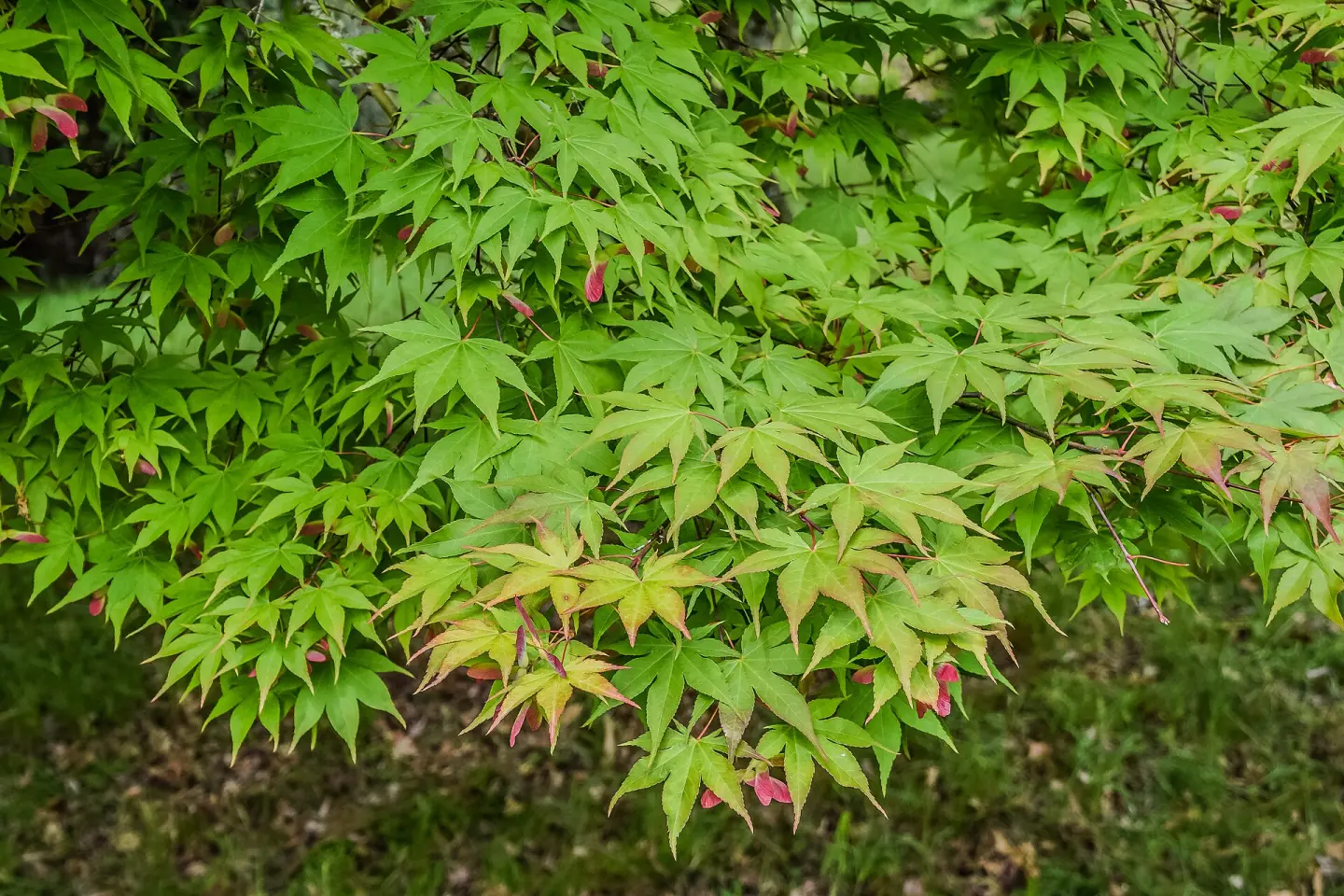
Photo: Krzysztof Golik · CC BY-SA 4.0, via Wikimedia Commons
Essential Care Requirements
Light
Partial sun
Watering
Moderate
Keep the soil evenly moist; dry, windy conditions scorch the leaf edges.
Soil
Moist, humus-rich, well-drained, slightly acidic soil; pH 5.5–6.5.
Temperature and humidity
-25–32 °C · Moderate humidity
Feeding
Feed lightly in spring with a slow-release fertilizer.
Pruning and propagation
Propagate by grafting, seed, stem cuttings
Prune minimally in late autumn or winter to remove crossing or dead branches.
Japanese maples are not considered toxic to cats or dogs.
Top Cultivation Tips
Shelter from strong wind and afternoon sun.
Dwarf and weeping varieties suit pots.
Leaf scorch in summer means too much sun or too little water.
Needs a cold winter for good colour.
Common problems
Aphids
Small, soft-bodied insects that cluster on new shoots and buds, sucking sap and leaving sticky honeydew behind.
How to treat it →DiseaseLeaf scorch
Brown, dry, crisp edges and patches on leaves, usually caused by too little water reaching the leaves in hot, windy or dry weather.
How to treat it →DiseaseSalt damage
Leaf burn and stunted growth caused by too much salt in the soil or water, from sea spray, road salt, hard water or heavy fertiliser use.
How to treat it →PestScale insects
Immobile, shell-covered insects that cling to stems and leaves, draining sap and weakening trees and houseplants.
How to treat it →DiseaseSunscald
Bleached, papery or brown patches on leaves, stems or fruit that were suddenly exposed to strong sun or heat.
How to treat it →DiseaseVerticillium wilt
A soil-borne fungal disease that blocks the water-conducting tissue, causing leaves to yellow and wilt, often on one side of the plant.
How to treat it →