Lilac
Syringa vulgaris
Lilac is a deciduous shrub with dense, cone-shaped clusters of intensely fragrant purple, lilac, white or pink flowers in late spring. It needs a cold winter to flower and is a classic of temperate gardens.
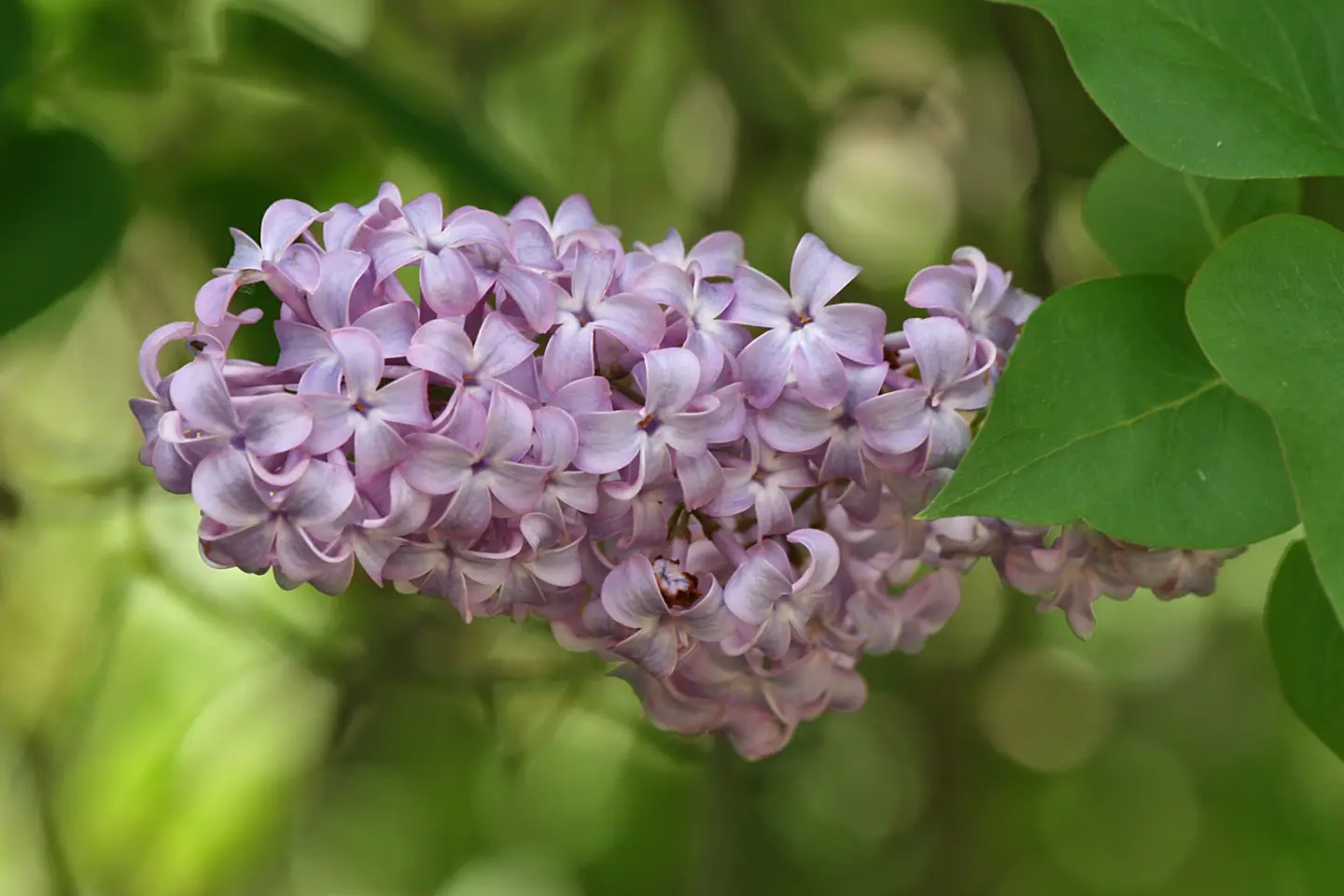
Photo: Jjron · CC BY-SA 3.0, via Wikimedia Commons
Essential Care Requirements
Light
Full sun
Watering
Moderate
Water young shrubs regularly; established lilacs need water only in dry spells.
Soil
Well-drained, neutral to slightly alkaline soil; pH 6.5–7.5.
Temperature and humidity
-35–32 °C · Moderate humidity
Feeding
Feed lightly in spring; too much nitrogen reduces flowers.
Pruning and propagation
Propagate by stem cuttings, layering, division
Prune just after flowering; remove a few of the oldest stems each year.
Lilacs are not toxic to people or pets.
Top Cultivation Tips
Remove suckers from the base.
Low-chill varieties exist for milder climates.
Give good airflow to prevent mildew.
Split woody stem ends for longer vase life.
Common problems
Honey fungus
A destructive fungus that attacks and kills the roots of trees and shrubs, spreading underground by black, bootlace-like strands.
How to treat it →DiseaseLeaf spot
Fungal or bacterial infections that cause brown, black or purple spots on leaves, often with a yellow halo, leading to early leaf drop.
How to treat it →DiseasePowdery mildew
A fungal disease that coats leaves, buds and young shoots with a white, flour-like dust, weakening the plant and spoiling flowers and fruit.
How to treat it →PestScale insects
Immobile, shell-covered insects that cling to stems and leaves, draining sap and weakening trees and houseplants.
How to treat it →