Magnolia
Magnolia grandiflora and Magnolia × soulangeana
Magnolias are among the most beautiful flowering trees. Southern magnolia is evergreen with huge, lemon-scented white flowers in summer, while saucer magnolia is deciduous and covered in pink-and-white goblets on bare branches in early spring.
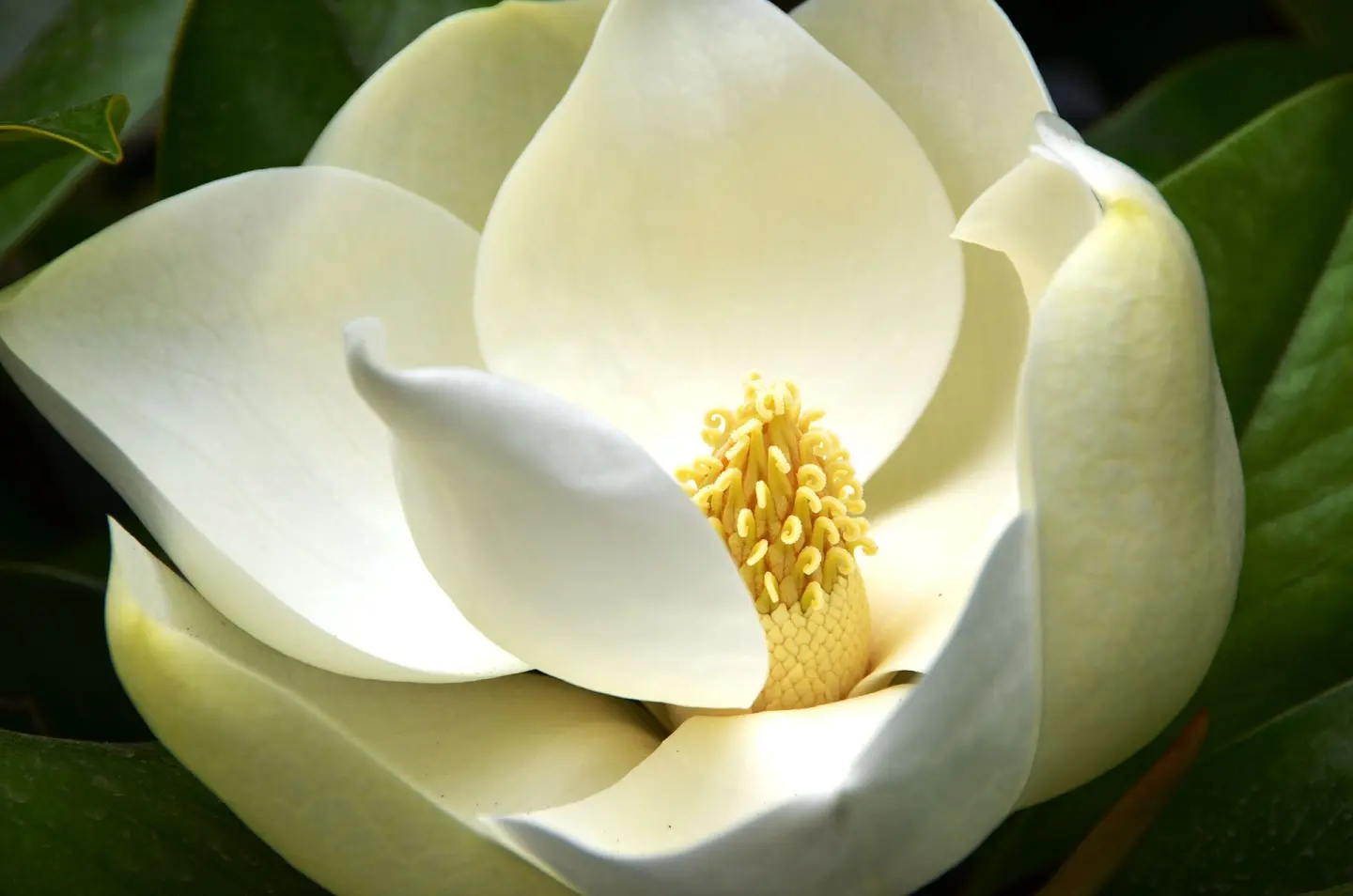
Photo: Josep Renalias Lohen11 · CC BY-SA 3.0, via Wikimedia Commons
Essential Care Requirements
Light
Full sun, Partial sun
Watering
Moderate
Water young trees regularly and mulch; magnolias have shallow roots.
Soil
Rich, moist, slightly acidic, well-drained soil; pH 5.5–6.5.
Temperature and humidity
-20–38 °C · Moderate humidity
Feeding
Feed in spring with a balanced or ericaceous fertilizer.
Pruning and propagation
Propagate by seed, layering, grafting
Prune minimally, after flowering, to remove dead or crossing branches.
Magnolias are not toxic to people or pets.
Top Cultivation Tips
Avoid digging near the shallow roots.
Plant where late frosts will not brown the flowers.
Compact varieties suit small gardens.
Grafted trees flower sooner.
Common problems
Iron chlorosis
Young leaves turn yellow while the veins stay green, usually because alkaline soil stops the plant taking up iron.
How to treat it →DiseaseLeaf spot
Fungal or bacterial infections that cause brown, black or purple spots on leaves, often with a yellow halo, leading to early leaf drop.
How to treat it →PestScale insects
Immobile, shell-covered insects that cling to stems and leaves, draining sap and weakening trees and houseplants.
How to treat it →