Mango Tree
Mangifera indica
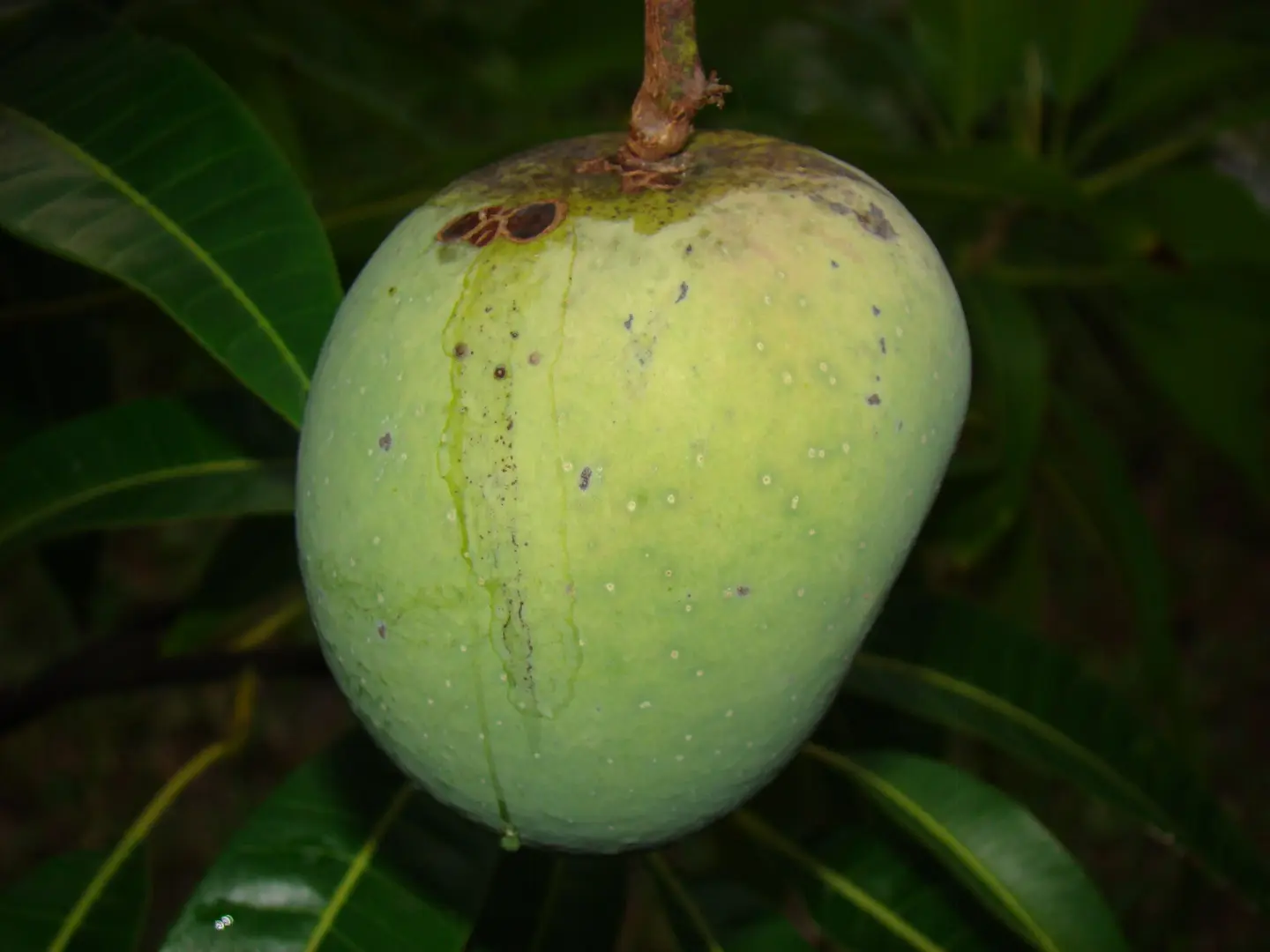
The mango is a long-lived evergreen fruit tree with dense, glossy foliage and sweet, fragrant fruit. Grafted trees start fruiting in three to five years. Dwarf varieties such as Amrapali and Mallika stay small enough for a large container on a sunny terrace.
Essential Care Requirements
Light
Full sun
Watering
Moderate
Water young trees deeply once or twice a week in the dry season. Established trees in the ground need little water except in long dry spells. Reduce watering for about two months before flowering, because a short dry period helps the tree set flowers.
Soil
Deep, well-drained loam with a pH of 5.5–7.5. In containers, use a mix of garden soil, compost and coarse sand in a pot at least 60 cm wide with large drainage holes.
Temperature and humidity
10–45 °C · Moderate humidity
Feeding
Give 10–20 kg of well-rotted manure or compost a year, split before flowering and after harvest. Young trees benefit from a balanced fertilizer three times a year; mature trees need more potassium and less nitrogen.
Pruning and propagation
Propagate by grafting, seed
Shape young trees to an open framework of three or four main branches. After harvest, remove dead, crossing and inward-growing branches and shorten very tall shoots to keep the canopy within reach.
The fruit is safe to eat. The sap and fruit skin contain urushiol-like compounds that can irritate sensitive skin, so wear gloves when pruning.
Top Cultivation Tips
Buy grafted plants for earlier, true-to-type fruit.
Protect young trees from frost and strong winds.
Remove flower panicles in the first two years so the tree builds strength.
Watch for mango hoppers and powdery mildew at flowering.
Common problems
Anthracnose
A fungal disease that causes dark, sunken spots on leaves, flowers and fruit, especially mango, chilli and papaya.
How to treat it →PestAnts on plants
Ants rarely damage plants themselves, but they protect sap-sucking pests for their honeydew and may nest in pots, drying out the roots.
How to treat it →PestFruit flies
Flies that lay eggs inside ripening fruit; the maggots rot the fruit from within.
How to treat it →DiseaseGummosis
A symptom in citrus, mango and stone fruit trees where sticky gum oozes from the bark, usually in response to disease, pests, wounds or stress.
How to treat it →PestJassids
Small, wedge-shaped green insects that run sideways and suck sap from leaf undersides, causing curled, yellow-edged and scorched leaves.
How to treat it →PestMango hopper
Small, wedge-shaped insects that suck sap from mango flower panicles, causing flowers and young fruit to dry and drop.
How to treat it →DiseaseMango malformation
A fungal disease that turns mango flower panicles or new shoots into compact, bunched, cauliflower-like masses that set no fruit.
How to treat it →DiseaseNitrogen deficiency
An even yellowing of older, lower leaves with slow, weak growth, caused by a lack of available nitrogen.
How to treat it →DiseasePoor fruit set
Plants that flower well but drop their blossoms or produce few fruit, usually because of temperature, poor pollination or too much nitrogen.
How to treat it →DiseasePowdery mildew
A fungal disease that coats leaves, buds and young shoots with a white, flour-like dust, weakening the plant and spoiling flowers and fruit.
How to treat it →PestScale insects
Immobile, shell-covered insects that cling to stems and leaves, draining sap and weakening trees and houseplants.
How to treat it →DiseaseSooty mould
A black, powdery fungal coating that grows on the sticky honeydew left by sap-sucking insects, blocking light from leaves.
How to treat it →PestStem borers
Caterpillars and grubs that tunnel inside stems and shoots, causing wilting, dead growing tips and broken stems.
How to treat it →PestTermites
Soil-dwelling social insects that eat roots and the base of stems, killing seedlings and weakening trees.
How to treat it →DiseaseWaterlogging
Soil so full of water that roots run short of oxygen, which causes yellow leaves, wilting and root rot.
How to treat it →