Ornamental Cherry
Prunus serrulata and hybrids
Ornamental cherries are celebrated for their clouds of pink or white blossom in spring, followed by bronze-red autumn leaves. Different varieties suit avenues, small gardens and even large pots.
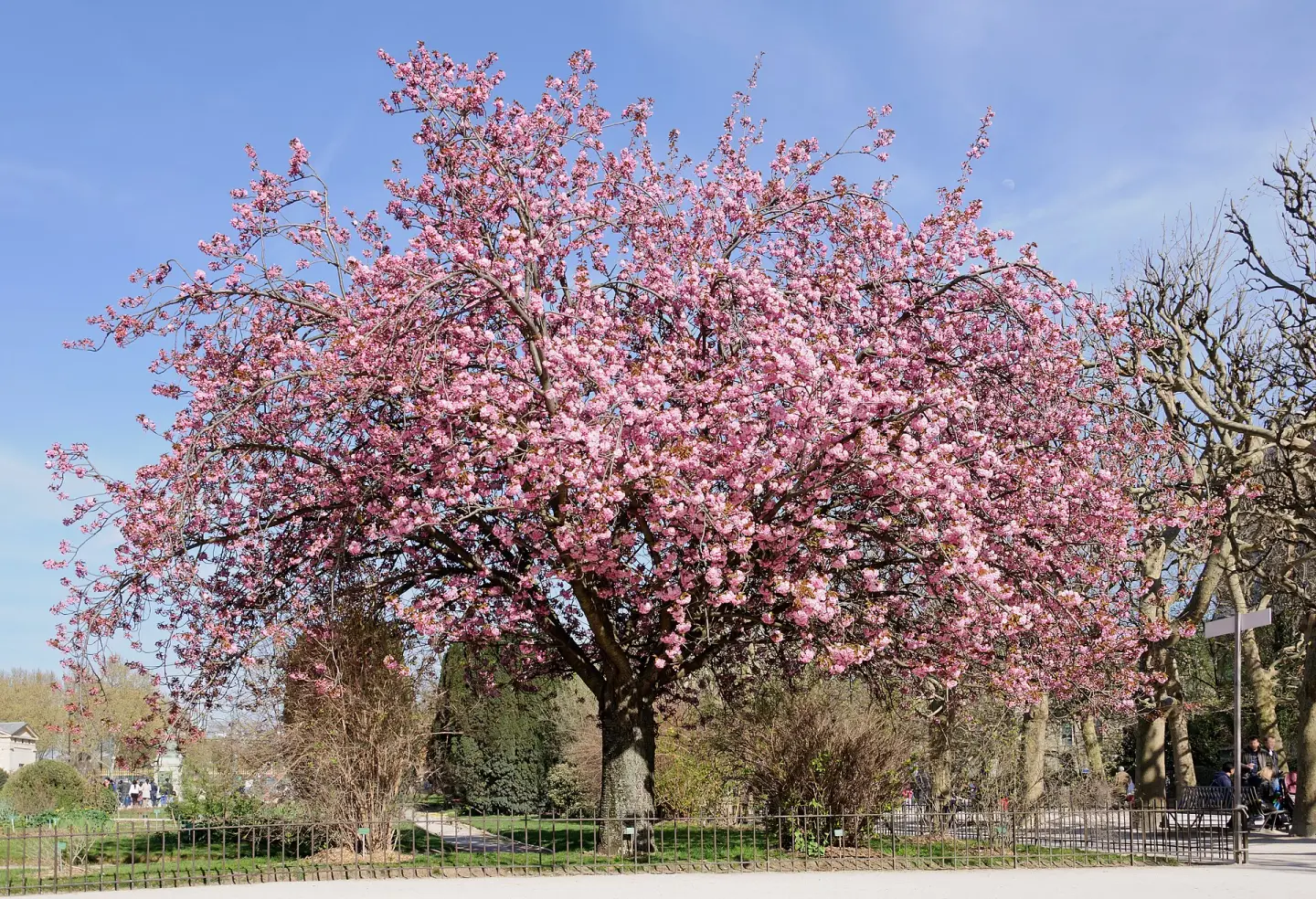
Photo: Myrabella · CC BY-SA 3.0, via Wikimedia Commons
Essential Care Requirements
Light
Full sun
Watering
Moderate
Water young trees regularly; established trees need water in drought.
Soil
Moist, well-drained soil; pH 6.0–7.5.
Temperature and humidity
-25–32 °C · Moderate humidity
Feeding
Feed lightly in spring.
Pruning and propagation
Propagate by grafting
Prune only if needed, in summer, to reduce the risk of silver leaf disease.
The leaves, stems and seeds contain compounds that release cyanide and can harm pets.
Top Cultivation Tips
Columnar and weeping varieties suit small spaces.
Plant where the blossom can be seen from the house.
Needs a cold winter.
Fallen petals can make paths slippery.
Common problems
Aphids
Small, soft-bodied insects that cluster on new shoots and buds, sucking sap and leaving sticky honeydew behind.
How to treat it →PestCaterpillars
The larvae of moths and butterflies, which chew holes in leaves, flowers and fruit and can strip a plant in days.
How to treat it →DiseaseLeaf spot
Fungal or bacterial infections that cause brown, black or purple spots on leaves, often with a yellow halo, leading to early leaf drop.
How to treat it →PestTent caterpillars
Hairy social caterpillars that build white silk nests in the forks of branches in spring and strip the leaves from fruit and ornamental trees.
How to treat it →