Yucca
Yucca filamentosa and Yucca gigantea
Yuccas are architectural plants with rosettes of stiff, sword-shaped leaves and tall spikes of creamy white flowers. Hardy Adam's needle suits dry gardens, while spineless yucca is a popular indoor and patio plant.
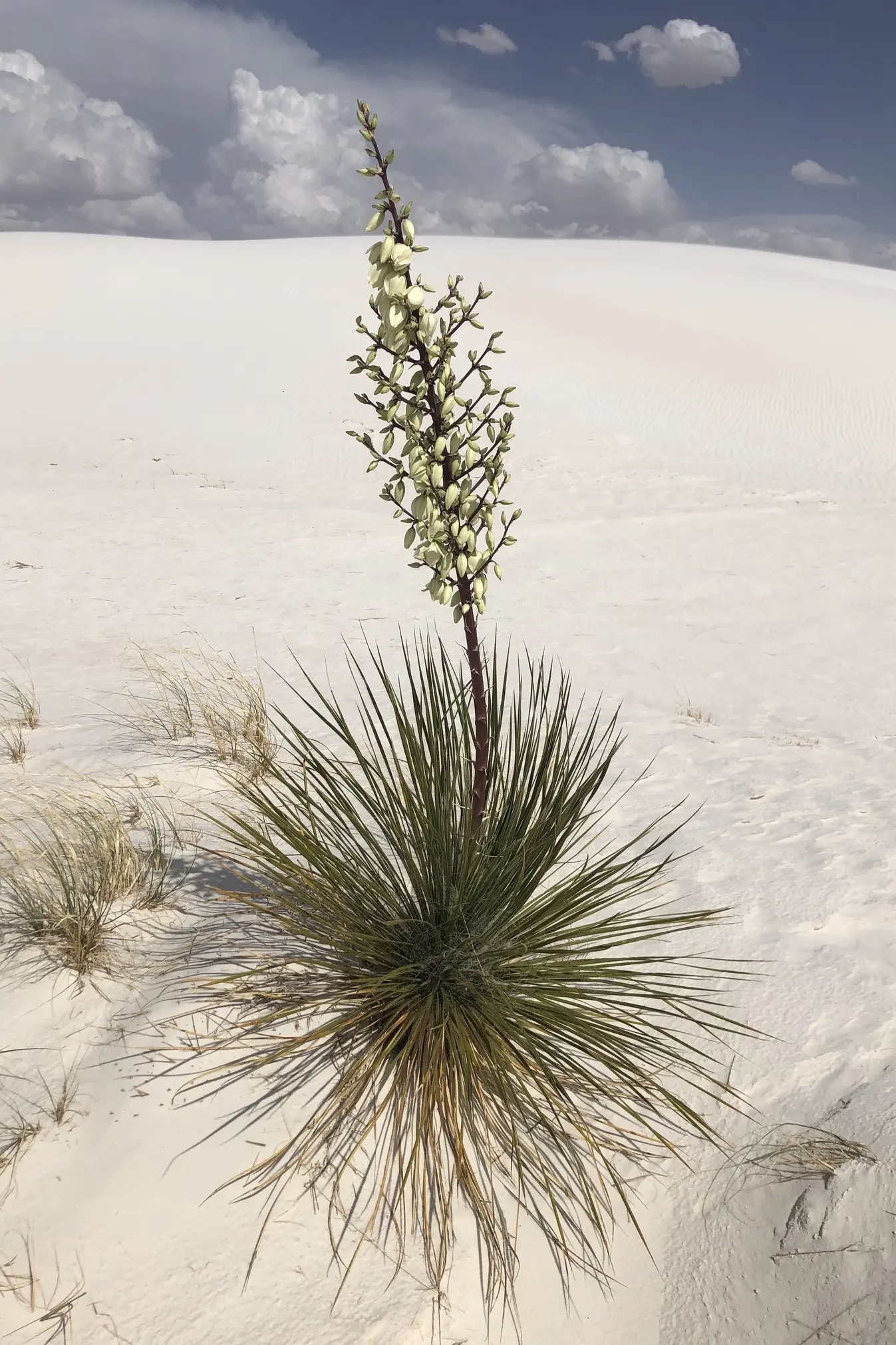
Photo: tmcelrath https://www.inaturalist.org/people/tmcelrath · CC0, via Wikimedia Commons
Essential Care Requirements
Light
Full sun, Bright indirect light
Watering
Low
Water only when the soil is mostly dry; overwatering causes rot.
Soil
Sandy, very well-drained soil; pH 6.0–8.0.
Temperature and humidity
-20–42 °C · Low humidity
Feeding
Feed two or three times a year.
Pruning and propagation
Propagate by offsets, stem cuttings
Remove dead lower leaves and spent flower stalks.
Yuccas contain saponins that cause vomiting in cats and dogs. Leaf tips can be sharp.
Top Cultivation Tips
Indoor yuccas need the brightest window available.
Cut tall canes to make new plants.
Plant away from paths if leaves are spiny.
Not the same as yuca (cassava).
Common problems
Leaf spot
Fungal or bacterial infections that cause brown, black or purple spots on leaves, often with a yellow halo, leading to early leaf drop.
How to treat it →DiseaseRoot rot
Roots decay in waterlogged soil, so the plant wilts and yellows even though the soil is wet.
How to treat it →PestScale insects
Immobile, shell-covered insects that cling to stems and leaves, draining sap and weakening trees and houseplants.
How to treat it →