Almond
Prunus amygdalus
The almond is a small deciduous tree with beautiful pink-white blossom in late winter and edible nuts in summer. It needs a cold winter and a dry summer, as found in Kashmir and parts of Himachal.
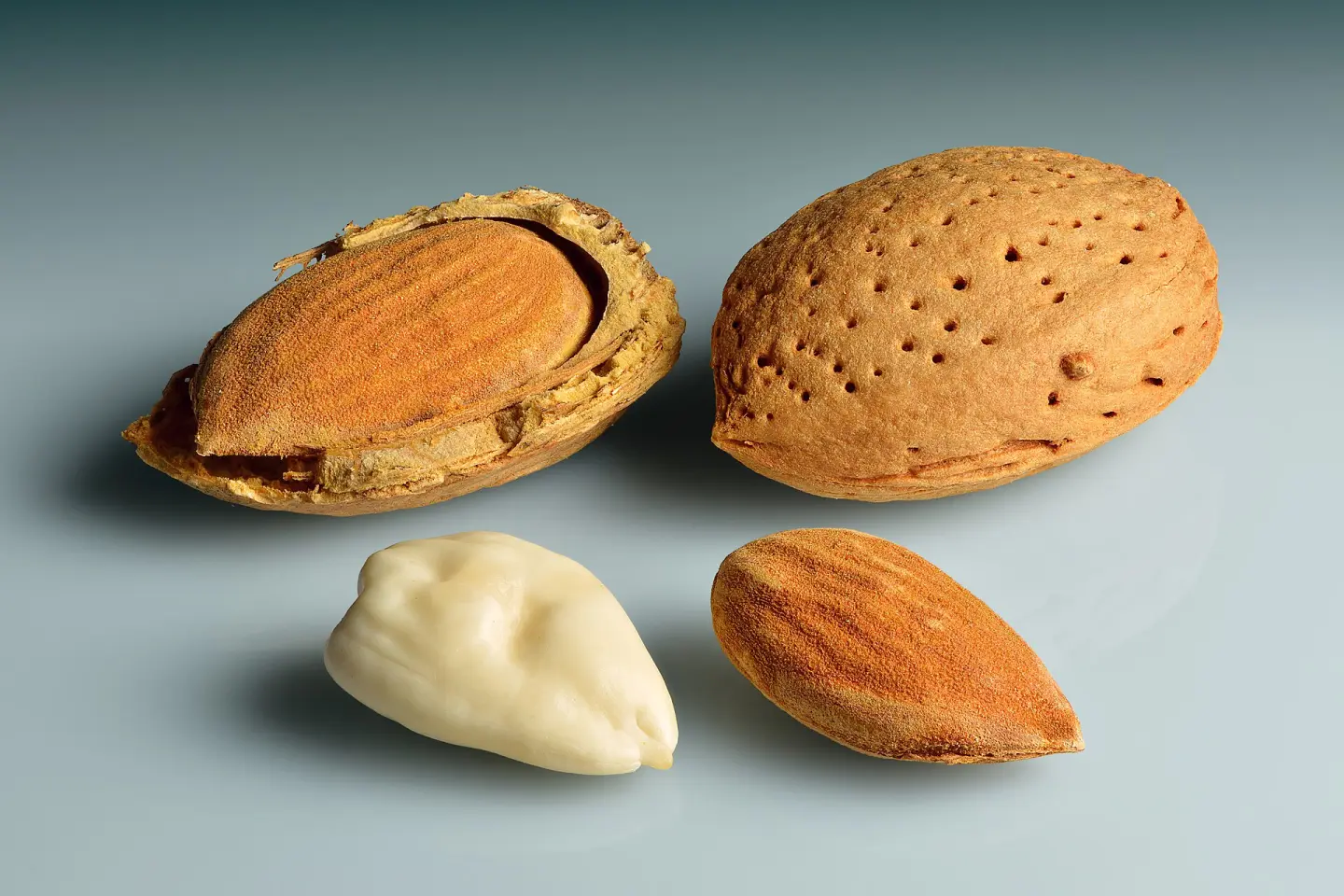
Photo: Ivar Leidus · CC BY-SA 4.0, via Wikimedia Commons
Essential Care Requirements
Light
Full sun
Watering
Low
Water during flowering and nut fill; established trees are drought tolerant.
Soil
Deep, well-drained soil; dislikes wet roots. pH 6.5–8.0.
Temperature and humidity
-10–38 °C · Low humidity
Feeding
Feed with compost and a balanced fertilizer in late winter.
Pruning and propagation
Propagate by grafting, seed
Prune in winter to an open vase shape and remove dead wood.
Sweet almond kernels are safe for people. Bitter almonds, leaves and stems contain compounds that release cyanide and are harmful to pets.
Top Cultivation Tips
Plant two varieties for cross-pollination.
Harvest when hulls split open.
Late frosts can damage blossom.
Does poorly in humid, rainy climates.
Common problems
Aphids
Small, soft-bodied insects that cluster on new shoots and buds, sucking sap and leaving sticky honeydew behind.
How to treat it →DiseaseGummosis
A symptom in citrus, mango and stone fruit trees where sticky gum oozes from the bark, usually in response to disease, pests, wounds or stress.
How to treat it →DiseaseLeaf spot
Fungal or bacterial infections that cause brown, black or purple spots on leaves, often with a yellow halo, leading to early leaf drop.
How to treat it →DiseasePeach leaf curl
A fungal disease that makes young peach, nectarine and almond leaves pucker, thicken and turn red in spring.
How to treat it →PestScale insects
Immobile, shell-covered insects that cling to stems and leaves, draining sap and weakening trees and houseplants.
How to treat it →