Areca Palm
Dypsis lutescens
The areca palm forms clumps of arching, feathery fronds on golden-yellow canes. It is one of the most popular palms for bright living rooms and shaded balconies, giving a lush, tropical look without spines or sharp edges.
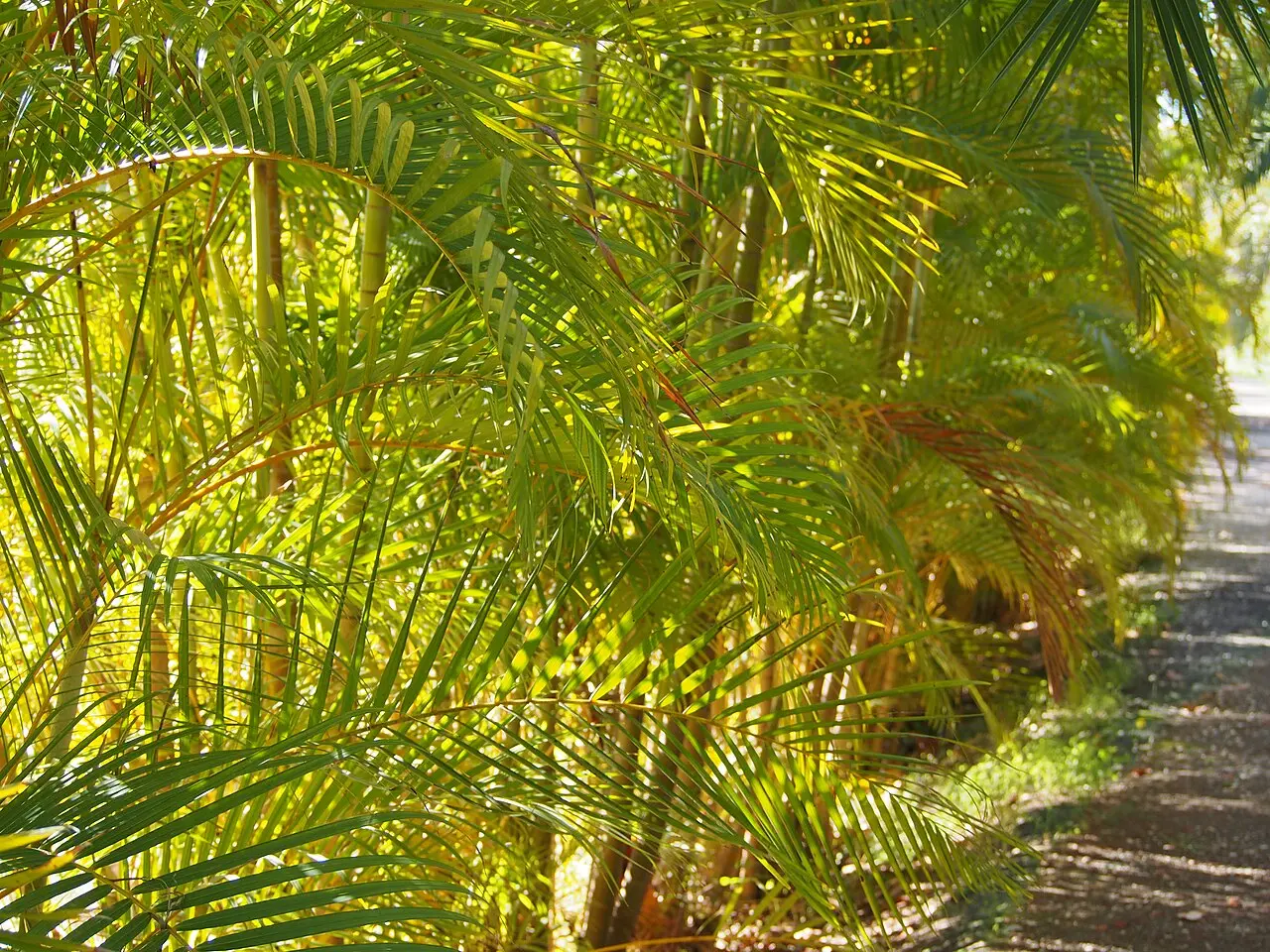
Photo: Agnieszka Kwiecień, Nova · CC BY-SA 4.0, via Wikimedia Commons
Essential Care Requirements
Light
Bright indirect light, Partial sun
Watering
Moderate
Keep the soil lightly moist but never soggy: water when the top 2–3 cm feels dry. Use filtered or rainwater if your tap water is hard, because salts cause brown leaf tips.
Soil
A peat-free, well-drained potting mix with cocopeat, compost and perlite. Use a pot with good drainage.
Temperature and humidity
15–32 °C · High humidity
Feeding
Feed monthly in spring and summer with a balanced liquid fertilizer at half strength. Do not feed in winter.
Pruning and propagation
Propagate by division, seed
Cut off fully brown fronds at the base. Leave fronds that are only partly yellow, as the plant is still drawing nutrients from them.
Areca palm is not toxic to cats or dogs.
Top Cultivation Tips
Bright light without direct midday sun keeps fronds green.
Raise humidity by grouping plants or using a pebble tray.
Brown tips usually mean dry air or hard water.
Check under fronds for spider mites in dry, air-conditioned rooms.
Common problems
Red palm weevil
A large reddish weevil whose grubs tunnel inside the trunks and crowns of coconut, date and other palms, often killing them.
How to treat it →PestRhinoceros beetle
A large black beetle with a horn that bores into the crowns of palms, leaving V-shaped cuts in the opened fronds.
How to treat it →DiseaseRoot rot
Roots decay in waterlogged soil, so the plant wilts and yellows even though the soil is wet.
How to treat it →PestScale insects
Immobile, shell-covered insects that cling to stems and leaves, draining sap and weakening trees and houseplants.
How to treat it →PestSpider mites
Tiny sap-sucking mites that thrive in hot, dry conditions, causing speckled, dull leaves and fine webbing.
How to treat it →