Peace Lily
Spathiphyllum wallisii
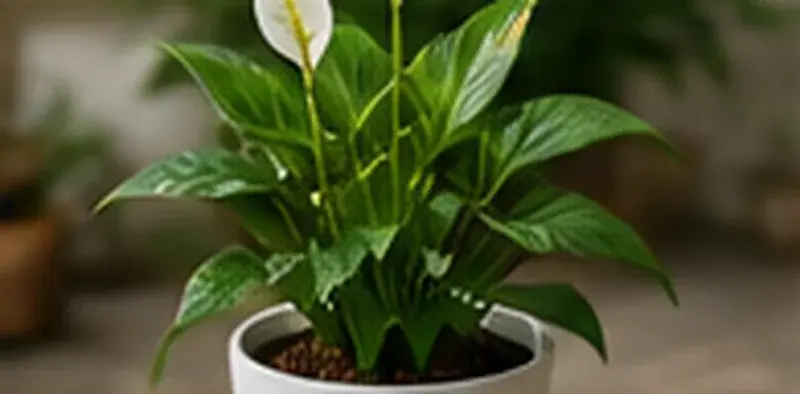
The peace lily has glossy, dark green leaves and elegant white flower spathes that appear several times a year. It is one of the few flowering houseplants that does well in moderate light, and it droops visibly when thirsty, so you always know when to water.
Essential Care Requirements
Light
Bright indirect light, Low light
Watering
Moderate
Keep the soil lightly moist. Water when the top 2 cm is dry or as soon as leaves begin to droop; they recover within hours. Avoid leaving the pot in standing water.
Soil
A rich, moisture-retentive but well-drained mix with cocopeat, compost and perlite.
Temperature and humidity
15–30 °C · High humidity
Feeding
Feed every six weeks in spring and summer with a balanced fertilizer at half strength. Too much fertilizer causes brown leaf tips.
Pruning and propagation
Propagate by division
Cut faded flowers and yellow leaves off at the base of their stems.
Contains calcium oxalate crystals; chewing the leaves causes mouth irritation, drooling and swallowing difficulty in pets and children.
Top Cultivation Tips
No flowers usually means it needs more light.
Mist or group with other plants in dry rooms.
Repot every 1–2 years in spring.
Use filtered water if the leaf tips keep browning.
Common problems
Brown leaf tips
Dry, brown, crisp tips on the leaves of houseplants, caused by dry air, uneven watering or a build-up of salts and minerals.
How to treat it →DiseaseFertilizer burn
Brown, scorched leaf edges and damaged roots caused by too much fertilizer or a build-up of salts in the soil.
How to treat it →PestFungus gnats
Small dark flies that hover around houseplants; their larvae live in damp potting soil and can damage roots and seedlings.
How to treat it →DiseaseLow light problems
Slow, weak growth, pale or fading leaf colour and leaf drop in plants kept in a spot that is too dim for them.
How to treat it →PestMealybugs
White, cottony insects that hide in leaf joints and under leaves, weakening plants and spreading easily to neighbours.
How to treat it →DiseaseOverwatering
Too much water, or water that cannot drain away, starves roots of air and is the most common cause of houseplant death.
How to treat it →DiseaseRoot rot
Roots decay in waterlogged soil, so the plant wilts and yellows even though the soil is wet.
How to treat it →DiseaseRoot-bound plants
When roots have filled a pot and circle the inside, so the plant dries out fast, grows slowly and cannot take up water and nutrients.
How to treat it →PestSpider mites
Tiny sap-sucking mites that thrive in hot, dry conditions, causing speckled, dull leaves and fine webbing.
How to treat it →DiseaseSunscald
Bleached, papery or brown patches on leaves, stems or fruit that were suddenly exposed to strong sun or heat.
How to treat it →DiseaseUnderwatering
Too little water makes plants wilt, crisp at the edges and drop leaves, flowers and fruit.
How to treat it →DiseaseWilting plants
Leaves and stems that droop, caused by too little water, too much water, heat or root and stem diseases.
How to treat it →