Bhringraj
Eclipta prostrata
Bhringraj is a low, spreading herb with narrow leaves and small white daisy-like flowers, long used in traditional hair and liver remedies. It thrives in damp places and is easy to keep in a pot or tray.
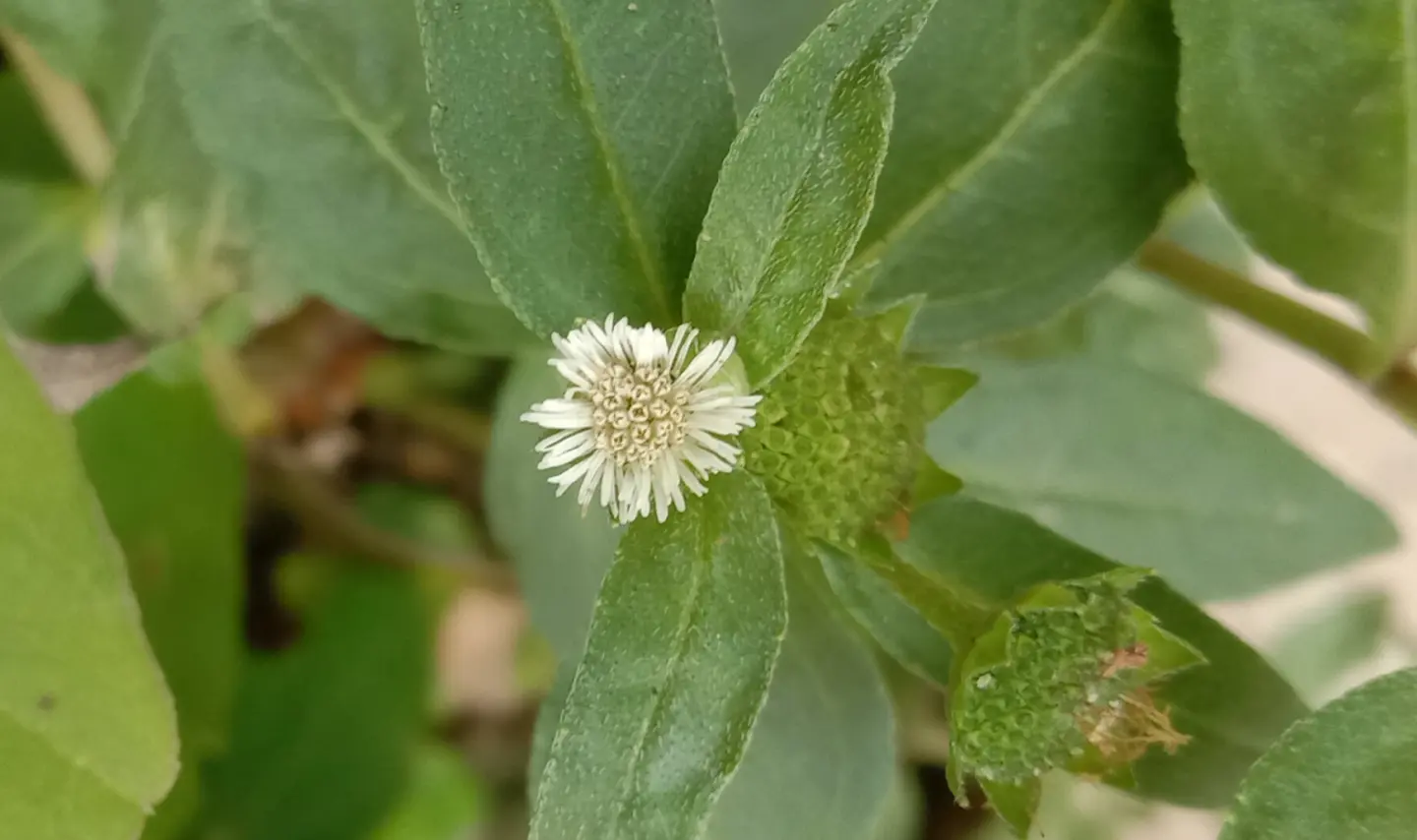
Photo: Billjones94 · CC BY-SA 4.0, via Wikimedia Commons
Essential Care Requirements
Light
Full sun, Partial sun
Watering
High
Keep the soil constantly moist. It grows well at the edge of a water feature, in a tray of water or in a pot kept damp.
Soil
Moist, fertile loam rich in organic matter; pH 5.5 to 7.5.
Temperature and humidity
12–38 °C · High humidity
Feeding
Mix compost into the soil at planting and feed with diluted liquid fertilizer every few weeks.
Pruning and propagation
Propagate by seed, stem cuttings
Cut back stems regularly to promote new growth. Prevent it from setting seed everywhere if you do not want it to spread.
Used in small amounts in traditional remedies. Check with a qualified practitioner before using regularly.
Top Cultivation Tips
Sow seeds on the surface, as they need light to germinate.
Pick leaves in the morning and use them fresh or dry them in the shade.
Cuttings root easily in moist soil.
It often grows wild in rice fields and damp lawns, so identify it carefully before harvesting.
Common problems
Aphids
Small, soft-bodied insects that cluster on new shoots and buds, sucking sap and leaving sticky honeydew behind.
How to treat it →DiseaseLeaf spot
Fungal or bacterial infections that cause brown, black or purple spots on leaves, often with a yellow halo, leading to early leaf drop.
How to treat it →DiseasePowdery mildew
A fungal disease that coats leaves, buds and young shoots with a white, flour-like dust, weakening the plant and spoiling flowers and fruit.
How to treat it →PestSnails and slugs
Night-feeding molluscs that chew ragged holes in leaves, seedlings and soft stems, especially in wet weather.
How to treat it →