Tulsi (Holy Basil)
Ocimum tenuiflorum
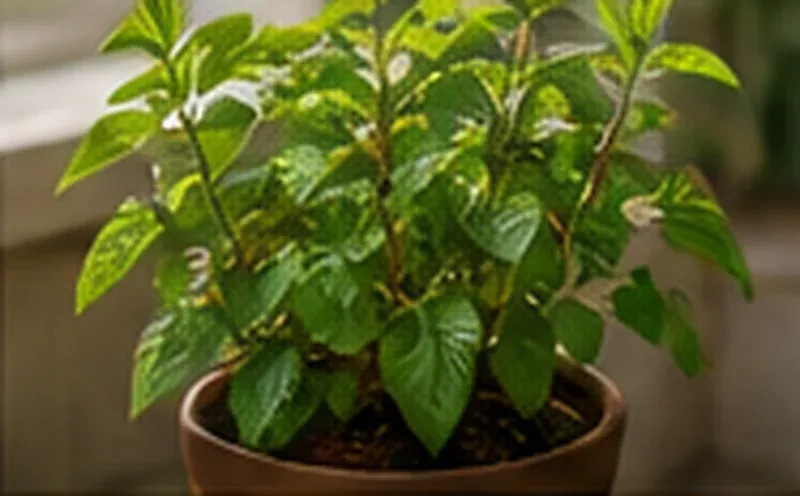
Tulsi is an aromatic, bushy herb grown across South Asia in courtyards, balconies and temple gardens. Its clove-scented leaves are used fresh in teas and home remedies. It grows quickly in warm weather and is easy to keep in a pot if it gets plenty of sun and is pinched back often.
Essential Care Requirements
Light
Full sun, Partial sun
Watering
Moderate
Water when the top 2–3 cm of soil is dry, usually every day or two in hot weather and much less in the monsoon and cooler months. It dislikes both drying out completely and sitting in wet soil.
Soil
Well-drained, fertile loam with added compost; a pH of about 6.0–7.5. In pots, use a mix with perlite or coarse sand so water drains freely.
Temperature and humidity
10–35 °C · Moderate humidity
Feeding
Mix compost or vermicompost into the top layer of soil once a month during the growing season. Avoid heavy nitrogen feeds, which produce soft growth that attracts aphids.
Pruning and propagation
Propagate by seed, stem cuttings
Pinch out the growing tips every week or two and remove flower spikes as they form to keep the plant leafy and prevent it from going woody.
Not considered toxic to cats or dogs. The leaves are widely used in food and drinks.
Top Cultivation Tips
Give it at least 4–6 hours of direct sun a day.
Pinch off flower spikes to keep leaves coming.
Bring pots under cover or indoors on nights below 10 °C.
Sow fresh seed every couple of years; old plants become woody.
Common problems
Aphids
Small, soft-bodied insects that cluster on new shoots and buds, sucking sap and leaving sticky honeydew behind.
How to treat it →DiseaseDamping off
Soil-borne fungi that rot seeds and young seedlings at soil level, causing them to collapse suddenly.
How to treat it →PestLace bugs
Small flat insects with lacy wings that feed under leaves, leaving the upper surface speckled pale and the underside spotted with black.
How to treat it →PestMealybugs
White, cottony insects that hide in leaf joints and under leaves, weakening plants and spreading easily to neighbours.
How to treat it →DiseaseRoot rot
Roots decay in waterlogged soil, so the plant wilts and yellows even though the soil is wet.
How to treat it →PestSnails and slugs
Night-feeding molluscs that chew ragged holes in leaves, seedlings and soft stems, especially in wet weather.
How to treat it →