Blackcurrant
Ribes nigrum
Blackcurrant is a hardy deciduous bush with aromatic leaves and strings of tart, vitamin-rich black berries used for jams, cordials and desserts. It thrives in cool climates and partial shade.
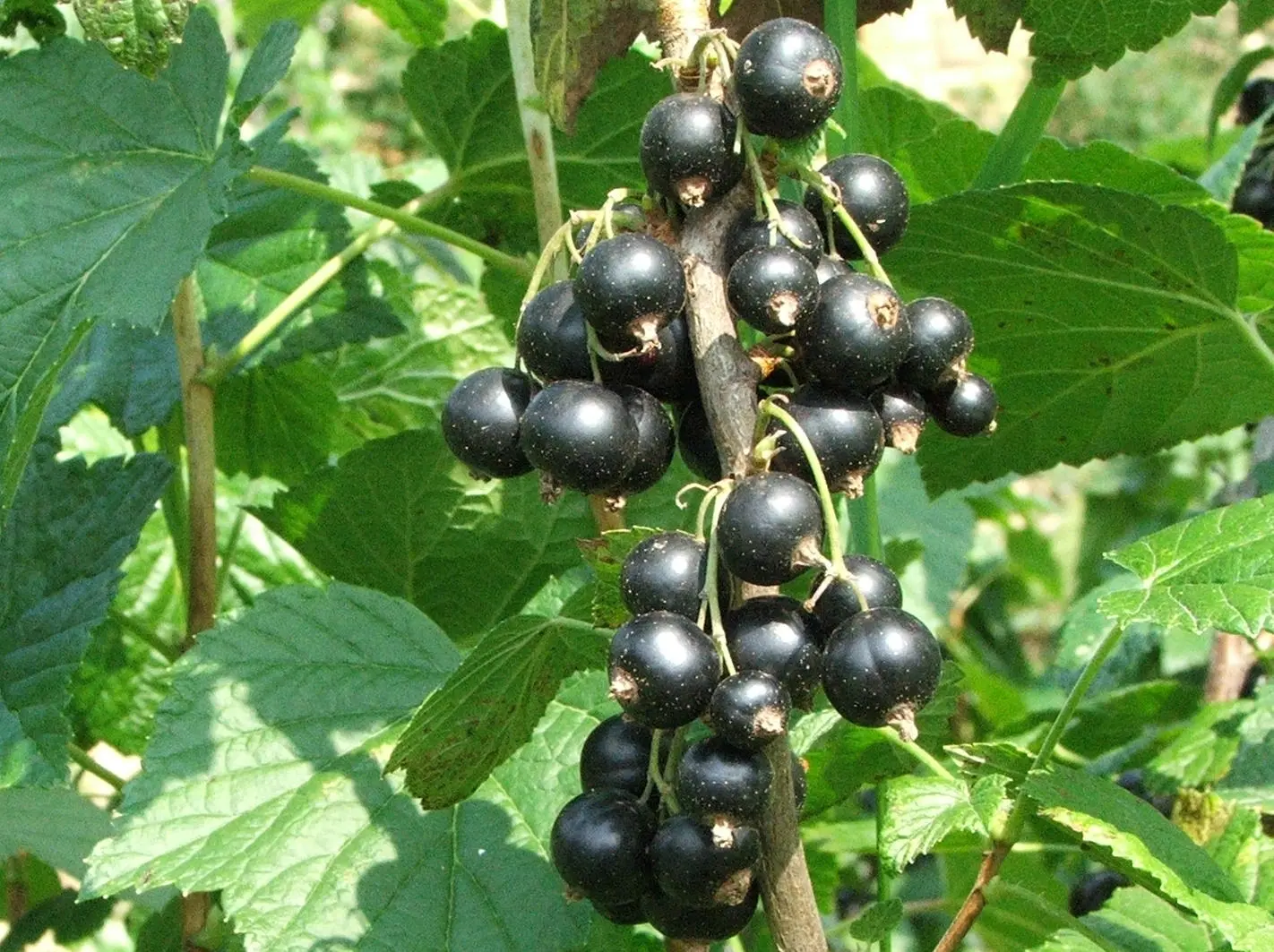
Photo: Jerzy Opioła · CC BY-SA 3.0, via Wikimedia Commons
Essential Care Requirements
Light
Full sun, Partial sun
Watering
Moderate
Keep the soil moist, especially as fruit swells.
Soil
Rich, moisture-retentive soil; pH 6.0–6.8.
Temperature and humidity
-35–28 °C · Moderate humidity
Feeding
Feed in spring with a nitrogen-rich fertilizer and mulch with compost.
Pruning and propagation
Propagate by stem cuttings
In winter, remove about a third of the oldest stems at the base each year.
Blackcurrants are safe to eat.
Top Cultivation Tips
Plant 5 cm deeper than in the pot to encourage new shoots.
Pick whole strings when ripe.
Hardwood cuttings root easily in winter.
Needs a cold winter.
Common problems
Aphids
Small, soft-bodied insects that cluster on new shoots and buds, sucking sap and leaving sticky honeydew behind.
How to treat it →PestBirds pecking fruit
Birds that peck at ripening soft fruit, taking bites or whole berries just as they are ready to pick.
How to treat it →DiseasePowdery mildew
A fungal disease that coats leaves, buds and young shoots with a white, flour-like dust, weakening the plant and spoiling flowers and fruit.
How to treat it →DiseaseRust
A fungal disease that forms orange, brown or yellow powdery pustules, mainly on leaf undersides.
How to treat it →PestSawfly larvae
Caterpillar-like larvae of sawflies that can strip gooseberries, currants and roses of their leaves in days.
How to treat it →