Boston Ivy
Parthenocissus tricuspidata
Boston ivy is a self-clinging deciduous climber that covers walls in glossy leaves turning brilliant red in fall, famous on Ivy League buildings. Native Virginia creeper is a close US relative.
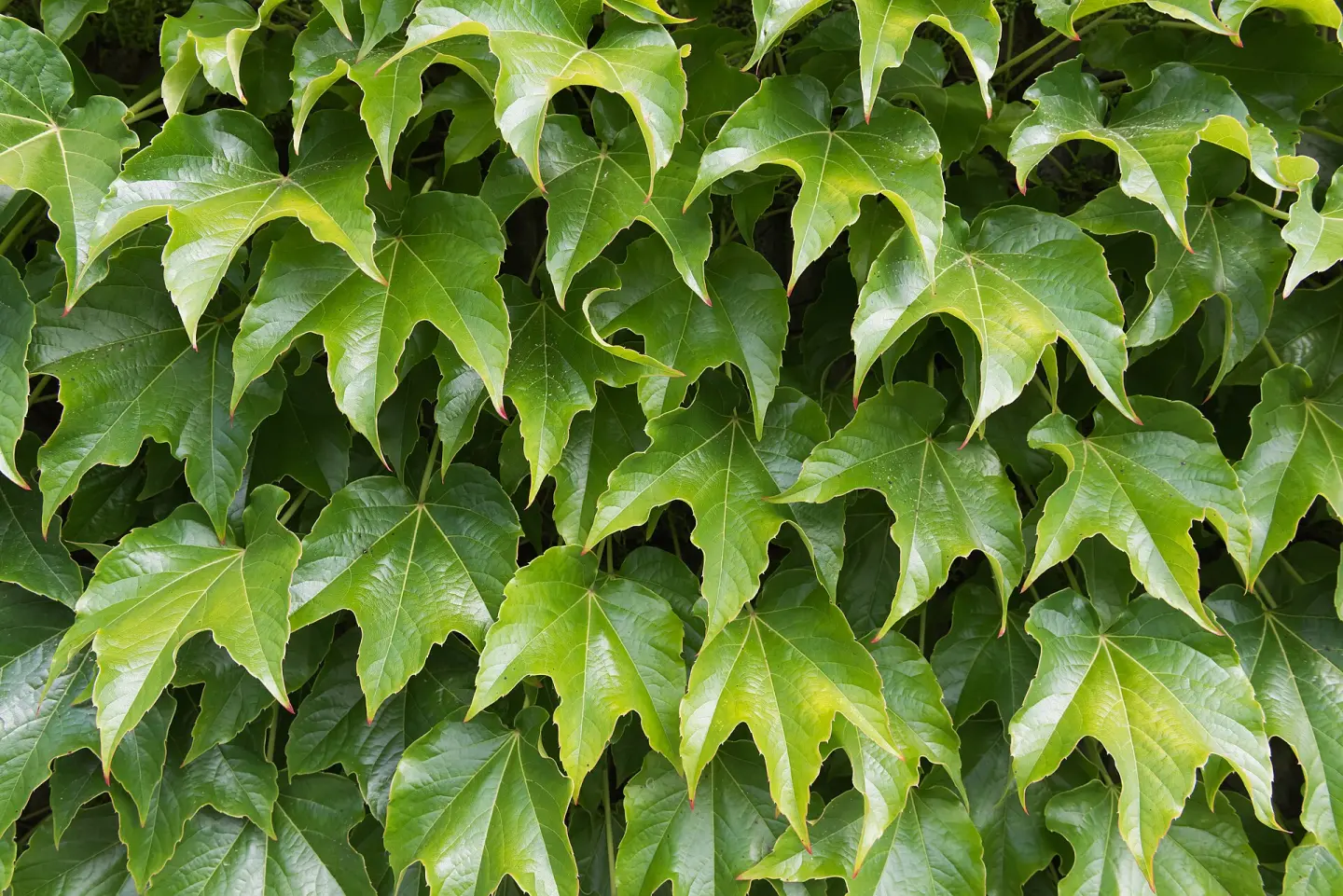
Photo: Johann Jaritz · CC BY-SA 4.0, via Wikimedia Commons
Essential Care Requirements
Light
Full sun, Partial sun, Low light
Watering
Moderate
Water young plants; established plants are drought tolerant.
Soil
Most soils; pH 5.5–8.0.
Temperature and humidity
-30–38 °C · Moderate humidity
Feeding
Little feeding needed.
Pruning and propagation
Propagate by stem cuttings, layering
Trim around windows, gutters and roofs in winter.
The berries can cause stomach upset in pets and children if eaten.
Top Cultivation Tips
Adhesive pads cling without support.
Can mark paint and render if removed.
Spectacular fall colour.
Hardy in USDA zones 4–8.
Common problems
Japanese beetle
Metallic green and copper beetles that skeletonise leaves and devour flowers in summer, while their grubs feed on lawn roots.
How to treat it →DiseaseLeaf spot
Fungal or bacterial infections that cause brown, black or purple spots on leaves, often with a yellow halo, leading to early leaf drop.
How to treat it →DiseasePowdery mildew
A fungal disease that coats leaves, buds and young shoots with a white, flour-like dust, weakening the plant and spoiling flowers and fruit.
How to treat it →