Clematis
Clematis spp. and hybrids
Clematis are versatile climbers with flowers ranging from small bells to dinner-plate stars in purple, blue, pink, red and white. Choosing the right type for your climate and pruning group is the key to success.
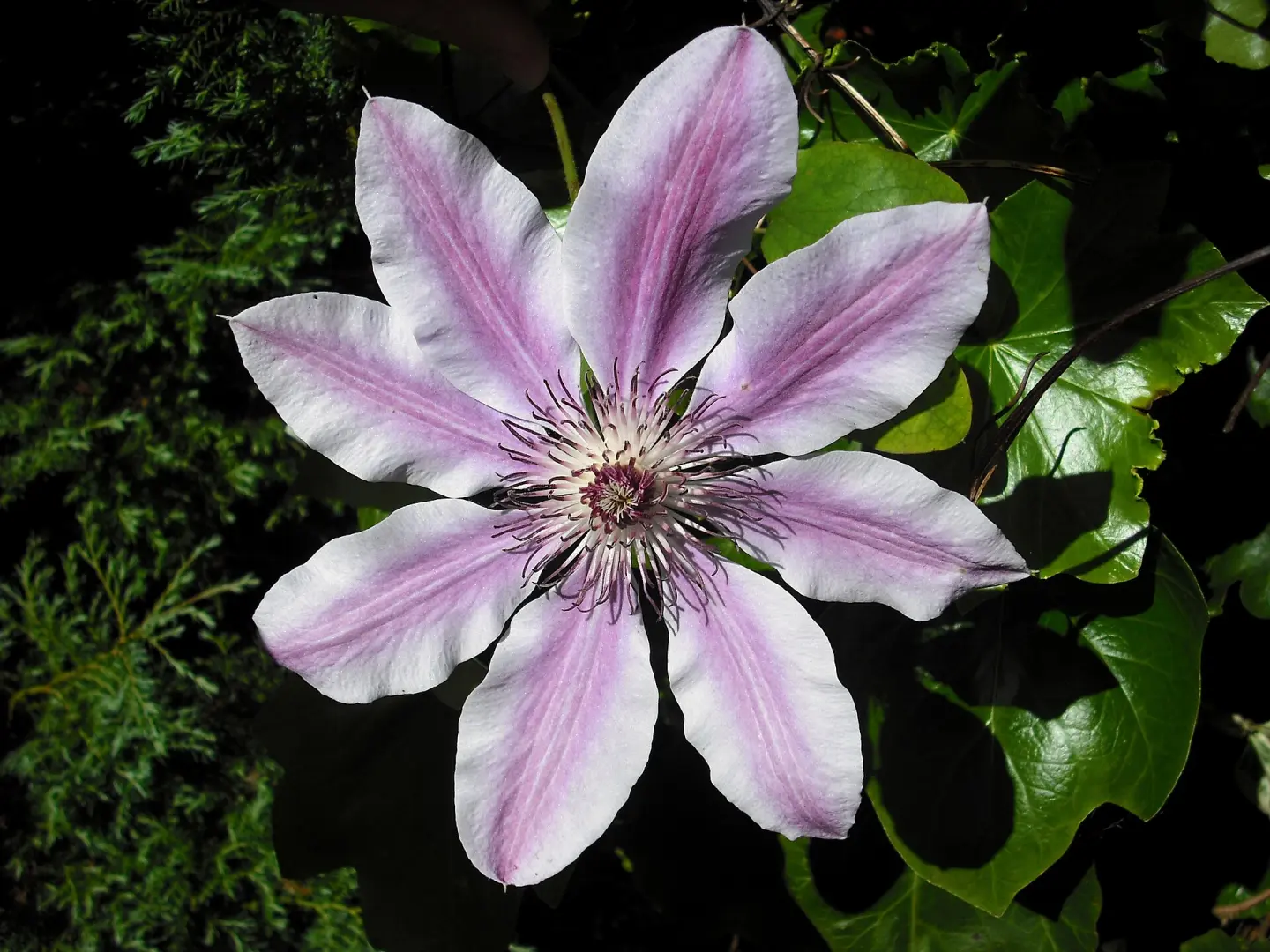
Photo: Jolly Janner · Public domain, via Wikimedia Commons
Essential Care Requirements
Light
Full sun, Partial sun
Watering
Moderate
Water deeply in dry weather; keep the root zone cool and moist.
Soil
Fertile, moist, well-drained soil; pH 6.5–7.5.
Temperature and humidity
-30–32 °C · Moderate humidity
Feeding
Feed in spring and summer with a potassium-rich fertilizer.
Pruning and propagation
Propagate by stem cuttings, layering
Prune according to group: early flowerers lightly after flowering; late flowerers hard in late winter.
The sap can irritate skin and the plant can cause stomach upset if eaten by people or pets.
Top Cultivation Tips
Plant 5–8 cm deeper than in the pot.
Shade the roots with low plants or stones.
Check the pruning group on the label.
Evergreen C. armandii suits mild climates.
Common problems
Aphids
Small, soft-bodied insects that cluster on new shoots and buds, sucking sap and leaving sticky honeydew behind.
How to treat it →DiseasePowdery mildew
A fungal disease that coats leaves, buds and young shoots with a white, flour-like dust, weakening the plant and spoiling flowers and fruit.
How to treat it →PestSnails and slugs
Night-feeding molluscs that chew ragged holes in leaves, seedlings and soft stems, especially in wet weather.
How to treat it →