Honeysuckle
Lonicera periclymenum and L. sempervirens
Honeysuckles are twining climbers with tubular flowers. British woodbine is famous for its evening scent, while American coral honeysuckle bears scarlet flowers loved by hummingbirds. Avoid invasive Japanese honeysuckle in the US.
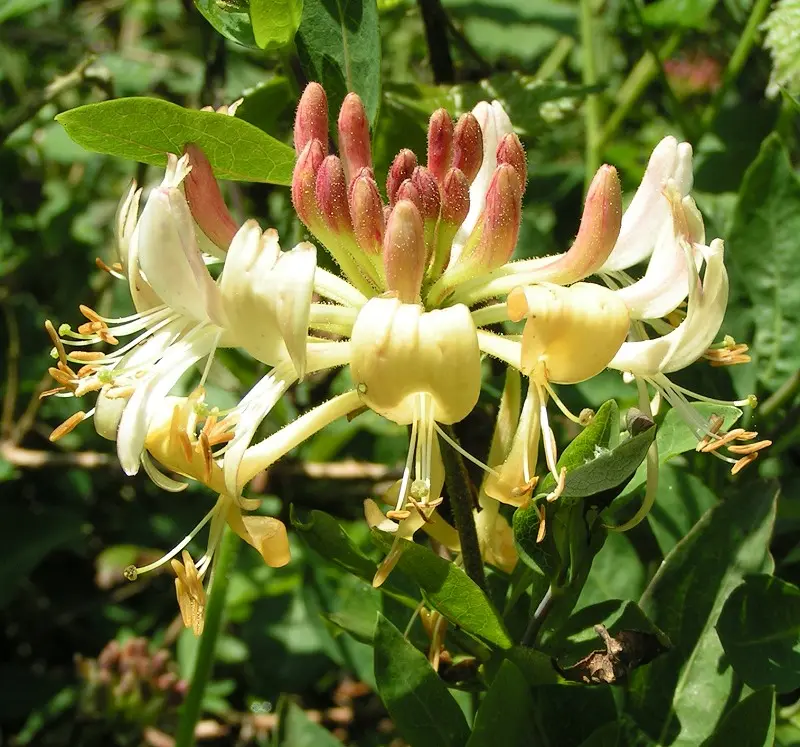
Photo: Nordelch (Wikimedia Commons) · CC BY-SA 3.0, via Wikimedia Commons
Essential Care Requirements
Light
Full sun, Partial sun
Watering
Moderate
Keep roots cool and moist; mulch well.
Soil
Moist, well-drained, humus-rich soil; pH 6.0–7.5.
Temperature and humidity
-30–35 °C · Moderate humidity
Feeding
Feed in spring with a balanced fertilizer.
Pruning and propagation
Propagate by stem cuttings, layering
Prune after flowering, thinning old stems.
The berries of most ornamental honeysuckles are mildly toxic if eaten.
Top Cultivation Tips
Plant roots in shade, head in sun.
Grow over arches near seating for scent.
Choose native species in the US.
Hardy in USDA zones 4–9.
Common problems
Aphids
Small, soft-bodied insects that cluster on new shoots and buds, sucking sap and leaving sticky honeydew behind.
How to treat it →DiseasePowdery mildew
A fungal disease that coats leaves, buds and young shoots with a white, flour-like dust, weakening the plant and spoiling flowers and fruit.
How to treat it →