Brussels Sprouts
Brassica oleracea var. gemmifera
Brussels sprouts form a tall stem lined with small, tight buds like miniature cabbages. They need a long, cool season, so they do best in the hills or a long winter in the north Indian plains.
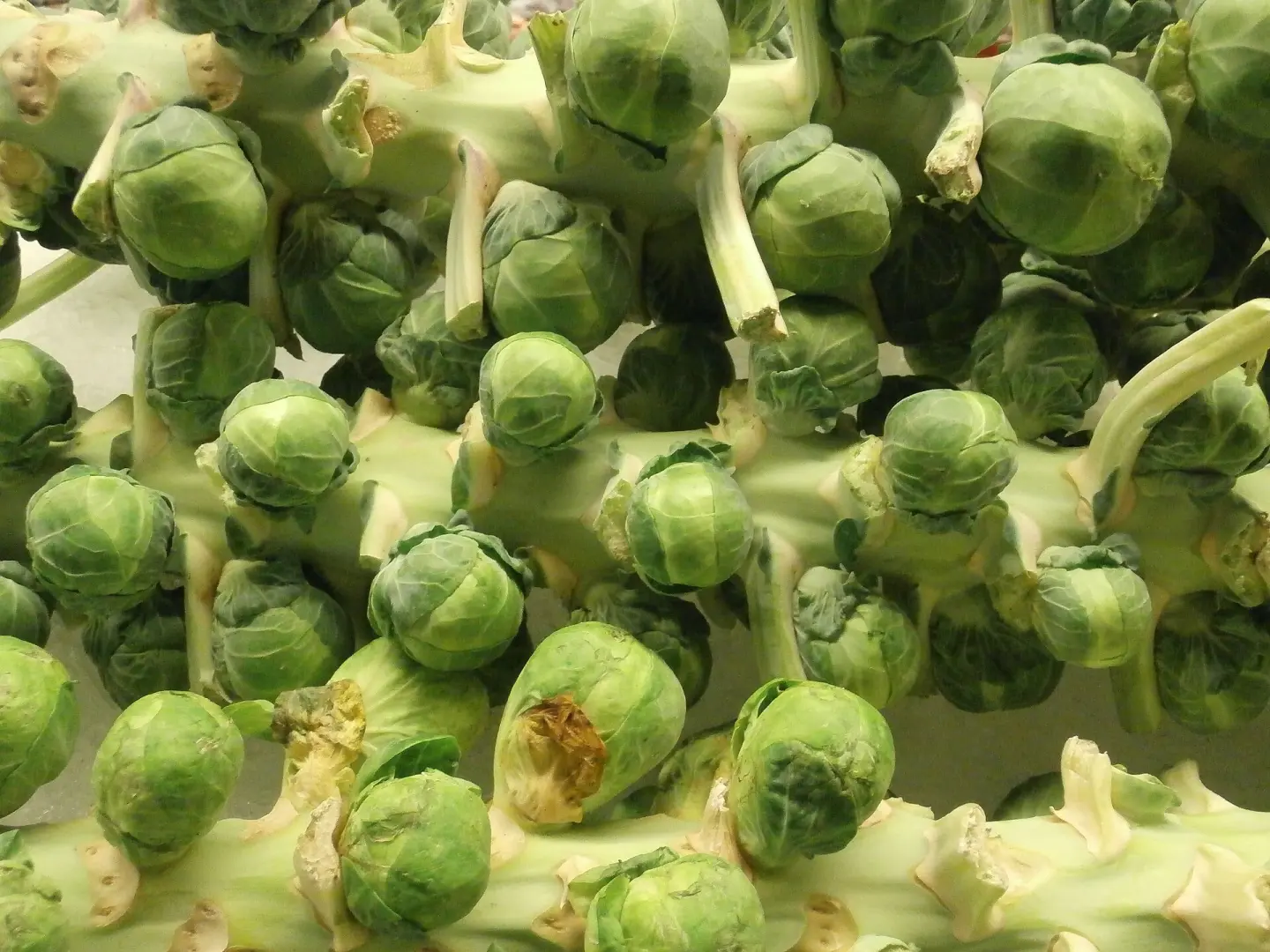
Photo: Jeffery Martin · CC0, via Wikimedia Commons
Essential Care Requirements
Light
Full sun
Watering
Moderate
Keep the soil evenly moist through the season.
Soil
Rich, firm soil with compost; pH 6.5–7.5.
Temperature and humidity
0–24 °C · Moderate humidity
Feeding
Feed every three weeks with a balanced organic fertilizer.
Pruning and propagation
Propagate by seed
Remove yellow lower leaves. Pinch out the top growing point a month before harvest to make the sprouts swell evenly.
Brussels sprouts are safe to eat.
Top Cultivation Tips
Stake plants in windy spots.
Pick sprouts from the bottom up when firm.
Flavour improves after cold nights.
Earth up the base for stability.
Common problems
Aphids
Small, soft-bodied insects that cluster on new shoots and buds, sucking sap and leaving sticky honeydew behind.
How to treat it →PestCabbage root fly
A small fly whose white maggots eat the roots of cabbage-family crops and radishes, causing wilting and stunted plants.
How to treat it →PestCabbage white caterpillars
Green or yellow-green caterpillars of white butterflies that chew large holes in cabbage-family leaves and foul the hearts with droppings.
How to treat it →PestCaterpillars
The larvae of moths and butterflies, which chew holes in leaves, flowers and fruit and can strip a plant in days.
How to treat it →DiseaseClubroot
A soil-borne disease of cabbage-family plants that causes swollen, distorted roots, wilting and stunted growth.
How to treat it →