Chilli
Capsicum annuum
Chilli plants are compact, productive and ornamental, with glossy leaves and fruit that ripens from green to red. A single healthy plant in a 10–15 litre pot can supply a household for months, and many varieties keep fruiting for two or three years.
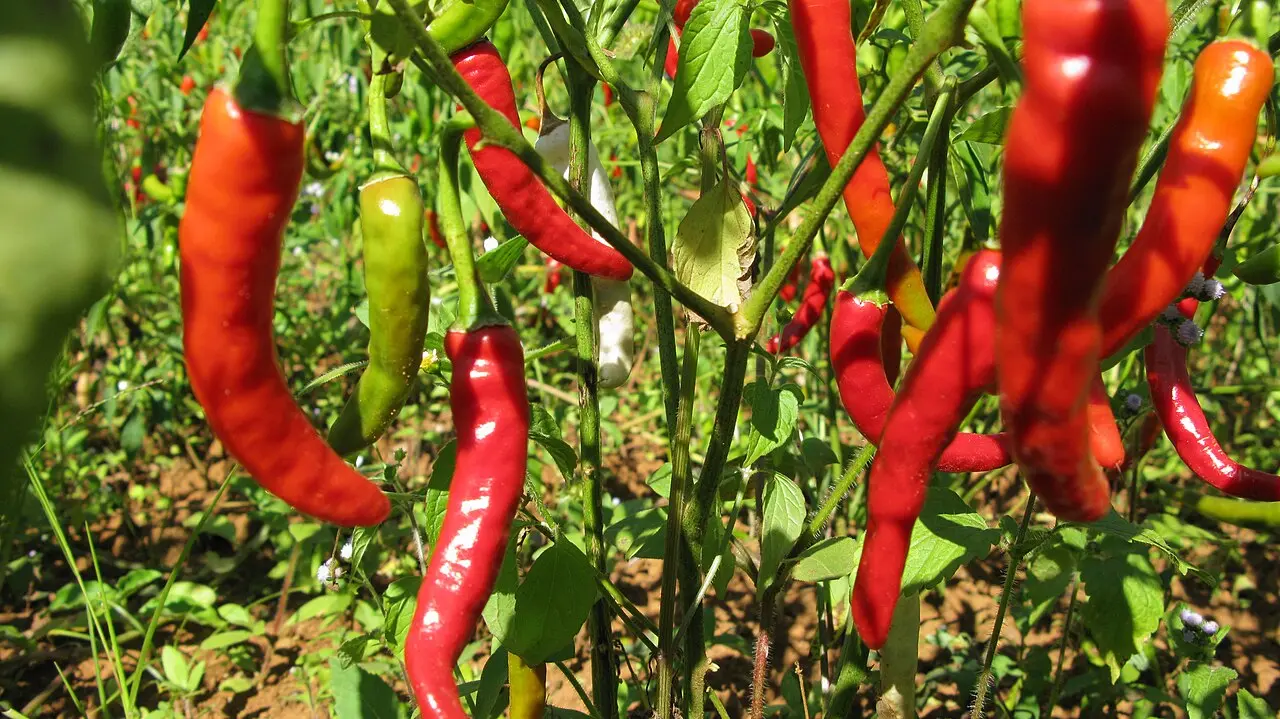
Photo: Vyacheslav Argenberg · CC BY 4.0, via Wikimedia Commons
Essential Care Requirements
Light
Full sun
Watering
Moderate
Water when the top 2–3 cm of soil is dry. Slightly drier conditions while fruiting can make chillies hotter, but letting plants wilt repeatedly causes flower drop.
Soil
Fertile, well-drained soil rich in compost, pH 6.0–7.0.
Temperature and humidity
15–35 °C · Moderate humidity
Feeding
Feed every two weeks once flowering starts with a potassium-rich fertilizer. Too much nitrogen gives leafy plants with few fruits.
Pruning and propagation
Propagate by seed, stem cuttings
Pinch the growing tip when the plant is 20 cm tall for a bushier shape. After the main harvest, cut back by a third to encourage a second flush.
Leaves and unripe fruit can upset pets' stomachs. Wash hands after handling hot chillies and keep them away from eyes.
Top Cultivation Tips
Pick regularly to keep the plant producing.
Leaf curl often means thrips, mites or whiteflies: check under leaves.
Stake plants heavy with fruit.
Overwinter healthy plants for an earlier crop next year.
Common problems
Anthracnose
A fungal disease that causes dark, sunken spots on leaves, flowers and fruit, especially mango, chilli and papaya.
How to treat it →PestAphids
Small, soft-bodied insects that cluster on new shoots and buds, sucking sap and leaving sticky honeydew behind.
How to treat it →DiseaseBacterial leaf spot
Small, dark, water-soaked spots on leaves and fruit caused by bacteria that spread rapidly in warm, wet weather.
How to treat it →DiseaseBacterial wilt
A soil-borne bacterial disease that causes sudden wilting of green plants, especially tomato, brinjal and chilli.
How to treat it →DiseaseBlossom end rot
A dark, sunken patch at the base of tomatoes, chillies and other fruit, caused by a shortage of calcium in the developing fruit.
How to treat it →PestBroad mites
Microscopic mites that cause twisted, hardened, bronzed leaves and stunted growth on peppers, aubergines and many ornamentals.
How to treat it →DiseaseBud drop
Flower buds yellow and fall before opening, usually because the plant has been stressed by changes in water, light or temperature.
How to treat it →DiseaseCollar rot
A soil-borne fungal rot at the base of the stem, where it meets the soil, that causes plants to wilt and collapse.
How to treat it →DiseaseCurly top virus
A leafhopper-spread virus that makes leaves roll, thicken and turn yellow, and stunts beet, tomato, pepper and bean plants.
How to treat it →PestCutworms
Fat, greyish caterpillars that hide in the soil by day and chew through young seedlings at ground level at night.
How to treat it →DiseaseDamping off
Soil-borne fungi that rot seeds and young seedlings at soil level, causing them to collapse suddenly.
How to treat it →DiseaseEarly blight
A fungal disease of tomatoes and potatoes that causes brown spots with target-like rings on the lower leaves.
How to treat it →DiseaseFertilizer burn
Brown, scorched leaf edges and damaged roots caused by too much fertilizer or a build-up of salts in the soil.
How to treat it →DiseaseFusarium wilt
A soil-borne fungus that blocks the water-conducting tissue, making plants yellow and wilt from one side.
How to treat it →DiseaseLeaf curl virus
A whitefly-spread virus that makes leaves curl, crinkle and shrink, stunting tomato, chilli and papaya.
How to treat it →DiseaseOedema
Small blisters and corky bumps on leaf undersides, caused when roots take up water faster than the leaves can release it.
How to treat it →DiseasePhosphorus deficiency
Slow growth with dull, dark green leaves that develop purple or reddish tints, and poor rooting and flowering.
How to treat it →DiseasePhytophthora blight
A water mould that causes sudden wilting, dark stem lesions and white-fuzzed rotting fruit in peppers and cucurbits during warm, wet weather.
How to treat it →DiseasePotassium deficiency
Older leaves develop yellow and then brown, scorched edges, and fruit is small and poorly coloured.
How to treat it →PestSnails and slugs
Night-feeding molluscs that chew ragged holes in leaves, seedlings and soft stems, especially in wet weather.
How to treat it →DiseaseSouthern blight
A soil-borne fungal disease of hot, humid climates that rots stems at the soil line under a white fan of mould dotted with tiny round seed-like bodies.
How to treat it →PestSpider mites
Tiny sap-sucking mites that thrive in hot, dry conditions, causing speckled, dull leaves and fine webbing.
How to treat it →DiseaseSunscald
Bleached, papery or brown patches on leaves, stems or fruit that were suddenly exposed to strong sun or heat.
How to treat it →PestThrips
Tiny, slender insects that rasp leaf and flower surfaces, leaving silvery streaks, curled leaves and distorted flowers.
How to treat it →DiseaseTomato mosaic virus
A very stable virus that causes mottled light and dark green leaves, distorted growth and poor fruit on tomatoes, peppers and relatives.
How to treat it →PestTomato psyllid
A tiny jumping sap-sucker that causes yellow, purple-tinged, upward-curling leaves on tomatoes, peppers and potatoes and can spread a bacterial disease.
How to treat it →DiseaseTomato spotted wilt virus
A virus carried by thrips that causes bronze rings and spots on leaves and fruit and wilts tomatoes, peppers, lettuce and many flowers.
How to treat it →DiseaseTransplant shock
Wilting, leaf drop and stalled growth after a plant is moved or repotted, while the roots recover and re-establish.
How to treat it →DiseaseWaterlogging
Soil so full of water that roots run short of oxygen, which causes yellow leaves, wilting and root rot.
How to treat it →PestWhiteflies
Small white flying insects that gather under leaves, sucking sap, spreading viruses and leaving sticky honeydew.
How to treat it →