Butternut Squash
Cucurbita moschata 'Butternut'
Butternut squash is a trailing winter squash with sweet, nutty orange flesh and a long storage life. It resists squash vine borers better than most squashes and is a favourite in US and UK kitchens.
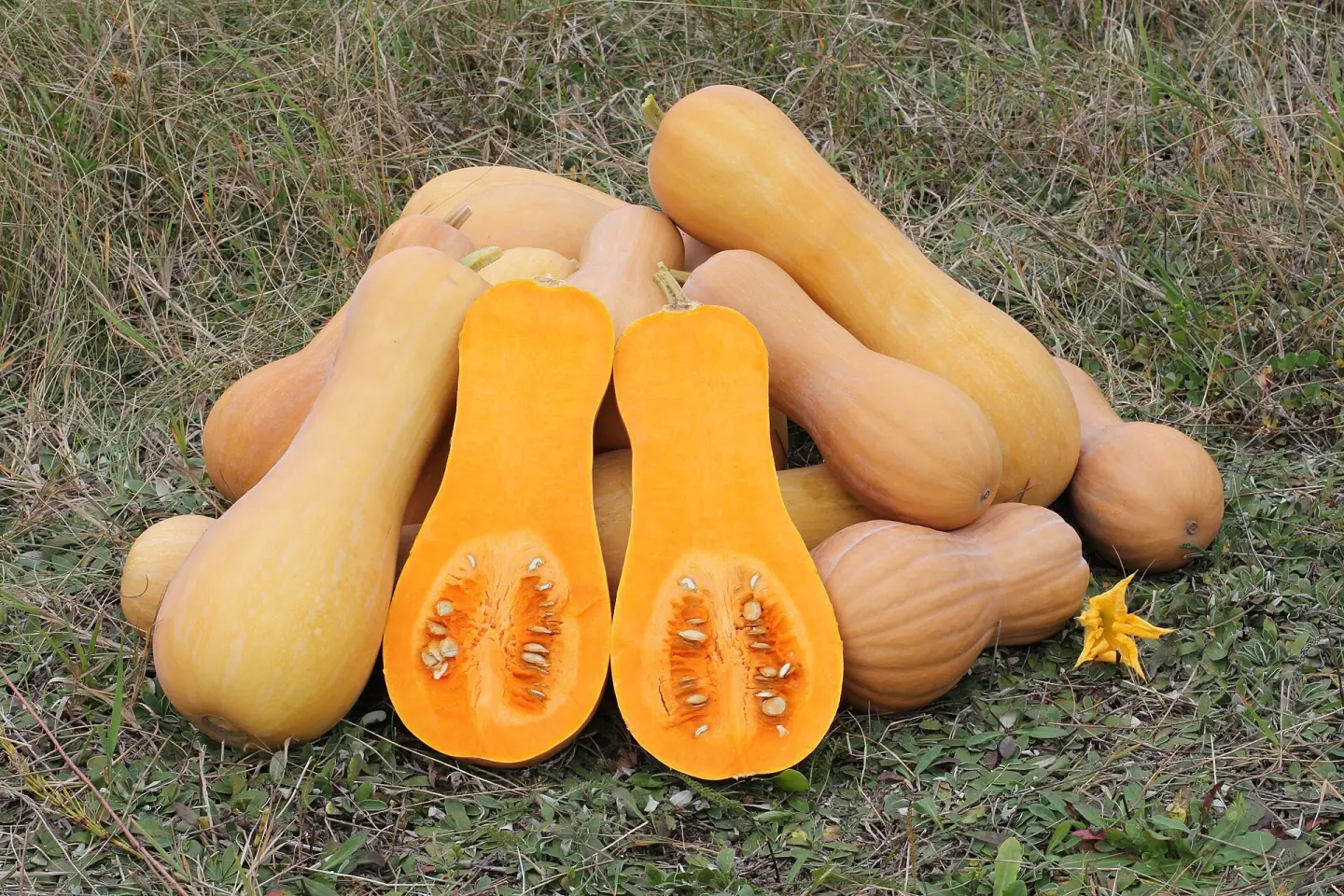
Photo: George Chernilevsky · Public domain, via Wikimedia Commons
Essential Care Requirements
Light
Full sun
Watering
Moderate
Water deeply at the base once or twice a week.
Soil
Rich, well-drained soil with plenty of compost; pH 6.0–7.0.
Temperature and humidity
12–35 °C · Moderate humidity
Feeding
Feed every two weeks with a potassium-rich fertilizer once fruit sets.
Pruning and propagation
Propagate by seed
Pinch vine tips after 3–4 fruits have set.
Butternut squash is safe to eat. Discard any squash that tastes very bitter.
Top Cultivation Tips
Start indoors 3–4 weeks before the last frost.
Harvest when the skin is hard and tan.
Cure in the sun for 10 days before storing.
Stores for 3–6 months in a cool room.
Common problems
Cucumber beetle
Yellow-and-black striped or spotted beetles that chew cucurbit seedlings and spread bacterial wilt, a major pest in North America.
How to treat it →DiseasePowdery mildew
A fungal disease that coats leaves, buds and young shoots with a white, flour-like dust, weakening the plant and spoiling flowers and fruit.
How to treat it →PestSquash bug
Grey-brown shield-shaped bugs that suck sap from squash and pumpkin leaves, causing wilting and blackened leaves, common across the US.
How to treat it →