Celeriac
Apium graveolens var. rapaceum
Celeriac is a variety of celery grown for its knobbly, swollen stem base, which tastes of celery and is used in soups, mash and salads. It needs a long, cool season and plenty of water.
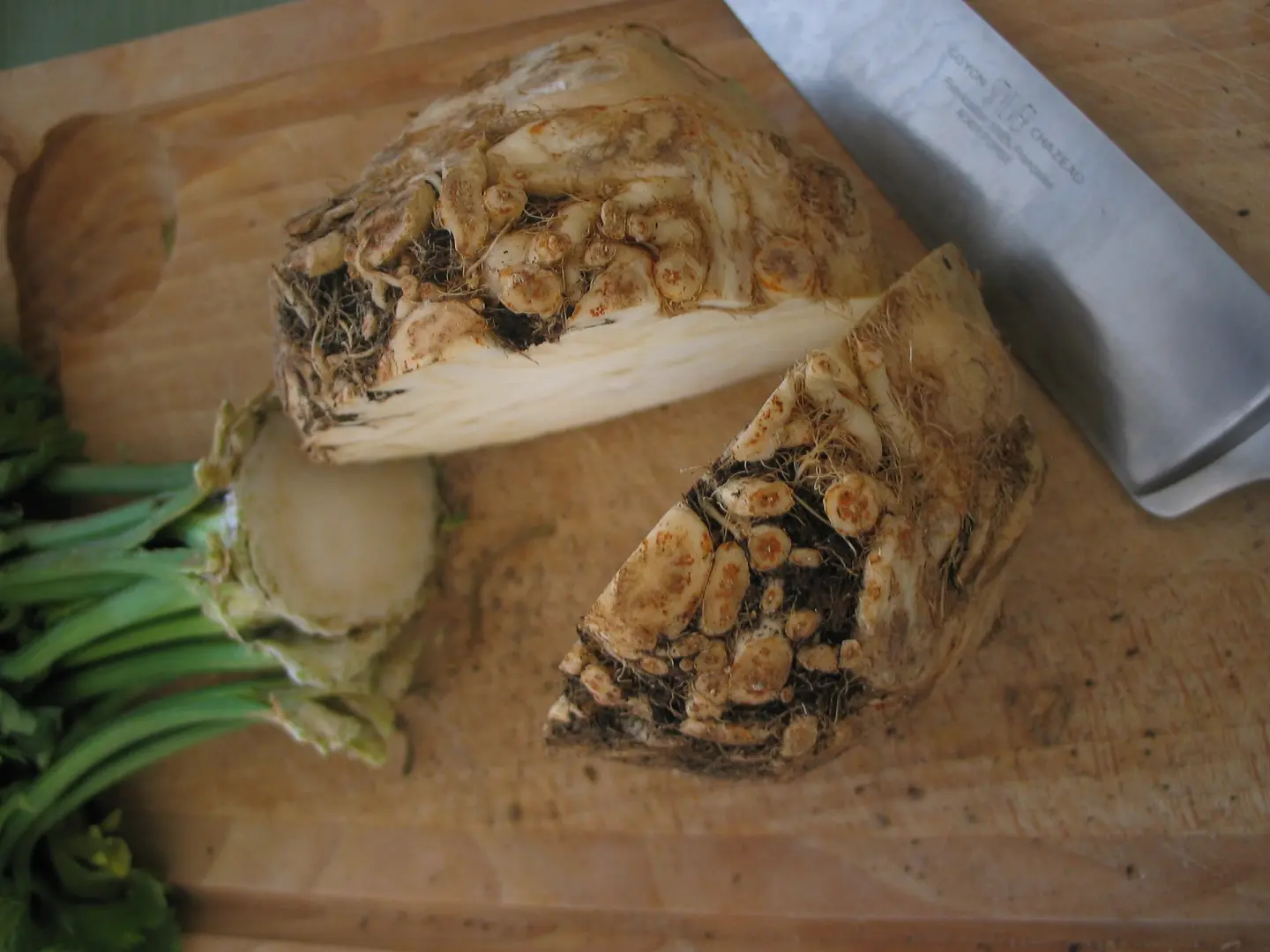
Photo: DocteurCosmos · CC BY-SA 3.0, via Wikimedia Commons
Essential Care Requirements
Light
Full sun, Partial sun
Watering
High
Never let the soil dry out; drought gives small, woody roots.
Soil
Rich, moisture-retentive soil; pH 6.0–7.0.
Temperature and humidity
-5–25 °C · Moderate humidity
Feeding
Feed every two weeks with a balanced liquid fertilizer.
Pruning and propagation
Propagate by seed
Remove lower side leaves and side shoots in late summer to expose the crown.
Celeriac is safe to eat; people with celery allergy should avoid it.
Top Cultivation Tips
Sow early indoors; seeds need light to germinate.
Plant with the crown at soil level, not buried.
Mulch heavily to keep moisture.
Stores well in a cool place.
Common problems
Aphids
Small, soft-bodied insects that cluster on new shoots and buds, sucking sap and leaving sticky honeydew behind.
How to treat it →PestCarrot fly
Small flies whose larvae tunnel into carrots, parsnips and celery roots, leaving rusty-brown tunnels.
How to treat it →DiseaseLeaf spot
Fungal or bacterial infections that cause brown, black or purple spots on leaves, often with a yellow halo, leading to early leaf drop.
How to treat it →DiseaseSeptoria leaf spot
A fungal disease that covers lower leaves in small round spots with dark edges and pale centres, then strips plants of foliage from the bottom up.
How to treat it →PestSnails and slugs
Night-feeding molluscs that chew ragged holes in leaves, seedlings and soft stems, especially in wet weather.
How to treat it →