Chickpea
Cicer arietinum
Chickpea is a bushy winter legume grown for its seeds and for its tender, tangy young shoots (chholar shak), a seasonal favourite in Bengal. It needs little water and enriches the soil with nitrogen.
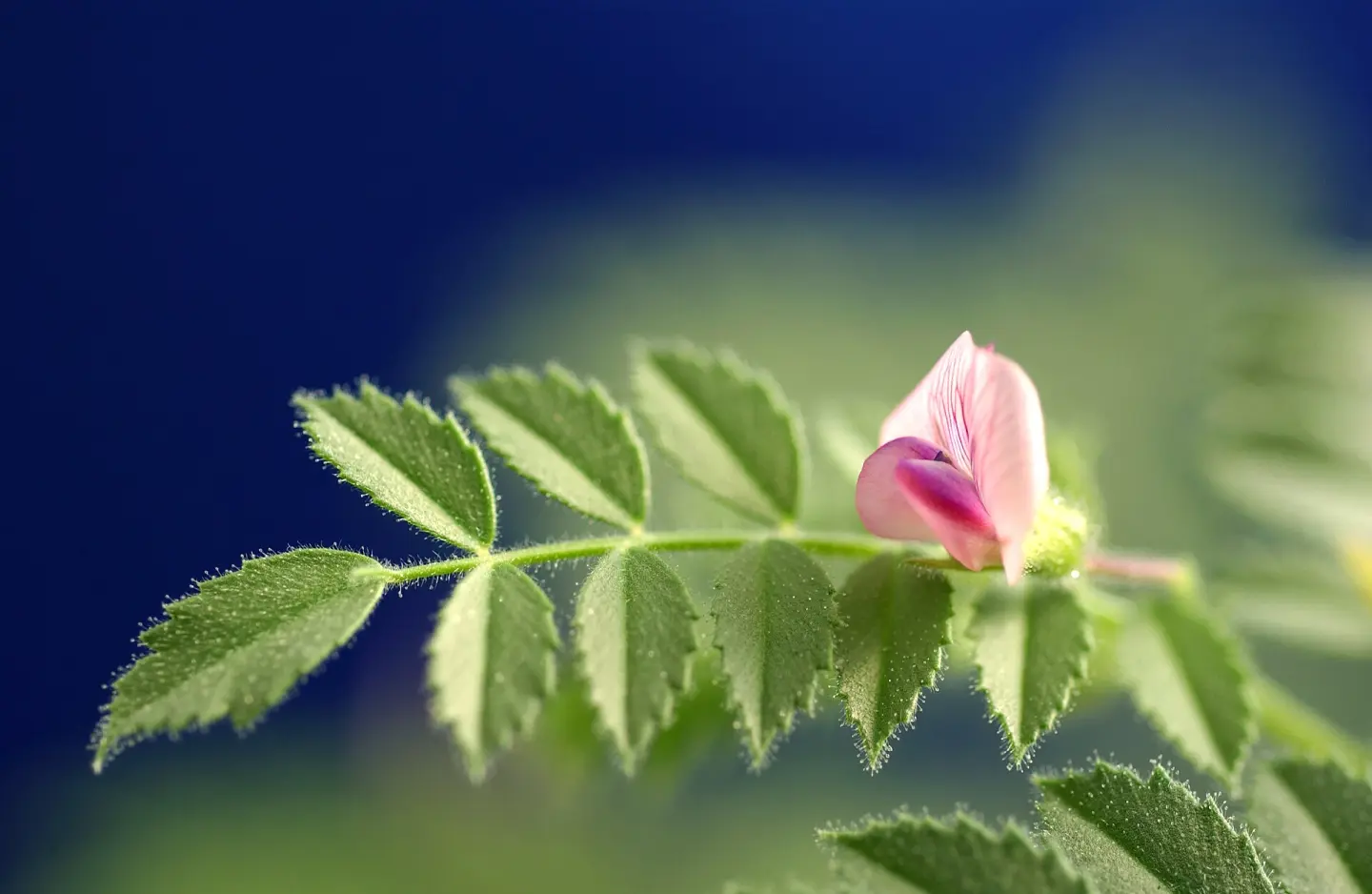
Photo: Carl Davies, CSIRO · CC BY 3.0, via Wikimedia Commons
Essential Care Requirements
Light
Full sun
Watering
Low
Water at sowing and lightly at flowering; too much water gives leafy plants with few pods.
Soil
Well-drained loam or clay loam; pH 6.0–8.0.
Temperature and humidity
5–30 °C · Low humidity
Feeding
Little feeding needed; a small amount of compost at sowing is enough.
Pruning and propagation
Propagate by seed
Nip the top shoots after a month to encourage branching; the tips are eaten as greens.
Young shoots and cooked seeds are safe to eat.
Top Cultivation Tips
Sow in October–November.
Fresh green chickpeas (chhola) are delicious roasted.
Avoid waterlogging, which causes wilt.
A good crop to rotate with brassicas.
Common problems
Caterpillars
The larvae of moths and butterflies, which chew holes in leaves, flowers and fruit and can strip a plant in days.
How to treat it →PestCorn earworm
A caterpillar that feeds on the tips of corn cobs and bores into tomato, pepper, chickpea and pigeon pea fruit and pods.
How to treat it →DiseaseFusarium wilt
A soil-borne fungus that blocks the water-conducting tissue, making plants yellow and wilt from one side.
How to treat it →DiseaseRoot rot
Roots decay in waterlogged soil, so the plant wilts and yellows even though the soil is wet.
How to treat it →