Daphne
Daphne odora
Daphne odora is a compact evergreen shrub with clusters of pink and white flowers that give off a fabulous, citrus-like fragrance in late winter. It prefers a sheltered position in dappled shade and dislikes disturbance once planted.
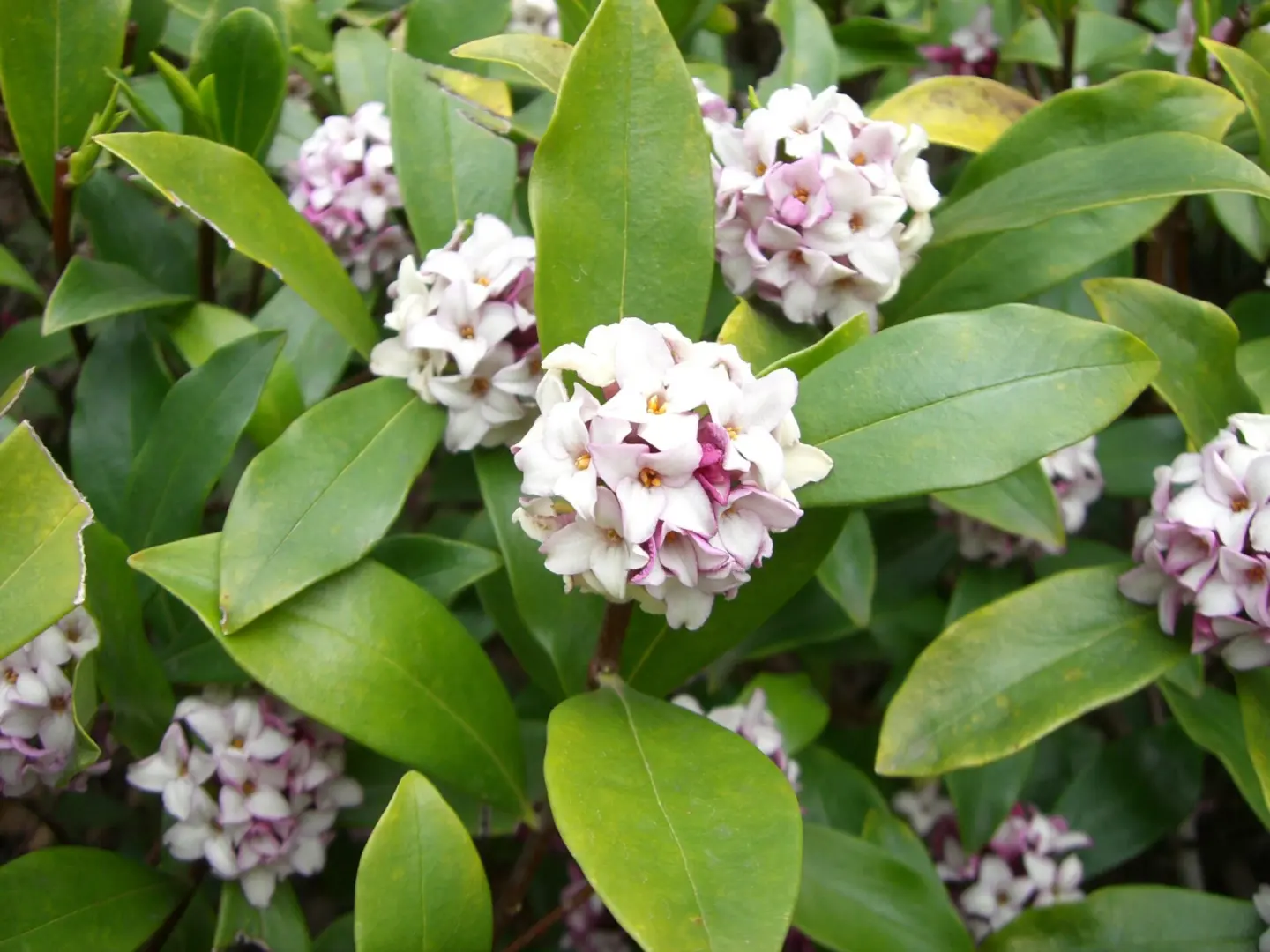
Photo: Miya · CC BY-SA 3.0, via Wikimedia Commons
Essential Care Requirements
Light
Partial sun, Full sun
Watering
Moderate
Water regularly in dry weather but never let it get waterlogged. Good drainage is essential.
Soil
Well-drained, humus-rich soil; pH 6.0 to 7.0.
Temperature and humidity
-10–28 °C · Moderate humidity
Feeding
Mulch lightly with leaf mould in spring. Avoid heavy feeding.
Pruning and propagation
Propagate by stem cuttings
Prune only to remove dead stems after flowering. It resents hard pruning.
All parts, especially the berries, are very toxic if eaten and the sap can irritate skin. Keep away from children and pets.
Top Cultivation Tips
Plant it near a path or entrance where the scent can be enjoyed.
Do not move it once established.
Protect from cold drying winds.
Wear gloves when handling.
Common problems
Aphids
Small, soft-bodied insects that cluster on new shoots and buds, sucking sap and leaving sticky honeydew behind.
How to treat it →DiseaseFrost damage
Injury caused when ice forms inside plant tissue, turning leaves, flowers and shoots black, limp or papery after a cold night.
How to treat it →DiseaseLeaf spot
Fungal or bacterial infections that cause brown, black or purple spots on leaves, often with a yellow halo, leading to early leaf drop.
How to treat it →DiseaseRoot rot
Roots decay in waterlogged soil, so the plant wilts and yellows even though the soil is wet.
How to treat it →