Date Palm
Phoenix dactylifera
The date palm is a tall, feather-leaved palm that produces heavy bunches of sweet dates in hot, dry climates such as Rajasthan and Gujarat. Trees are male or female, and young palms make attractive ornamental plants in large pots.
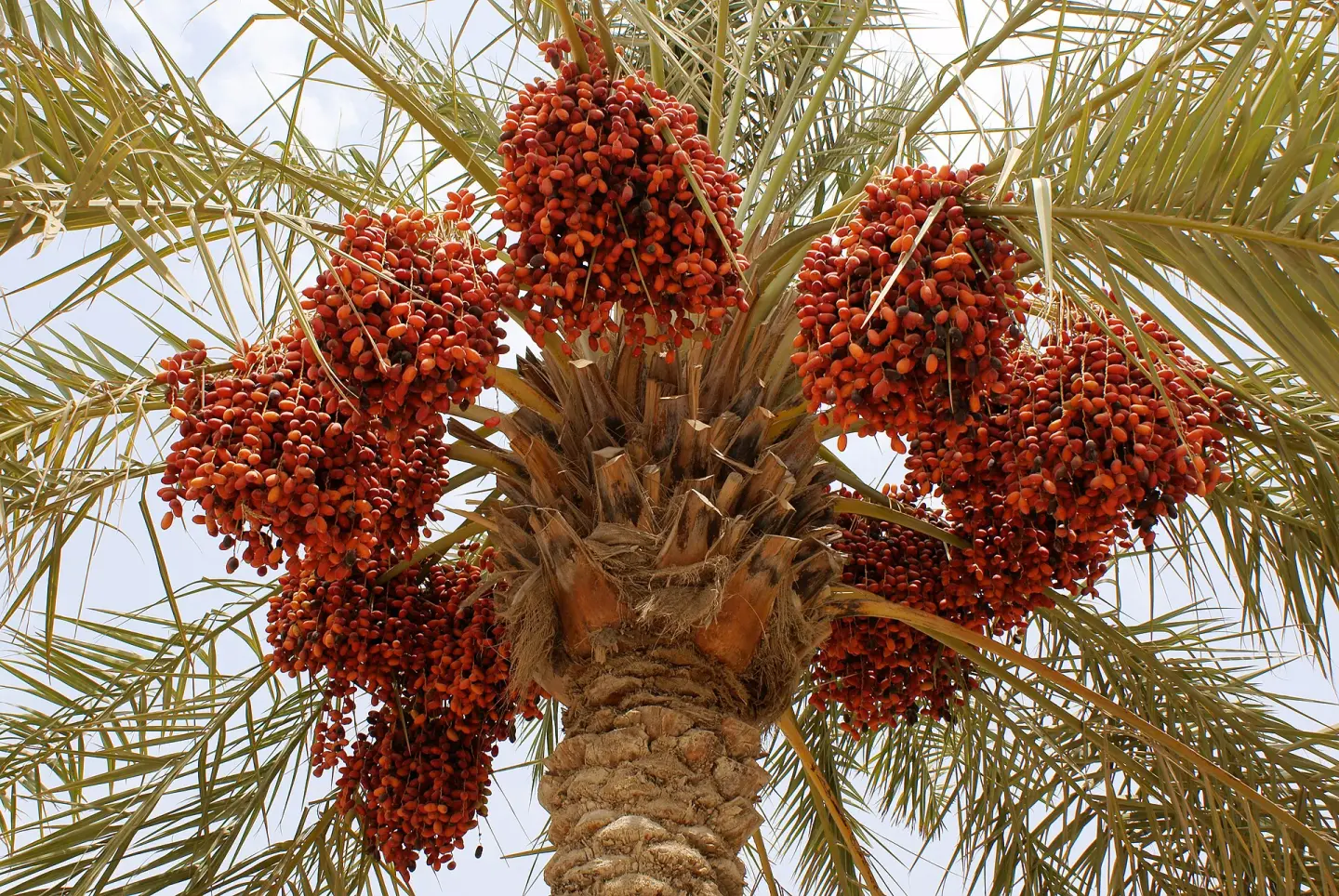
Photo: Nepenthes · CC BY-SA 3.0, via Wikimedia Commons
Essential Care Requirements
Light
Full sun
Watering
Moderate
Water deeply but infrequently; roots like moisture while the crown likes dry air. Reduce watering in winter.
Soil
Deep, sandy, well-drained soil; tolerates salt and alkalinity. pH 7.0–8.5.
Temperature and humidity
0–50 °C · Low humidity
Feeding
Feed with compost and a palm fertilizer twice a year.
Pruning and propagation
Propagate by offsets, seed
Remove dead fronds and old fruit stalks. Thin fruit bunches for bigger dates.
Dates are safe to eat. The leaf bases carry sharp spines.
Top Cultivation Tips
Plant offshoots of known female trees for fruit.
Hand-pollinate female flowers with male flower strands.
Cover bunches with net bags against birds.
Fruits poorly in humid, rainy climates.
Common problems
Red palm weevil
A large reddish weevil whose grubs tunnel inside the trunks and crowns of coconut, date and other palms, often killing them.
How to treat it →PestRhinoceros beetle
A large black beetle with a horn that bores into the crowns of palms, leaving V-shaped cuts in the opened fronds.
How to treat it →PestScale insects
Immobile, shell-covered insects that cling to stems and leaves, draining sap and weakening trees and houseplants.
How to treat it →