Elderberry
Sambucus nigra
Elder is a fast-growing shrub or small tree with flat heads of fragrant cream flowers, used for cordial, followed by clusters of dark berries used in syrups and jams after cooking. Purple-leaved forms are popular ornamentals.
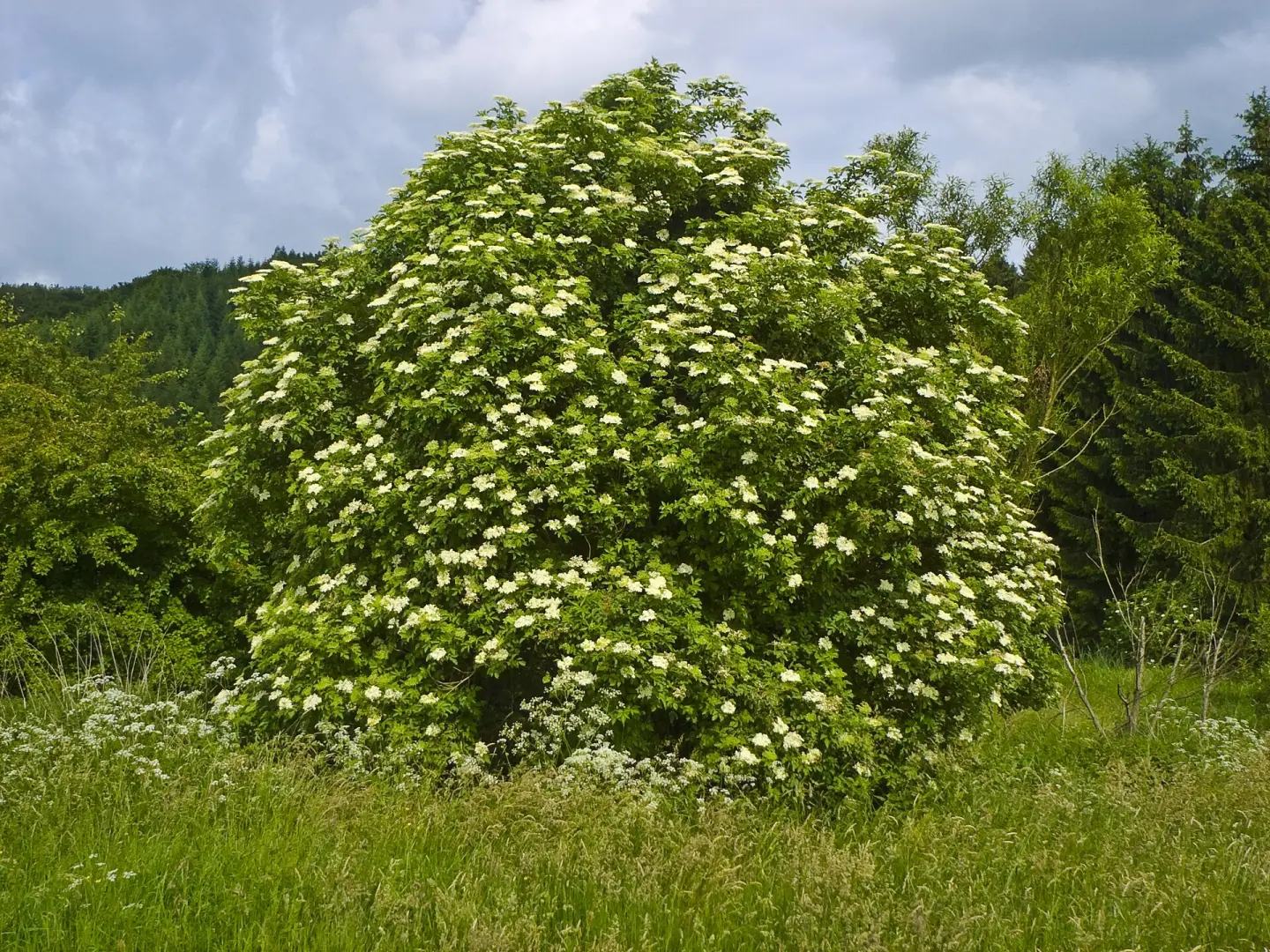
Photo: Willow · CC BY 2.5, via Wikimedia Commons
Essential Care Requirements
Light
Full sun, Partial sun
Watering
Moderate
Water in dry spells; elder likes moist soil.
Soil
Most moist, fertile soils; pH 5.5–7.5.
Temperature and humidity
-30–32 °C · Moderate humidity
Feeding
Mulch with compost in spring.
Pruning and propagation
Propagate by stem cuttings, seed
Cut out old stems in winter; it tolerates hard pruning.
Raw berries, leaves, stems and roots are toxic. Berries must be ripe and cooked before eating; remove all stems.
Top Cultivation Tips
Pick flower heads on a sunny morning for the best scent.
Use a fork to strip berries from stalks.
Hardwood cuttings root easily.
Great for wildlife hedges.
Common problems
Aphids
Small, soft-bodied insects that cluster on new shoots and buds, sucking sap and leaving sticky honeydew behind.
How to treat it →DiseasePowdery mildew
A fungal disease that coats leaves, buds and young shoots with a white, flour-like dust, weakening the plant and spoiling flowers and fruit.
How to treat it →