Elephant Foot Yam
Amorphophallus paeoniifolius
Elephant foot yam is a tropical tuber crop that sends up a single, umbrella-like leaf on a mottled stalk. Its large corm is cooked in curries and fries. It grows easily in a deep container or a shady bed.
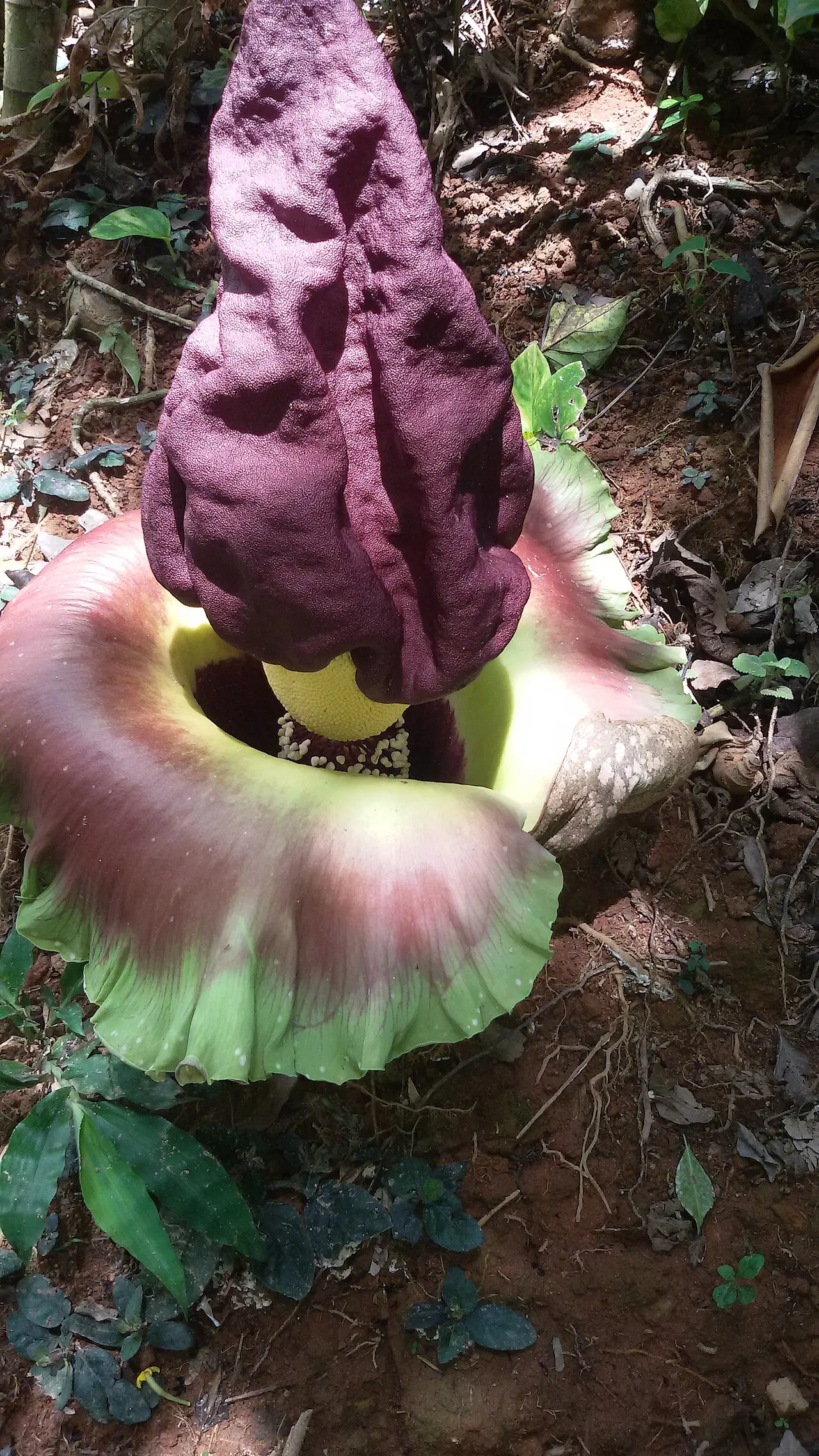
Photo: J A Forbes · CC BY-SA 4.0, via Wikimedia Commons
Essential Care Requirements
Light
Partial sun, Full sun
Watering
Moderate
Water regularly during growth. Stop watering when the leaf dies back and the corm becomes dormant.
Soil
Deep, loose, well-drained soil rich in organic matter; pH 5.5–7.0.
Temperature and humidity
18–38 °C · High humidity
Feeding
Mix plenty of compost or manure into the planting hole and top-dress after three months.
Pruning and propagation
Propagate by division
No pruning needed.
The corm contains calcium oxalate and must be peeled, boiled and cooked well, often with tamarind. Raw corms irritate the mouth and skin and are toxic to pets.
Top Cultivation Tips
Plant corm pieces of 250–500 g each with a bud.
Plant before the monsoon.
Wear gloves when cutting raw yam.
Keep a corm for replanting next season.
Common problems
Collar rot
A soil-borne fungal rot at the base of the stem, where it meets the soil, that causes plants to wilt and collapse.
How to treat it →DiseaseLeaf spot
Fungal or bacterial infections that cause brown, black or purple spots on leaves, often with a yellow halo, leading to early leaf drop.
How to treat it →DiseaseRoot rot
Roots decay in waterlogged soil, so the plant wilts and yellows even though the soil is wet.
How to treat it →