Fatsia
Fatsia japonica
Fatsia is a bold evergreen shrub with big, glossy, hand-shaped leaves and round heads of cream flowers in autumn. It thrives in shade, copes with city pollution and gives a tropical look in cool-climate gardens, containers and indoors.
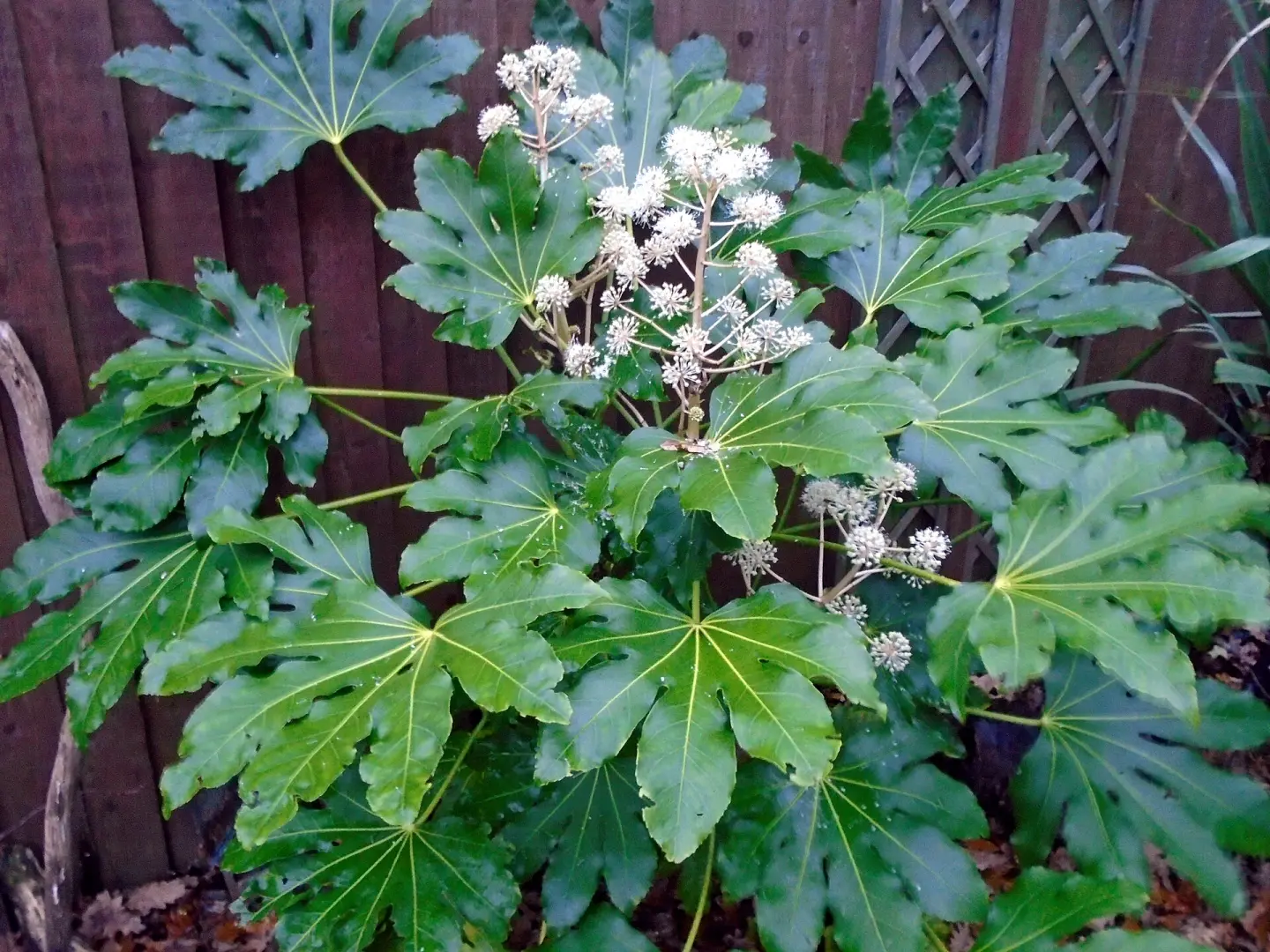
Photo: Orengi Harvey · CC BY-SA 4.0, via Wikimedia Commons
Essential Care Requirements
Light
Partial sun, Low light, Bright indirect light
Watering
Moderate
Water regularly while young and in dry spells. Mulch to keep roots moist.
Soil
Moist, well-drained, fertile soil; pH 5.5 to 7.5.
Temperature and humidity
-10–30 °C · Moderate humidity
Feeding
Feed in spring with a balanced fertilizer and mulch with compost.
Pruning and propagation
Propagate by stem cuttings, seed, air layering
Prune in spring to remove frost-damaged or leggy stems and to control size.
Mildly toxic if eaten. Sap may irritate skin.
Top Cultivation Tips
Plant in a sheltered, shaded spot out of winter wind.
Leaf margins brown in cold wind, so protect it.
Pruning back hard in spring renews leggy plants.
Make a good houseplant in a bright room.
Common problems
Aphids
Small, soft-bodied insects that cluster on new shoots and buds, sucking sap and leaving sticky honeydew behind.
How to treat it →DiseaseFrost damage
Injury caused when ice forms inside plant tissue, turning leaves, flowers and shoots black, limp or papery after a cold night.
How to treat it →DiseaseLeaf spot
Fungal or bacterial infections that cause brown, black or purple spots on leaves, often with a yellow halo, leading to early leaf drop.
How to treat it →PestScale insects
Immobile, shell-covered insects that cling to stems and leaves, draining sap and weakening trees and houseplants.
How to treat it →