Fava Bean
Vicia faba
Fava beans are hardy, upright legumes that grow through cool weather and produce fat pods of large, buttery beans. They are one of the earliest crops in temperate gardens and a winter crop in warmer regions.
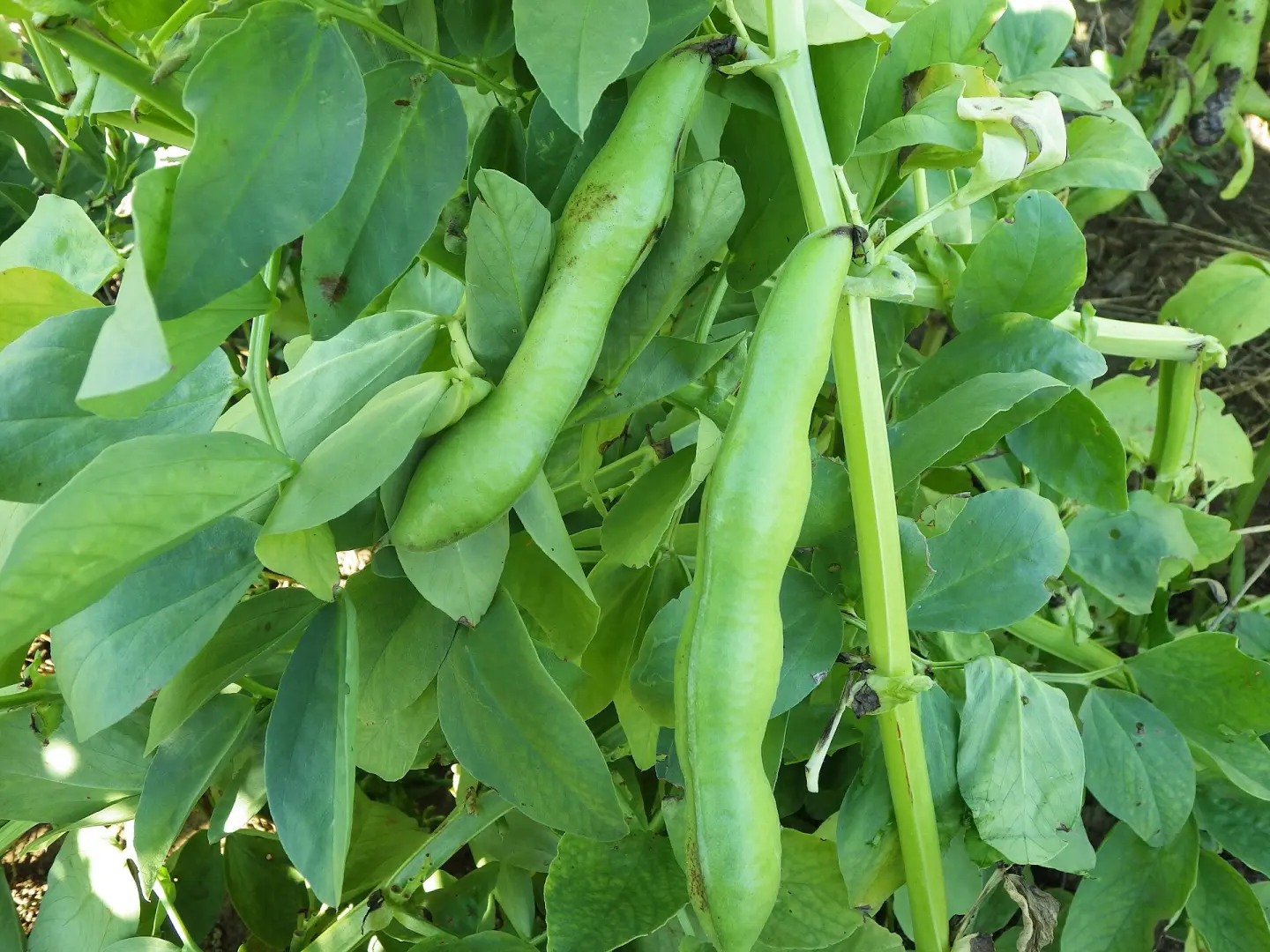
Photo: Schlaghecken Josef · CC BY-SA 4.0, via Wikimedia Commons
Essential Care Requirements
Light
Full sun
Watering
Moderate
Water regularly once flowering starts.
Soil
Well-drained, fertile soil; pH 6.0–7.5.
Temperature and humidity
-10–25 °C · Moderate humidity
Feeding
Little feeding needed; they fix their own nitrogen.
Pruning and propagation
Propagate by seed
Pinch out the tips once the first pods form to discourage black aphids; the tips are edible.
Cooked beans are safe for most people, but those with G6PD deficiency (favism) must avoid them.
Top Cultivation Tips
Sow in autumn or very early spring in cool climates.
Support tall varieties with string.
Pick pods young for tender beans.
Dig the roots in after harvest.
Common problems
Aphids
Small, soft-bodied insects that cluster on new shoots and buds, sucking sap and leaving sticky honeydew behind.
How to treat it →DiseaseLeaf spot
Fungal or bacterial infections that cause brown, black or purple spots on leaves, often with a yellow halo, leading to early leaf drop.
How to treat it →DiseaseRust
A fungal disease that forms orange, brown or yellow powdery pustules, mainly on leaf undersides.
How to treat it →