Jerusalem Artichoke
Helianthus tuberosus
Jerusalem artichoke is a tall perennial sunflower grown for its knobbly, nutty-tasting tubers, eaten raw, roasted or in soups. It is extremely easy and productive, but spreads unless every tuber is harvested.
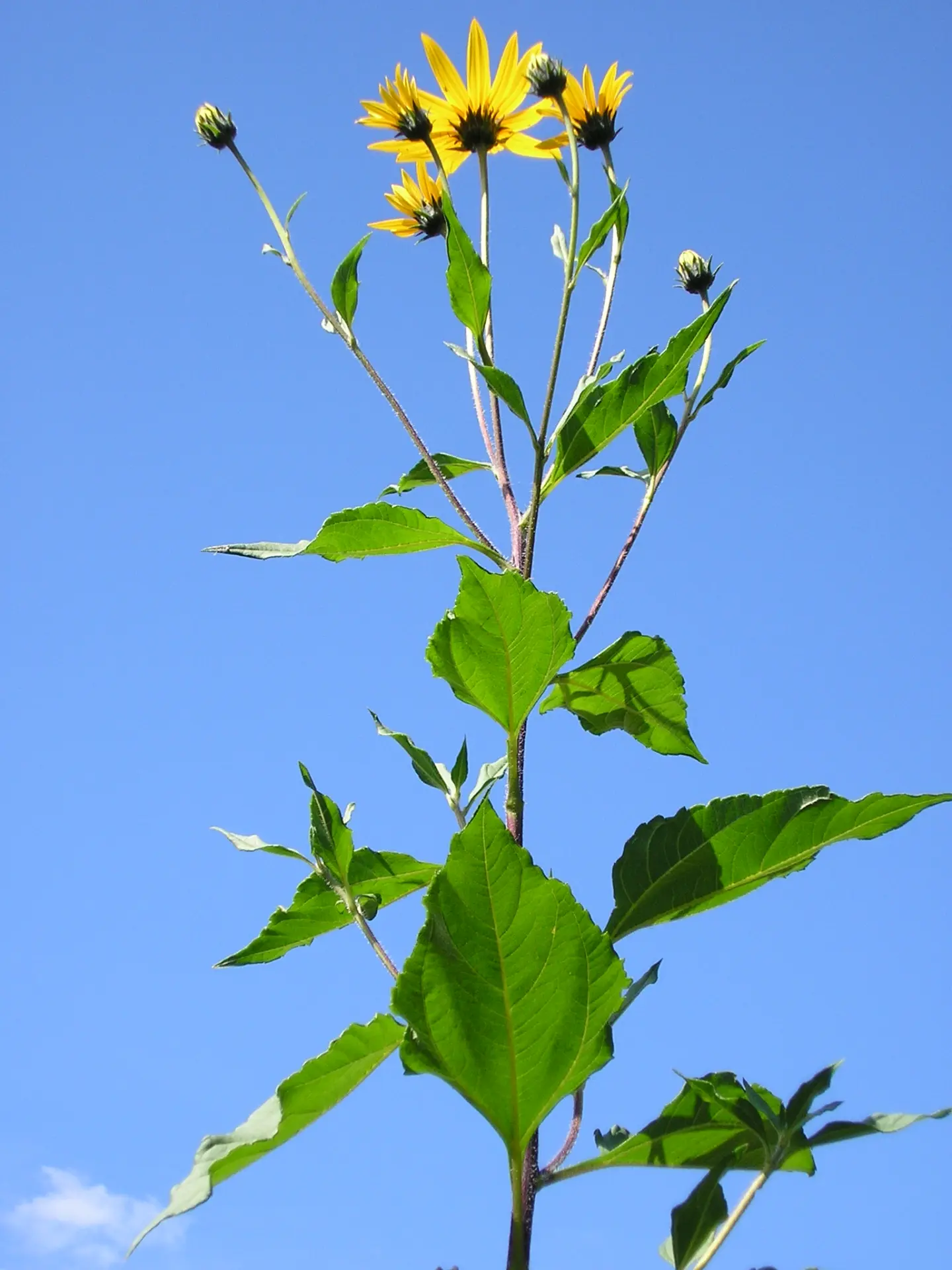
Photo: PJF (Wikimedia Commons) · CC BY-SA 3.0, via Wikimedia Commons
Essential Care Requirements
Light
Full sun
Watering
Moderate
Water in dry spells; established plants are drought tolerant.
Soil
Most well-drained soils; pH 5.8–7.0.
Temperature and humidity
-30–35 °C · Moderate humidity
Feeding
Little feeding needed.
Pruning and propagation
Propagate by division
Cut stems back to 1.5 m in windy sites; cut down when they die in autumn.
Safe to eat; the tubers contain inulin, which can cause wind in some people.
Top Cultivation Tips
Plant tubers in spring, 10 cm deep.
Use as a summer windbreak or screen.
Dig all tubers to control spread.
Store in the ground until needed.
Common problems
Powdery mildew
A fungal disease that coats leaves, buds and young shoots with a white, flour-like dust, weakening the plant and spoiling flowers and fruit.
How to treat it →PestSnails and slugs
Night-feeding molluscs that chew ragged holes in leaves, seedlings and soft stems, especially in wet weather.
How to treat it →