Orchid Tree
Bauhinia variegata
A medium-sized deciduous tree with distinctive twin-lobed leaves and a profusion of orchid-like pink, purple or white flowers in late winter and spring. The buds and flowers are cooked as a vegetable in parts of India.
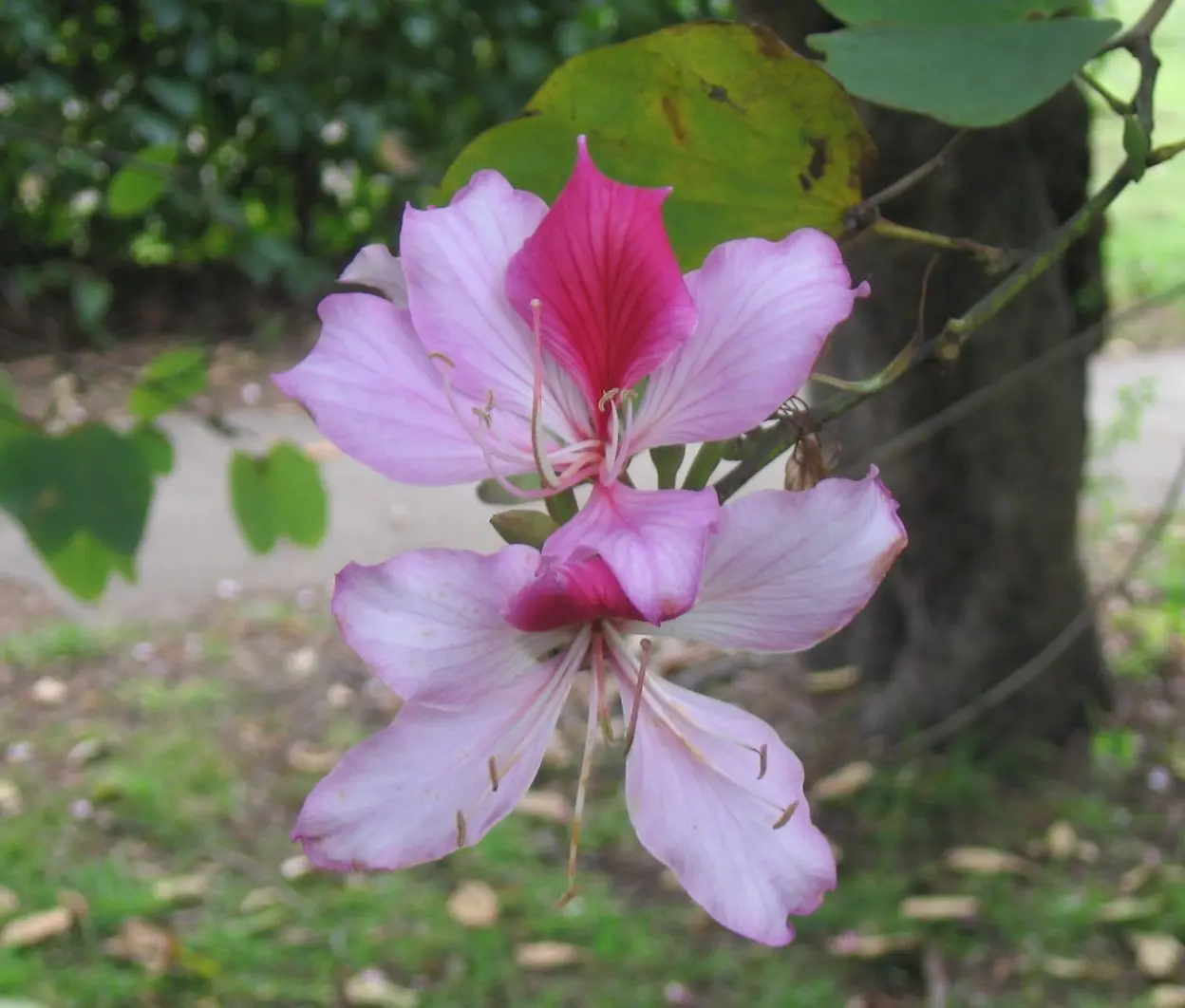
Photo: Peter1968 at English Wikipedia · CC BY 2.5, via Wikimedia Commons
Essential Care Requirements
Light
Full sun
Watering
Low
Water young trees weekly in dry weather. Established trees are drought-tolerant and need little extra water.
Soil
Well-drained soil of almost any type; pH 5.5 to 7.5.
Temperature and humidity
2–42 °C · Low humidity
Feeding
Apply compost around the drip line once a year at the start of the rains.
Pruning and propagation
Propagate by seed, stem cuttings
Prune lightly after flowering to shape the crown and remove dead wood. Avoid heavy cutting.
The flower buds are eaten as a vegetable. Other parts are used in traditional medicine, but should only be used under guidance.
Top Cultivation Tips
Scratch or soak the hard seeds overnight before sowing.
Plant it where its leaf fall in winter is not a nuisance.
It flowers best in full sun with a dry spell beforehand.
Seedlings usually flower in three to five years.
Common problems
Aphids
Small, soft-bodied insects that cluster on new shoots and buds, sucking sap and leaving sticky honeydew behind.
How to treat it →PestCaterpillars
The larvae of moths and butterflies, which chew holes in leaves, flowers and fruit and can strip a plant in days.
How to treat it →PestLeaf miners
Larvae of small flies and moths that tunnel inside leaves, leaving pale, winding trails.
How to treat it →PestScale insects
Immobile, shell-covered insects that cling to stems and leaves, draining sap and weakening trees and houseplants.
How to treat it →