Kidney Bean
Phaseolus vulgaris (dry bean types)
Kidney beans are dry-bean varieties of the common bean, grown until the pods dry and the large red seeds can be shelled. They are traditionally grown in the hills of north India in summer and in the plains in the cool season.
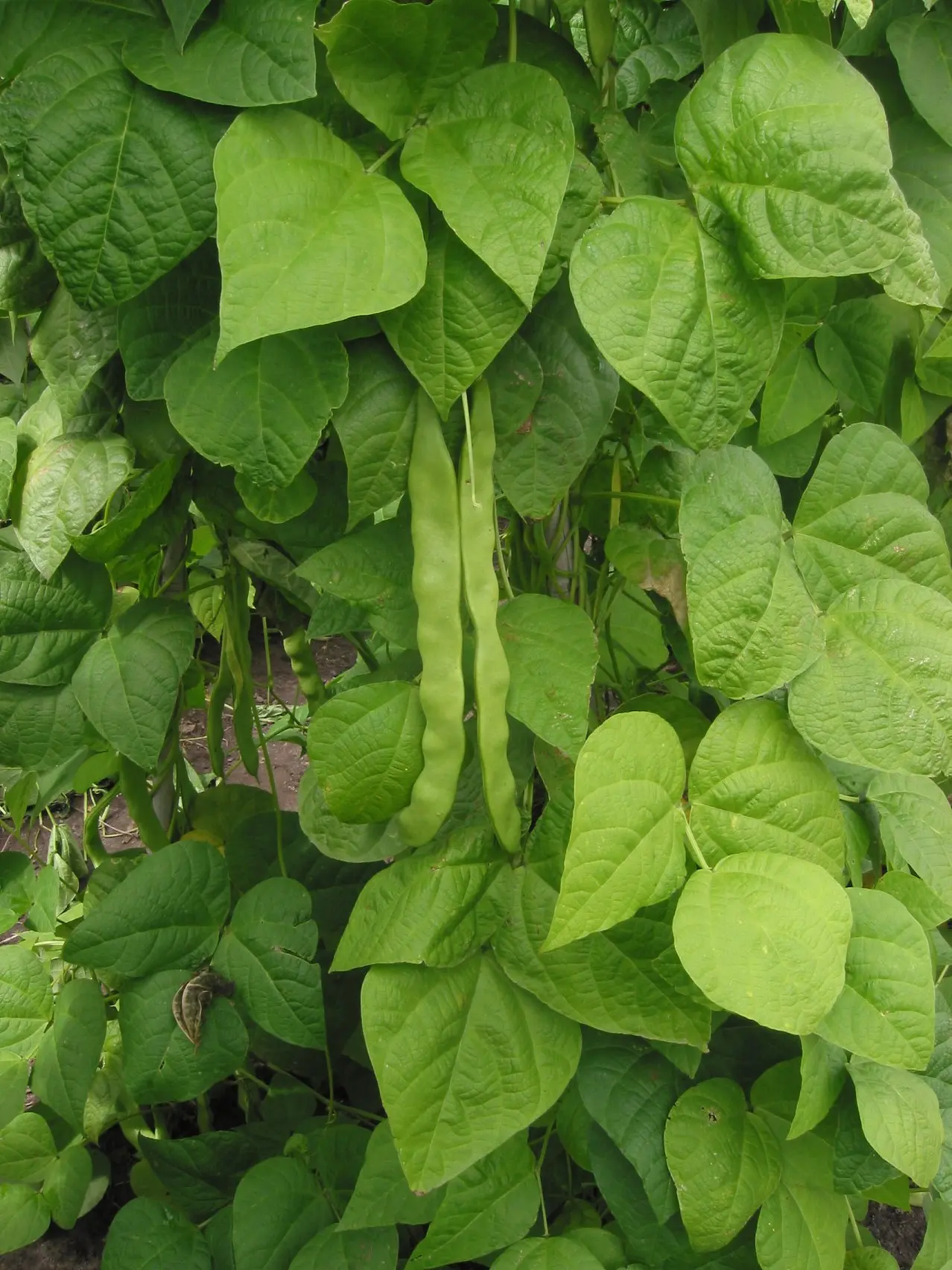
Photo: Rasbak · CC BY-SA 3.0, via Wikimedia Commons
Essential Care Requirements
Light
Full sun
Watering
Moderate
Water regularly until pods fill, then stop so the pods dry on the plant.
Soil
Well-drained loam with compost; pH 6.0–7.0.
Temperature and humidity
10–30 °C · Moderate humidity
Feeding
Light feeding with compost; rajma fixes less nitrogen than other beans, so a little extra feed helps.
Pruning and propagation
Propagate by seed
No pruning needed.
Raw or undercooked kidney beans contain a lectin that causes severe stomach upset. Soak and boil vigorously for at least 10 minutes before cooking.
Top Cultivation Tips
Pull whole plants when most pods rattle.
Dry shelled beans fully before storing.
Save the best seeds for sowing.
Avoid working among wet plants to limit disease.
Common problems
Aphids
Small, soft-bodied insects that cluster on new shoots and buds, sucking sap and leaving sticky honeydew behind.
How to treat it →DiseaseBacterial blight
A bacterial disease that causes water-soaked angular leaf spots and dark spots on pods and fruit in beans, pomegranate, geranium and other plants.
How to treat it →DiseaseBean common mosaic virus
A seed-borne and aphid-spread virus that mottles and puckers bean leaves, stunts plants and reduces pod yield.
How to treat it →PestEpilachna beetles
Ladybird-like leaf-eating beetles and their spiny yellow larvae that scrape leaves into lace on beans, aubergine, potato and cucurbits.
How to treat it →DiseaseRoot rot
Roots decay in waterlogged soil, so the plant wilts and yellows even though the soil is wet.
How to treat it →DiseaseRust
A fungal disease that forms orange, brown or yellow powdery pustules, mainly on leaf undersides.
How to treat it →DiseaseYellow vein mosaic
A virus spread by whiteflies that turns leaf veins bright yellow, especially on okra.
How to treat it →