Lavender
Lavandula angustifolia
Lavender is a fragrant, silver-leaved shrub with spikes of purple flowers used for scent, tea and baking. It thrives in hot, dry, sunny places with lean soil and struggles in heavy rain and humidity, so it is best grown in pots in the plains.
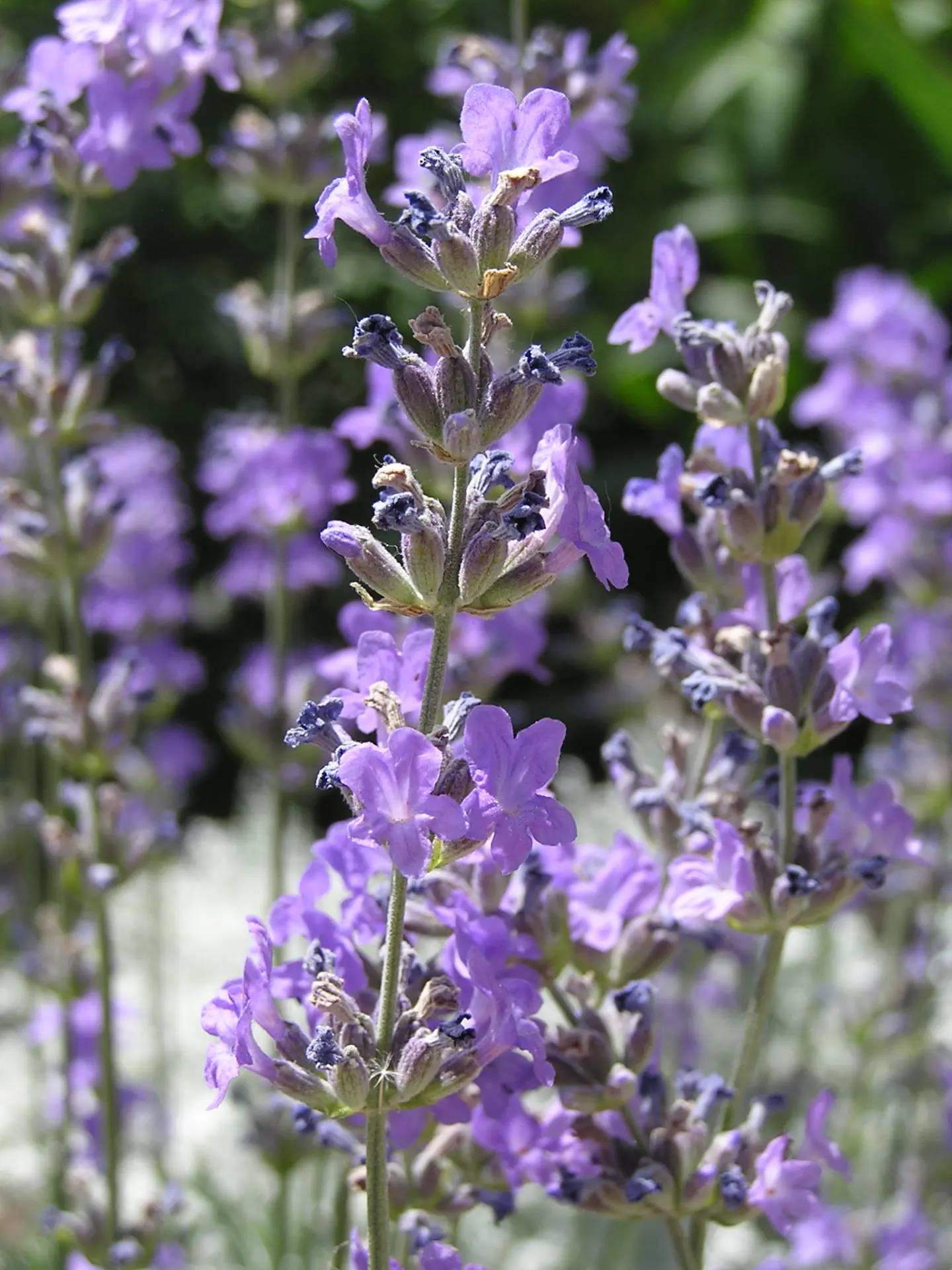
Photo: Andrey Butko · CC BY-SA 3.0, via Wikimedia Commons
Essential Care Requirements
Light
Full sun
Watering
Low
Water only when the soil is dry; overwatering and humid weather cause root rot.
Soil
Gritty, very well-drained, alkaline soil; pH 6.5–8.0.
Temperature and humidity
-5–32 °C · Low humidity
Feeding
Little or no feeding; rich soil reduces fragrance.
Pruning and propagation
Propagate by stem cuttings, seed
Trim after flowering to keep it compact, without cutting into old, bare wood.
Culinary lavender is safe in small amounts. The plant can upset the stomachs of cats and dogs, and concentrated lavender oil is harmful to pets.
Top Cultivation Tips
Use a terracotta pot with grit and keep it under cover in the monsoon.
Grows best in the hills and dry regions.
French and Spanish lavenders handle heat better.
Dry flower bunches upside down.
Common problems
Aphids
Small, soft-bodied insects that cluster on new shoots and buds, sucking sap and leaving sticky honeydew behind.
How to treat it →DiseaseLeaf spot
Fungal or bacterial infections that cause brown, black or purple spots on leaves, often with a yellow halo, leading to early leaf drop.
How to treat it →DiseaseRoot rot
Roots decay in waterlogged soil, so the plant wilts and yellows even though the soil is wet.
How to treat it →DiseaseWaterlogging
Soil so full of water that roots run short of oxygen, which causes yellow leaves, wilting and root rot.
How to treat it →