Muscadine Grape
Vitis rotundifolia
Muscadines are native grapes of the American South with large, thick-skinned, musky-sweet berries. Unlike European grapes, they thrive in heat and humidity and resist many diseases.
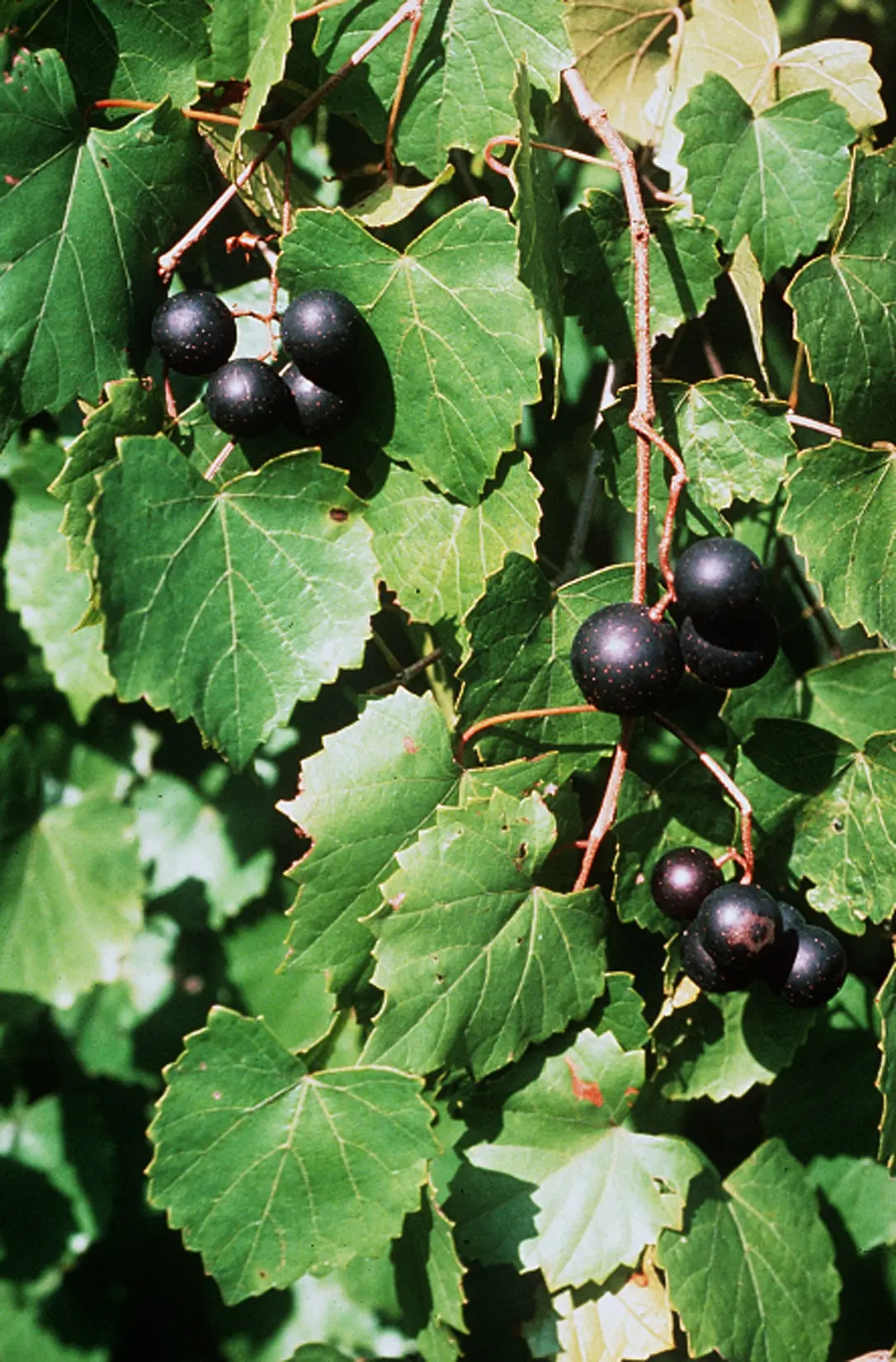
Photo: Eugene van der Pijll (Wikimedia Commons) · Public domain, via Wikimedia Commons
Essential Care Requirements
Light
Full sun
Watering
Moderate
Water young vines; established vines are drought tolerant.
Soil
Well-drained sandy loam; pH 5.5–6.5.
Temperature and humidity
-12–40 °C · High humidity
Feeding
Feed in early spring and early summer.
Pruning and propagation
Propagate by layering, stem cuttings
Train on a single wire; prune side shoots to short spurs in late winter.
Safe for people, but grapes can cause kidney failure in dogs and cats.
Top Cultivation Tips
Choose self-fertile varieties, or plant a pollinator.
Berries ripen individually; pick over several weeks.
Thrives where European grapes struggle.
Hardy in USDA zones 7–10.
Common problems
Anthracnose
A fungal disease that causes dark, sunken spots on leaves, flowers and fruit, especially mango, chilli and papaya.
How to treat it →DiseaseBlack rot of grapes
A fungal disease of grapes that causes brown leaf spots and turns berries into hard, shrivelled black mummies.
How to treat it →PestJapanese beetle
Metallic green and copper beetles that skeletonise leaves and devour flowers in summer, while their grubs feed on lawn roots.
How to treat it →DiseaseLeaf spot
Fungal or bacterial infections that cause brown, black or purple spots on leaves, often with a yellow halo, leading to early leaf drop.
How to treat it →