Olive
Olea europaea
The olive is a slow-growing evergreen tree with silvery-grey leaves and fruit used for oil and pickling. It needs a cool winter and dry summer to fruit, but makes a handsome, drought-tolerant pot plant anywhere sunny.
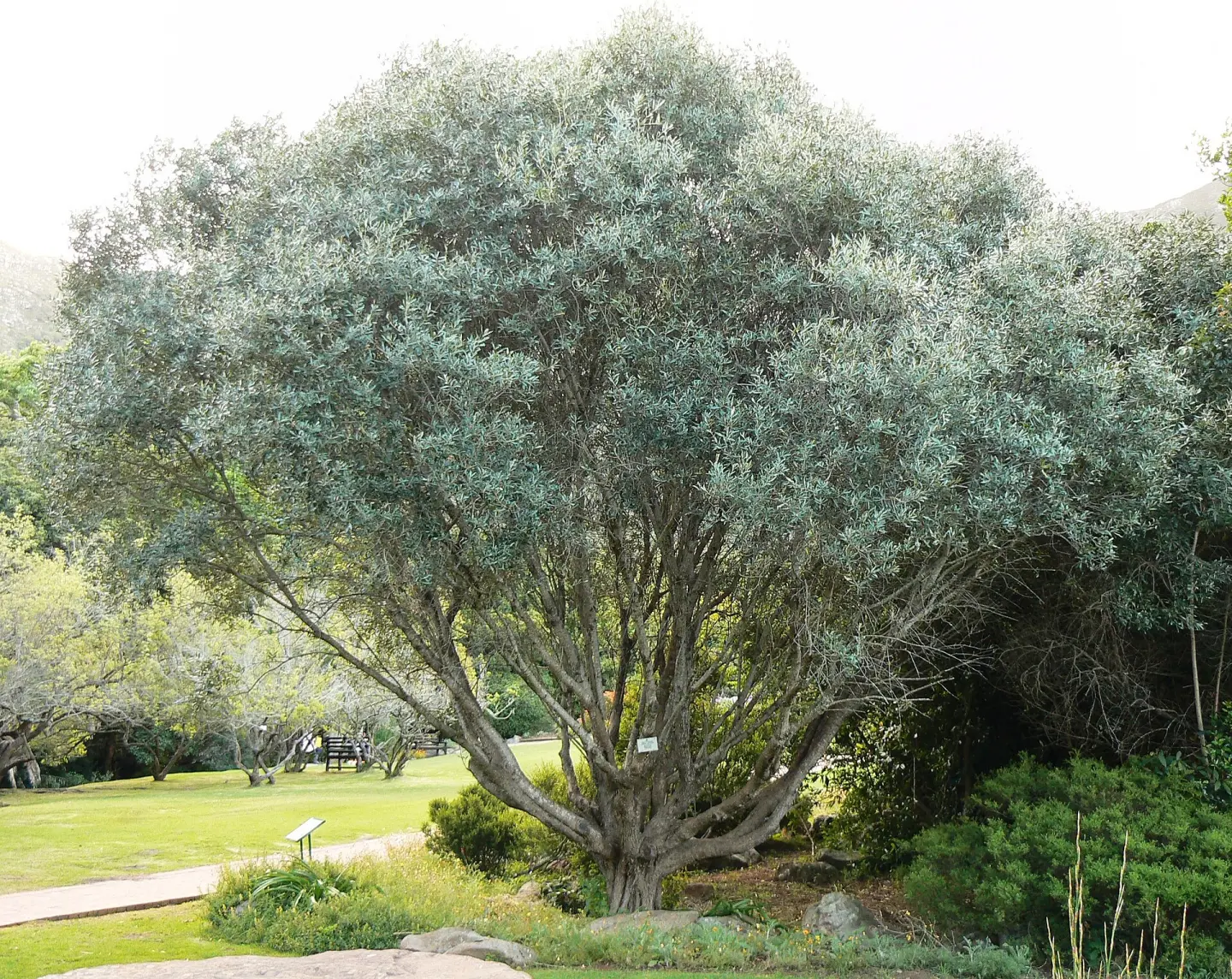
Photo: Abu Shawka · Public domain, via Wikimedia Commons
Essential Care Requirements
Light
Full sun
Watering
Low
Water when the top half of the soil is dry. Olives dislike wet roots.
Soil
Gritty, very well-drained soil; pH 6.5–8.0.
Temperature and humidity
-5–40 °C · Low humidity
Feeding
Feed lightly in spring with a balanced fertilizer.
Pruning and propagation
Propagate by stem cuttings, grafting
Prune lightly after harvest to keep an open shape.
Olive trees are not toxic. Raw olives are very bitter and must be cured before eating.
Top Cultivation Tips
Use a terracotta pot with gritty mix.
Needs cool winters to flower.
Cure olives in brine for weeks before eating.
A good bonsai subject.
Common problems
Root rot
Roots decay in waterlogged soil, so the plant wilts and yellows even though the soil is wet.
How to treat it →PestScale insects
Immobile, shell-covered insects that cling to stems and leaves, draining sap and weakening trees and houseplants.
How to treat it →DiseaseSooty mould
A black, powdery fungal coating that grows on the sticky honeydew left by sap-sucking insects, blocking light from leaves.
How to treat it →DiseaseVerticillium wilt
A soil-borne fungal disease that blocks the water-conducting tissue, causing leaves to yellow and wilt, often on one side of the plant.
How to treat it →DiseaseWaterlogging
Soil so full of water that roots run short of oxygen, which causes yellow leaves, wilting and root rot.
How to treat it →