Parsnip
Pastinaca sativa
Parsnips are long, cream-coloured roots with a sweet, nutty flavour that improves after frost. They need a long, cool season and deep, stone-free soil.
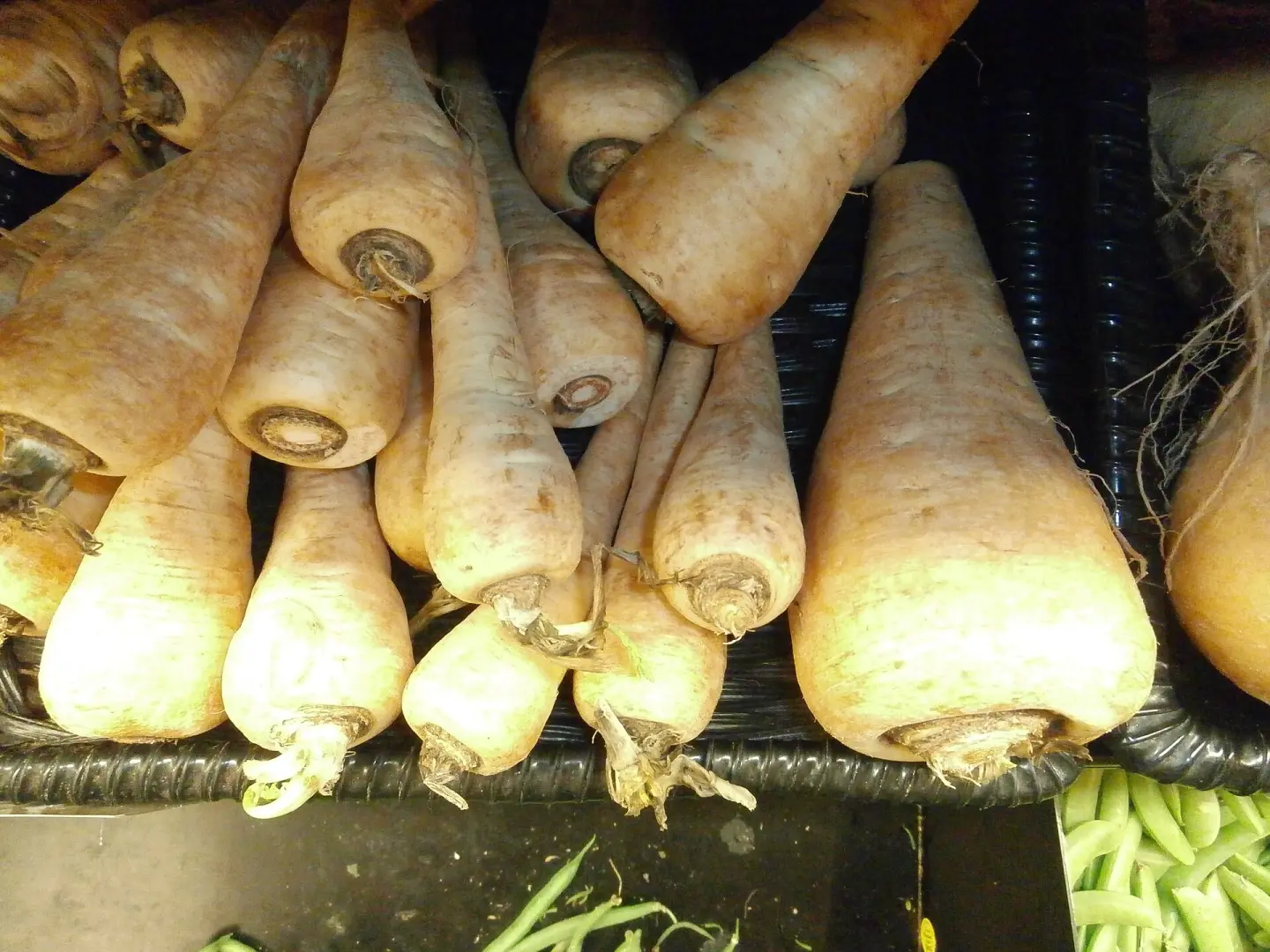
Photo: Jeffery Martin · CC0, via Wikimedia Commons
Essential Care Requirements
Light
Full sun
Watering
Moderate
Keep the soil moist during germination, which can take three weeks, and water in dry spells.
Soil
Deep, loose, stone-free soil; pH 6.0–7.0.
Temperature and humidity
-10–25 °C · Moderate humidity
Feeding
Little feeding needed; avoid fresh manure.
Pruning and propagation
Propagate by seed
No pruning needed. Thin seedlings to 10–15 cm apart.
The roots are safe to eat. Sap from the leaves can cause skin blisters in sunlight, so wear gloves when handling foliage.
Top Cultivation Tips
Always use fresh seed; it loses viability quickly.
Sow radishes alongside to mark the slow rows.
Leave roots in the ground over winter and dig as needed.
Grow in the cool season in warm climates.
Common problems
Aphids
Small, soft-bodied insects that cluster on new shoots and buds, sucking sap and leaving sticky honeydew behind.
How to treat it →PestCarrot fly
Small flies whose larvae tunnel into carrots, parsnips and celery roots, leaving rusty-brown tunnels.
How to treat it →DiseaseCommon scab
A soil bacterium that causes rough, corky, scabby patches on potatoes and other root crops. It spoils the look but not the eating quality.
How to treat it →PestLeaf miners
Larvae of small flies and moths that tunnel inside leaves, leaving pale, winding trails.
How to treat it →DiseaseLeaf spot
Fungal or bacterial infections that cause brown, black or purple spots on leaves, often with a yellow halo, leading to early leaf drop.
How to treat it →