Pointed Gourd
Trichosanthes dioica
Pointed gourd, or potol, is a perennial climbing vine popular in Bengal and Bihar, with small, striped, spindle-shaped fruit. Plants are either male or female, so a few male vines are needed among the females for fruit to set.
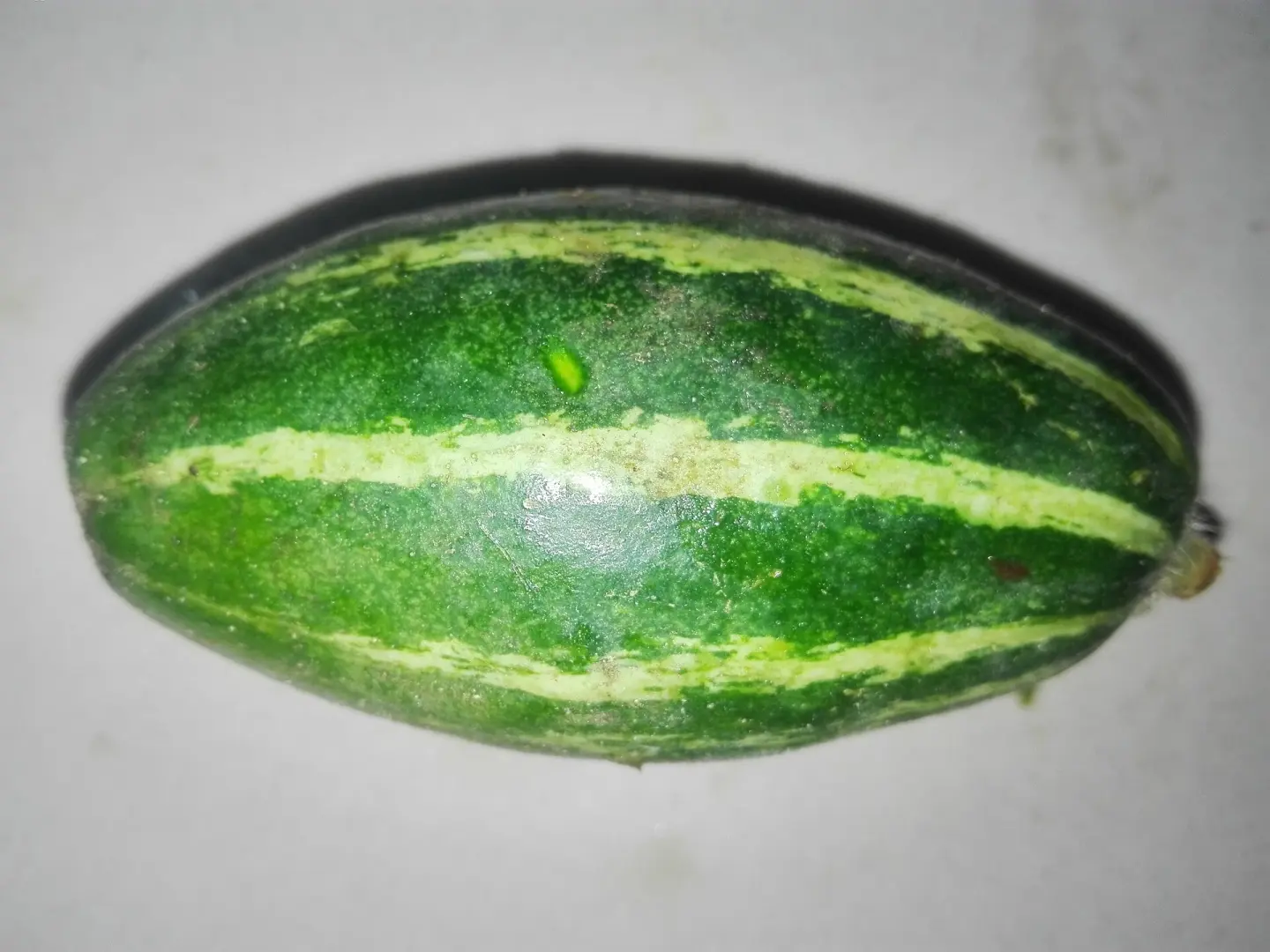
Photo: Ferdous · CC BY-SA 4.0, via Wikimedia Commons
Essential Care Requirements
Light
Full sun
Watering
Moderate
Water regularly in the growing season, keeping the soil moist but never waterlogged. Water less in winter when the vine rests.
Soil
Well-drained sandy loam rich in organic matter; pH 6.0–7.0. It does not tolerate waterlogging.
Temperature and humidity
15–38 °C · High humidity
Feeding
Feed monthly with compost or vermicompost and a balanced fertilizer during the fruiting season.
Pruning and propagation
Propagate by stem cuttings, division
Cut the vines back to 30 cm in winter, after which new shoots grow from the perennial roots.
The fruit is safe to eat when cooked.
Top Cultivation Tips
Plant about one male vine for every ten female vines.
Buy rooted cuttings from a known female plant.
Harvest fruit while the seeds inside are still soft.
Train the vine on a bower or low net.
Common problems
Downy mildew
A water-mould disease that causes yellow patches on top of leaves and grey-purple fuzz underneath, spreading fast in cool, wet weather.
How to treat it →PestFruit flies
Flies that lay eggs inside ripening fruit; the maggots rot the fruit from within.
How to treat it →PestRed pumpkin beetle
Bright orange beetles that chew holes in the leaves and flowers of gourds, pumpkins and cucumbers, especially young plants.
How to treat it →PestRoot-knot nematodes
Microscopic soil worms that invade roots and cause knobbly swellings, leaving plants stunted and prone to wilting.
How to treat it →