Pumpkin
Cucurbita moschata
Pumpkin is a sprawling, heat-loving vine with big leaves, golden flowers and long-keeping fruit. The young shoots, flowers and fruit are all eaten. It needs room to run, but can be trained over a terrace railing or a sturdy frame.
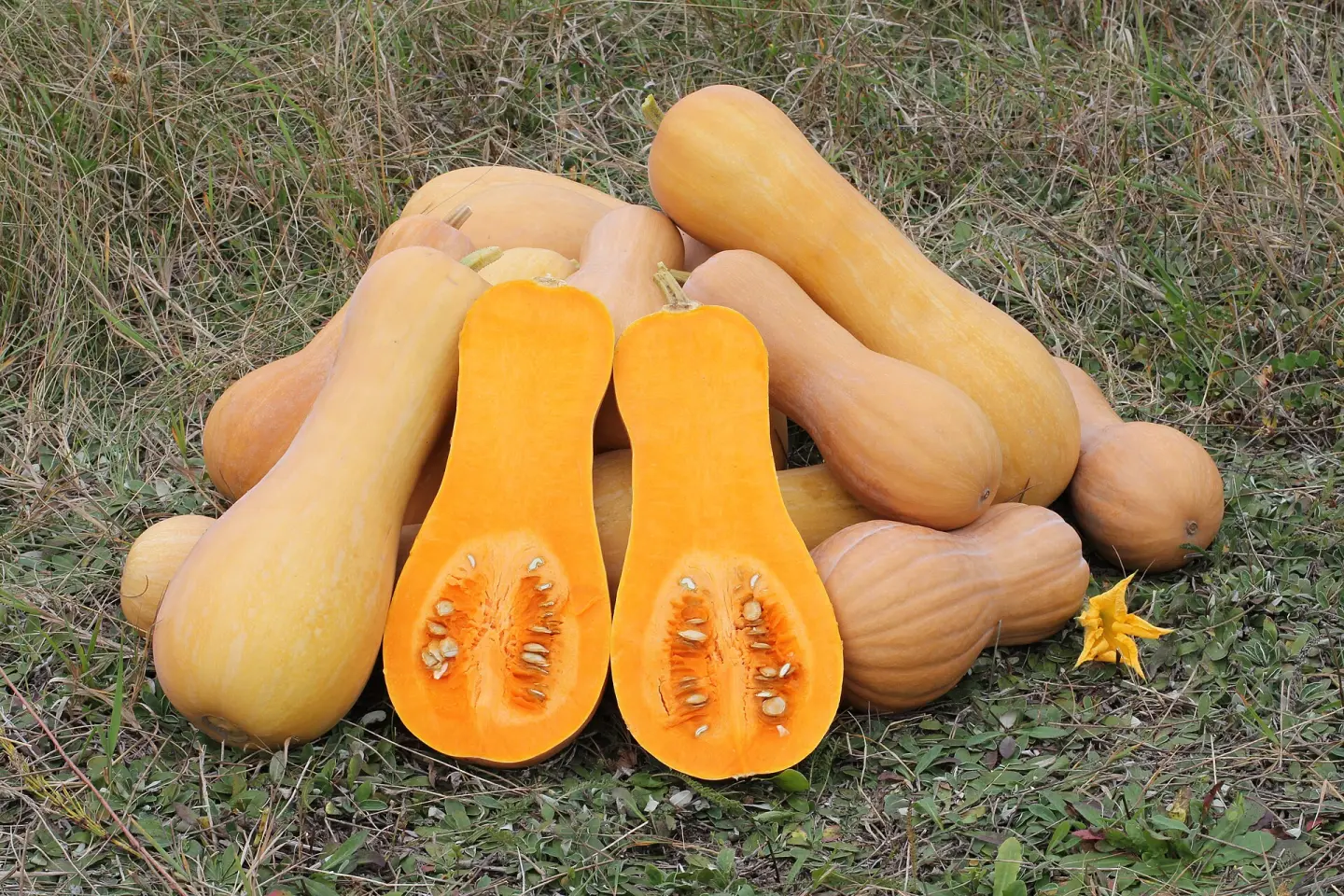
Photo: George Chernilevsky · Public domain, via Wikimedia Commons
Essential Care Requirements
Light
Full sun
Watering
Moderate
Water deeply at the base once or twice a week, more often in containers. Avoid wetting leaves late in the day.
Soil
Rich, well-drained soil with plenty of compost or rotted manure; pH 6.0–7.0. A container needs at least 50 litres.
Temperature and humidity
18–38 °C · Moderate humidity
Feeding
Feed every two weeks with compost tea or a balanced organic fertilizer, and switch to a potassium-rich feed once fruits set.
Pruning and propagation
Propagate by seed
Pinch the main vine after three or four fruits have set so the plant puts its energy into ripening them. Remove old, mildewed leaves.
Pumpkin flesh, seeds, flowers and young shoots are safe to eat. Discard any fruit that tastes strongly bitter.
Top Cultivation Tips
Hand-pollinate female flowers (with a tiny fruit behind them) in the morning.
Slip a tile or board under ripening fruit on the ground.
Leave a short stalk on harvested pumpkins so they store longer.
Cure fruit in the sun for a week before storing.
Common problems
Cucumber beetle
Yellow-and-black striped or spotted beetles that chew cucurbit seedlings and spread bacterial wilt, a major pest in North America.
How to treat it →DiseaseCucumber mosaic virus
An aphid-spread virus that causes mottled, puckered leaves and stunted plants in cucumbers, melons, squash and many other plants.
How to treat it →DiseaseCurly top virus
A leafhopper-spread virus that makes leaves roll, thicken and turn yellow, and stunts beet, tomato, pepper and bean plants.
How to treat it →DiseaseDowny mildew
A water-mould disease that causes yellow patches on top of leaves and grey-purple fuzz underneath, spreading fast in cool, wet weather.
How to treat it →PestFruit flies
Flies that lay eggs inside ripening fruit; the maggots rot the fruit from within.
How to treat it →DiseasePapaya ringspot virus
A viral disease spread by aphids that causes mottled, distorted papaya leaves and ring-shaped spots on the fruit.
How to treat it →DiseasePhytophthora blight
A water mould that causes sudden wilting, dark stem lesions and white-fuzzed rotting fruit in peppers and cucurbits during warm, wet weather.
How to treat it →DiseasePoor fruit set
Plants that flower well but drop their blossoms or produce few fruit, usually because of temperature, poor pollination or too much nitrogen.
How to treat it →DiseasePowdery mildew
A fungal disease that coats leaves, buds and young shoots with a white, flour-like dust, weakening the plant and spoiling flowers and fruit.
How to treat it →PestRaccoons
Nocturnal, clever mammals that raid sweetcorn, melons, grapes and fruit at night and dig lawns for grubs.
How to treat it →PestRats and mice
Rodents that gnaw stored produce, seeds and bulbs, raid compost heaps and chew through stems, irrigation pipes and wiring.
How to treat it →PestRed pumpkin beetle
Bright orange beetles that chew holes in the leaves and flowers of gourds, pumpkins and cucumbers, especially young plants.
How to treat it →PestSquash bug
Grey-brown shield-shaped bugs that suck sap from squash and pumpkin leaves, causing wilting and blackened leaves, common across the US.
How to treat it →PestSquash vine borer
Caterpillars of a day-flying moth that bore into the base of squash and pumpkin stems, causing sudden wilting.
How to treat it →DiseaseWilting plants
Leaves and stems that droop, caused by too little water, too much water, heat or root and stem diseases.
How to treat it →