Indian Snakeroot
Rauvolfia serpentina
A small, shade-loving evergreen shrub with shiny whorled leaves, clusters of pink and white flowers and red-black berries. Its roots have been used in traditional medicine for centuries and it is now a protected plant in many areas.
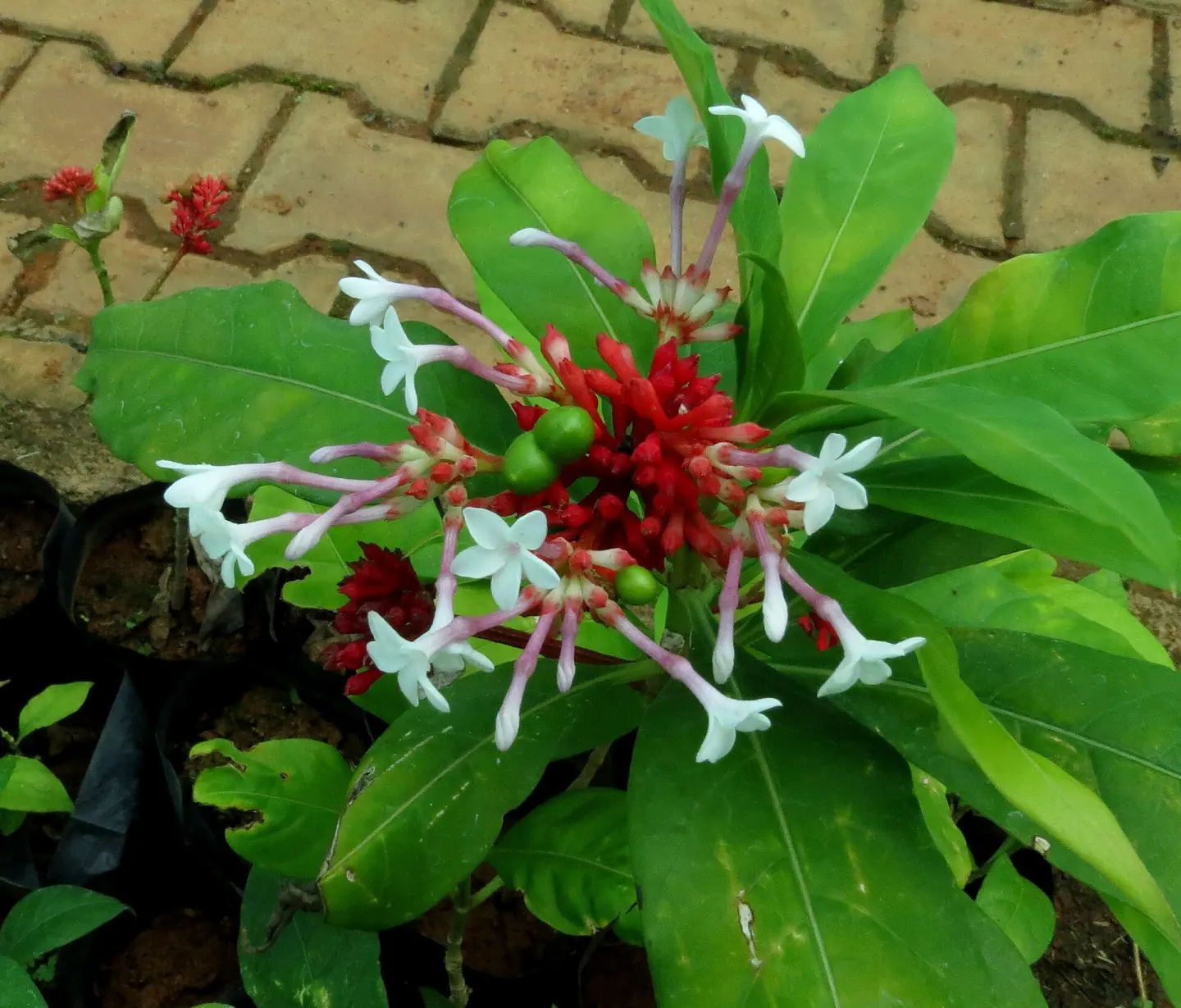
Photo: Forestowlet · CC0, via Wikimedia Commons
Essential Care Requirements
Light
Partial sun, Low light
Watering
Moderate
Keep the soil moist but not waterlogged. Water more often in the dry season.
Soil
Rich, moist, well-drained loam with plenty of leaf mould; pH 6.0 to 7.5.
Temperature and humidity
10–36 °C · High humidity
Feeding
Mulch with leaf mould or compost twice a year. Feed lightly during active growth.
Pruning and propagation
Propagate by seed, stem cuttings, division
Pinch the tips of young plants to encourage branching, and remove dead stems in spring.
All parts, especially the roots, contain strong alkaloids that are poisonous if eaten. Only use under professional medical guidance, and check local rules about collecting or trading it.
Top Cultivation Tips
Grow it in filtered light under trees or in a shaded corner.
Seed germination is slow and uneven, so sow many and be patient.
Keep the plant out of reach of children and pets.
Buy plants only from licensed nurseries, as wild plants are threatened.
Common problems
Aphids
Small, soft-bodied insects that cluster on new shoots and buds, sucking sap and leaving sticky honeydew behind.
How to treat it →DiseaseLeaf spot
Fungal or bacterial infections that cause brown, black or purple spots on leaves, often with a yellow halo, leading to early leaf drop.
How to treat it →PestMealybugs
White, cottony insects that hide in leaf joints and under leaves, weakening plants and spreading easily to neighbours.
How to treat it →DiseaseRoot rot
Roots decay in waterlogged soil, so the plant wilts and yellows even though the soil is wet.
How to treat it →