Soybean
Glycine max
Soybean is a bushy summer legume. In a home garden, it is best grown for edamame: young green pods boiled in salted water and the beans popped out to eat. It grows quickly in warm weather and improves soil nitrogen.
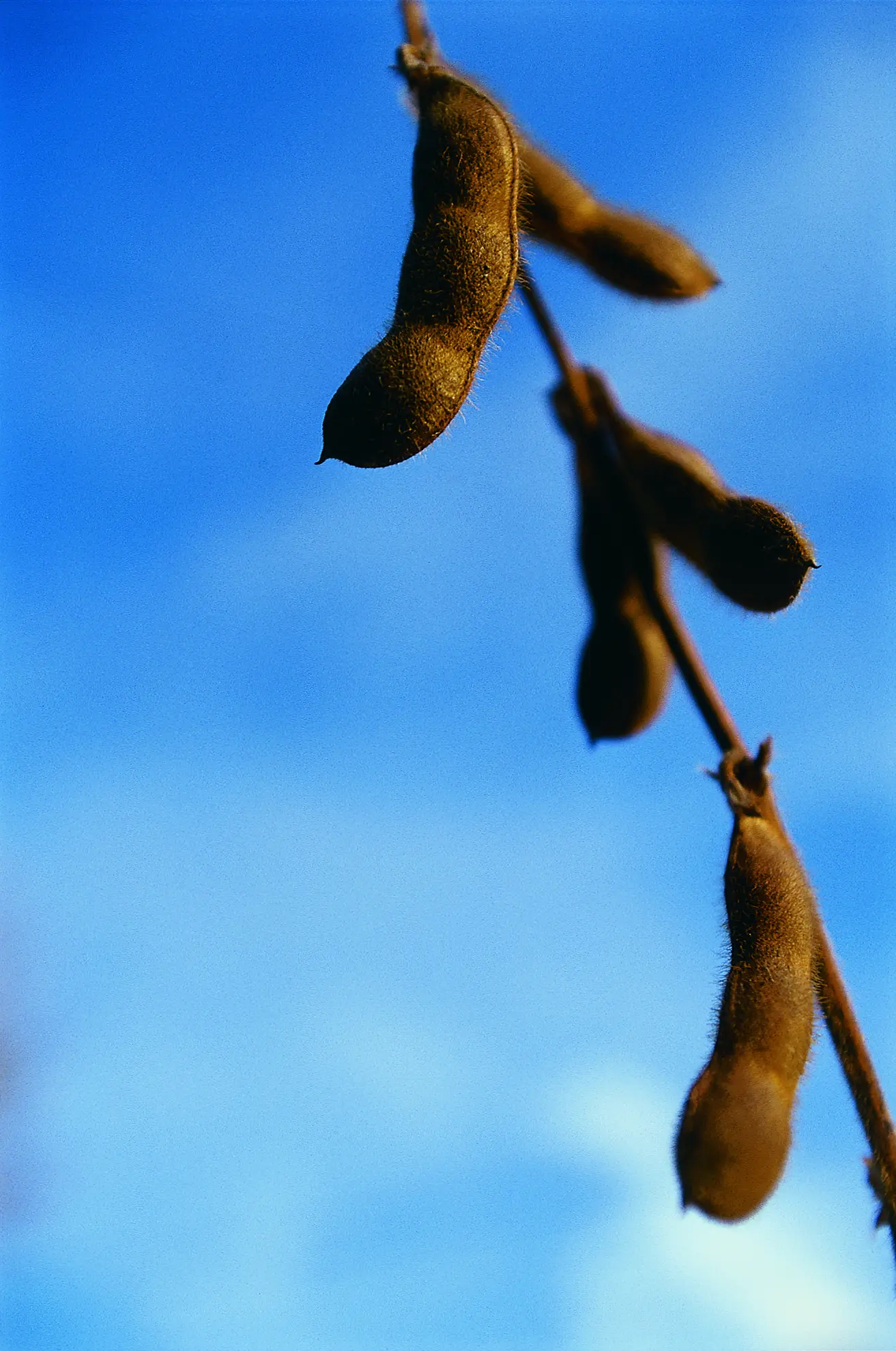
Photo: Lynn Betts, USDA NRCS · Public domain, via Wikimedia Commons
Essential Care Requirements
Light
Full sun
Watering
Moderate
Water regularly during flowering and pod filling.
Soil
Fertile, well-drained loam; pH 6.0–7.0.
Temperature and humidity
15–35 °C · Moderate humidity
Feeding
Light feeding with compost; nitrogen is fixed by the roots.
Pruning and propagation
Propagate by seed
No pruning needed.
Beans and pods must be cooked before eating. Soy is a common allergen.
Top Cultivation Tips
Sow with the monsoon in June–July.
Pick edamame when pods are plump and still green.
Harvest all pods at once; they mature together.
Grow in blocks for support.
Common problems
Bacterial blight
A bacterial disease that causes water-soaked angular leaf spots and dark spots on pods and fruit in beans, pomegranate, geranium and other plants.
How to treat it →DiseaseBean common mosaic virus
A seed-borne and aphid-spread virus that mottles and puckers bean leaves, stunts plants and reduces pod yield.
How to treat it →PestCaterpillars
The larvae of moths and butterflies, which chew holes in leaves, flowers and fruit and can strip a plant in days.
How to treat it →PestEpilachna beetles
Ladybird-like leaf-eating beetles and their spiny yellow larvae that scrape leaves into lace on beans, aubergine, potato and cucurbits.
How to treat it →DiseaseRust
A fungal disease that forms orange, brown or yellow powdery pustules, mainly on leaf undersides.
How to treat it →PestStink bugs
Shield-shaped bugs that pierce fruit and pods to feed, leaving pale, corky spots and distorted fruit, and give off a bad smell when disturbed.
How to treat it →DiseaseYellow vein mosaic
A virus spread by whiteflies that turns leaf veins bright yellow, especially on okra.
How to treat it →