Sponge Gourd
Luffa aegyptiaca
Sponge gourd is a fast summer vine with smooth, cylindrical fruit that is eaten young and, when fully mature and dried, becomes the natural loofah sponge. It is very productive on a trellis or terrace net.
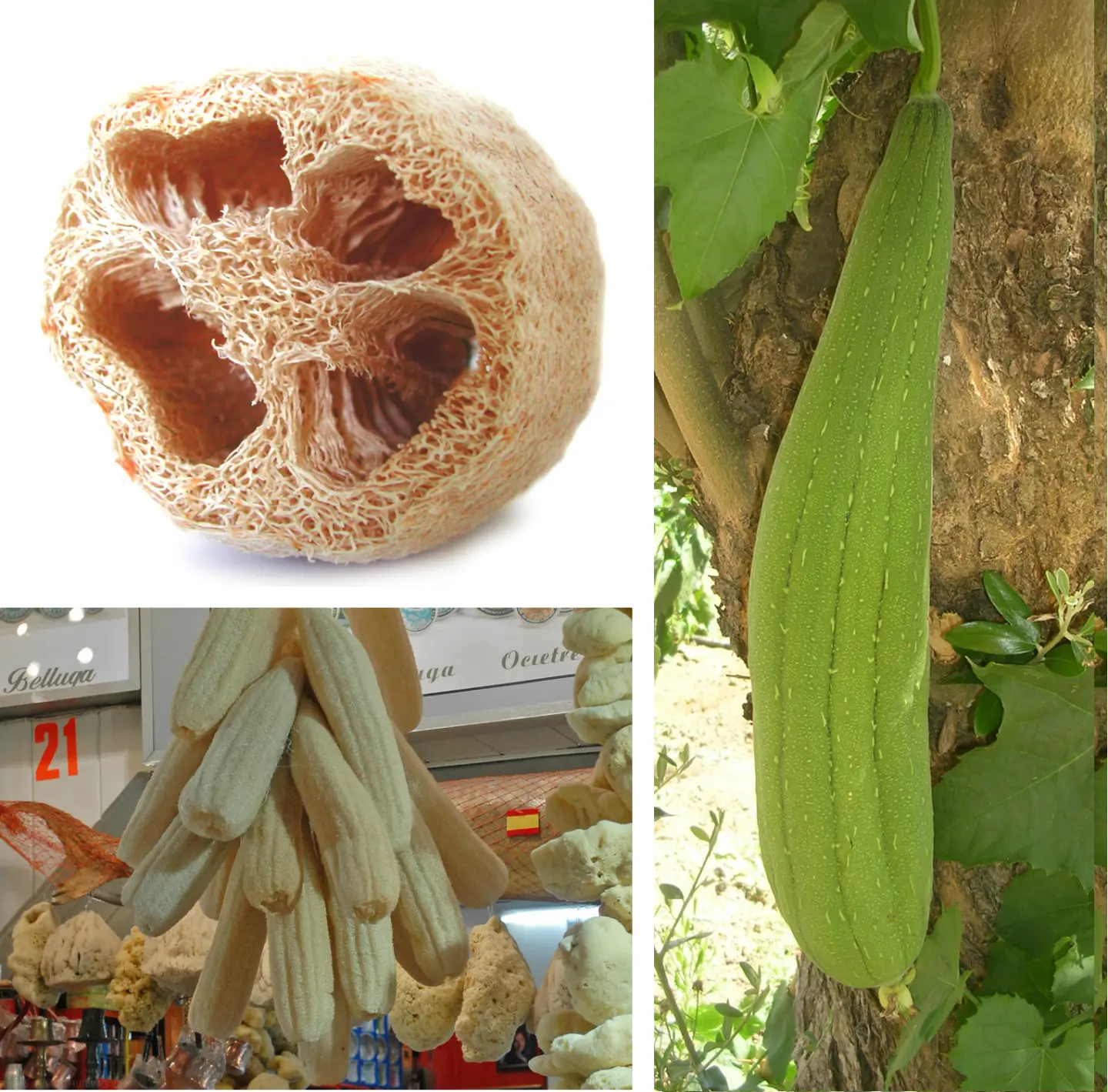
Photo: Tomas nevado, Jerry Crimson Mann and others · CC BY-SA 3.0, via Wikimedia Commons
Essential Care Requirements
Light
Full sun
Watering
Moderate
Water regularly to keep the soil moist, especially in hot weather and while fruit is forming.
Soil
Fertile, well-drained soil with compost; pH 6.0–7.0.
Temperature and humidity
20–38 °C · High humidity
Feeding
Feed every two weeks with compost tea or a balanced organic fertilizer.
Pruning and propagation
Propagate by seed
Pinch the main vine at the top of the support to encourage fruiting side shoots, and thin crowded growth.
Young fruit is safe when cooked. Bitter fruit should be discarded.
Top Cultivation Tips
Pick fruit for cooking at 15–20 cm while still soft.
For sponges, leave fruit on the vine until brown and light.
Shake out the seeds from dried fruit and peel the skin.
Give a strong support for the heavy vines.
Common problems
Downy mildew
A water-mould disease that causes yellow patches on top of leaves and grey-purple fuzz underneath, spreading fast in cool, wet weather.
How to treat it →PestFruit flies
Flies that lay eggs inside ripening fruit; the maggots rot the fruit from within.
How to treat it →DiseasePowdery mildew
A fungal disease that coats leaves, buds and young shoots with a white, flour-like dust, weakening the plant and spoiling flowers and fruit.
How to treat it →PestRed pumpkin beetle
Bright orange beetles that chew holes in the leaves and flowers of gourds, pumpkins and cucumbers, especially young plants.
How to treat it →