Sweet Cherry
Prunus avium
Sweet cherry trees produce white spring blossom and dark red or yellow fruit in early summer. They need cold winters and are grown in cool temperate regions and hill areas; dwarfing rootstocks keep them garden-sized.
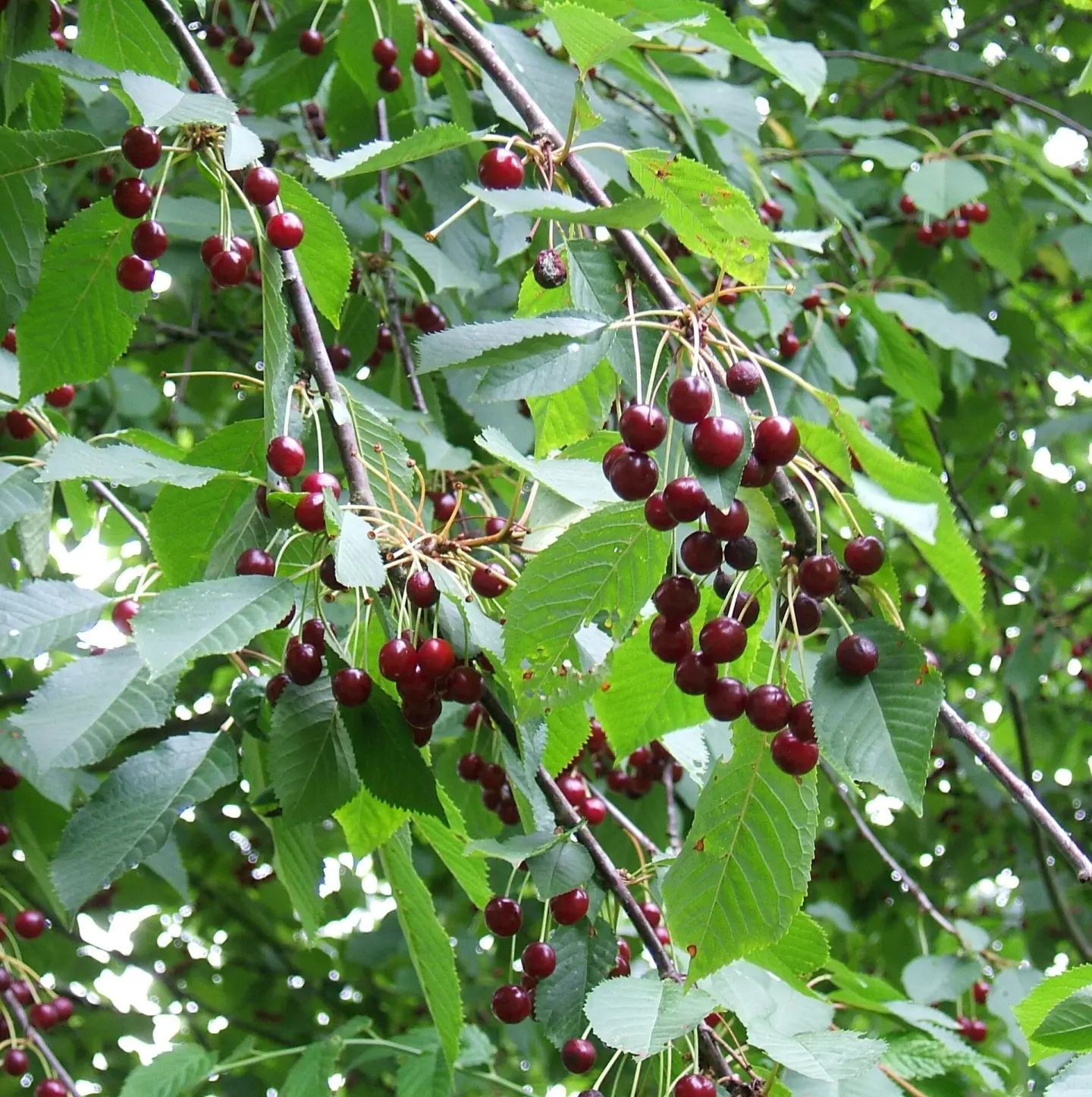
Photo: MPF · CC BY 2.5, via Wikimedia Commons
Essential Care Requirements
Light
Full sun
Watering
Moderate
Water regularly while fruit develops; sudden heavy watering near harvest causes splitting.
Soil
Deep, well-drained loam; pH 6.0–7.5.
Temperature and humidity
-25–32 °C · Moderate humidity
Feeding
Feed with a balanced fertilizer in late winter.
Pruning and propagation
Propagate by grafting
Prune in summer after harvest to reduce disease risk.
The fruit flesh is safe. Stones, leaves and stems contain compounds that release cyanide and are harmful to pets.
Top Cultivation Tips
Choose a self-fertile variety, or plant two.
Net trees against birds.
Needs 700+ chilling hours.
Pick with the stalk on.
Common problems
Aphids
Small, soft-bodied insects that cluster on new shoots and buds, sucking sap and leaving sticky honeydew behind.
How to treat it →PestBirds pecking fruit
Birds that peck at ripening soft fruit, taking bites or whole berries just as they are ready to pick.
How to treat it →DiseaseBrown rot
A fungal disease of stone and pome fruit that turns ripening fruit into soft brown rot covered in rings of grey-buff spore pustules.
How to treat it →DiseaseFruit cracking
Ripening fruit splits open, usually after a sudden heavy watering or rain following a dry spell.
How to treat it →PestFruit flies
Flies that lay eggs inside ripening fruit; the maggots rot the fruit from within.
How to treat it →DiseaseGummosis
A symptom in citrus, mango and stone fruit trees where sticky gum oozes from the bark, usually in response to disease, pests, wounds or stress.
How to treat it →DiseaseLeaf spot
Fungal or bacterial infections that cause brown, black or purple spots on leaves, often with a yellow halo, leading to early leaf drop.
How to treat it →DiseaseSilver leaf
A fungal disease of plums, cherries and other fruit trees that gives leaves a silvery sheen and kills branches from the inside.
How to treat it →DiseaseStem canker
Sunken, dead patches of bark on stems and branches caused by fungi or bacteria, which can girdle and kill the shoot above them.
How to treat it →PestTent caterpillars
Hairy social caterpillars that build white silk nests in the forks of branches in spring and strip the leaves from fruit and ornamental trees.
How to treat it →