Sweet Corn
Zea mays var. saccharata
Sweet corn is a tall summer grass grown for its tender, sugary cobs. It is wind-pollinated, so it must be planted in a block rather than a single row, but even a few large pots can give a harvest.
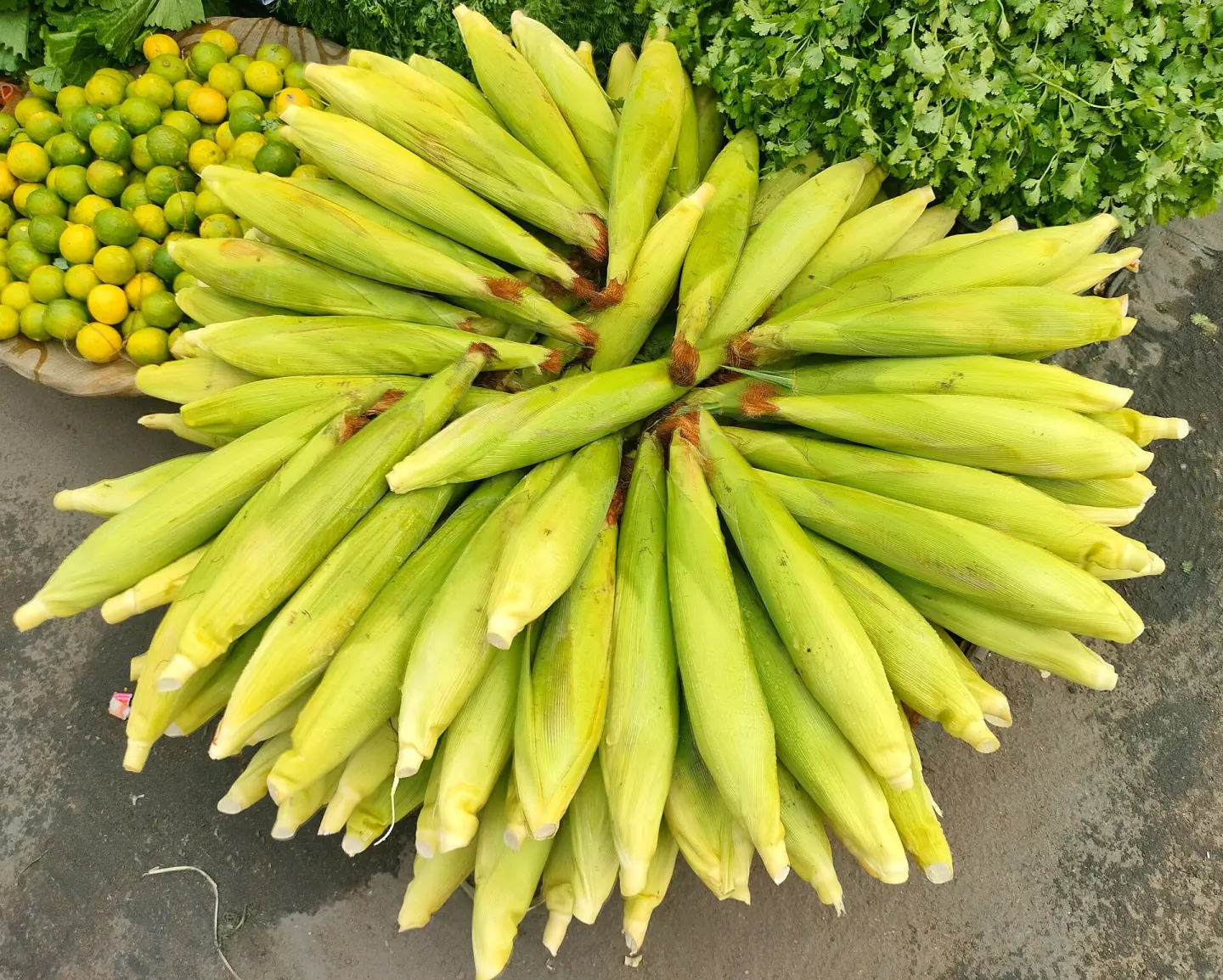
Photo: পাপৰি বৰা · CC BY-SA 4.0, via Wikimedia Commons
Essential Care Requirements
Light
Full sun
Watering
Moderate
Water regularly, especially when tassels and silks appear; dry soil then gives poorly filled cobs.
Soil
Rich, well-drained soil with compost; pH 6.0–7.0.
Temperature and humidity
15–35 °C · Moderate humidity
Feeding
Corn is a heavy feeder. Top-dress with compost and give a nitrogen-rich feed when plants are knee high.
Pruning and propagation
Propagate by seed
No pruning needed. Earth up the base to support the stems.
Corn kernels are safe. Corn cobs are a serious choking and blockage risk for dogs.
Top Cultivation Tips
Plant in a block of at least 3 × 3 plants for pollination.
Shake stems gently when tassels shed pollen.
Harvest when silks turn brown and kernels squirt milky juice.
Cook soon after picking; the sugar turns to starch quickly.
Common problems
Aphids
Small, soft-bodied insects that cluster on new shoots and buds, sucking sap and leaving sticky honeydew behind.
How to treat it →PestArmyworms
Striped caterpillars that feed in large groups at night and can strip a lawn, grass crop or vegetable bed in a matter of days.
How to treat it →PestCaterpillars
The larvae of moths and butterflies, which chew holes in leaves, flowers and fruit and can strip a plant in days.
How to treat it →PestCorn earworm
A caterpillar that feeds on the tips of corn cobs and bores into tomato, pepper, chickpea and pigeon pea fruit and pods.
How to treat it →PestEarwigs
Brown, pincer-tailed insects that hide by day and chew holes in petals, soft leaves and ripe fruit at night, but also eat aphids.
How to treat it →PestFall armyworm
A fast-spreading caterpillar that eats maize leaves and shoots, and also attacks many vegetables, leaving ragged holes and sawdust-like droppings.
How to treat it →DiseaseManganese deficiency
A trace-element shortage that causes yellow patches between green veins on young leaves, often on high-pH, peaty or heavily limed soils.
How to treat it →DiseasePhosphorus deficiency
Slow growth with dull, dark green leaves that develop purple or reddish tints, and poor rooting and flowering.
How to treat it →PestRaccoons
Nocturnal, clever mammals that raid sweetcorn, melons, grapes and fruit at night and dig lawns for grubs.
How to treat it →PestRats and mice
Rodents that gnaw stored produce, seeds and bulbs, raid compost heaps and chew through stems, irrigation pipes and wiring.
How to treat it →DiseaseRust
A fungal disease that forms orange, brown or yellow powdery pustules, mainly on leaf undersides.
How to treat it →PestSquirrels
Bushy-tailed rodents that dig up bulbs and seeds, strip bark, and eat fruit, nuts and sweetcorn.
How to treat it →PestStem borers
Caterpillars and grubs that tunnel inside stems and shoots, causing wilting, dead growing tips and broken stems.
How to treat it →PestStink bugs
Shield-shaped bugs that pierce fruit and pods to feed, leaving pale, corky spots and distorted fruit, and give off a bad smell when disturbed.
How to treat it →DiseaseSulfur deficiency
A nutrient shortage that makes whole plants, especially the youngest leaves, pale yellow-green, and is often mistaken for nitrogen deficiency.
How to treat it →PestWireworms
Slender, hard, yellow-brown grubs that tunnel into potatoes, carrots and seedling roots in soil that was recently grass.
How to treat it →DiseaseZinc deficiency
A trace-element shortage that causes small, narrow, yellowing leaves bunched on short shoots, most often on alkaline or sandy soils.
How to treat it →