Tamarind
Tamarindus indica
Tamarind is a large, long-lived evergreen tree with feathery leaves and brown pods filled with sweet-sour pulp, an essential ingredient in Indian cooking. It is extremely drought tolerant and makes a fine shade tree, and it is also a popular bonsai subject.
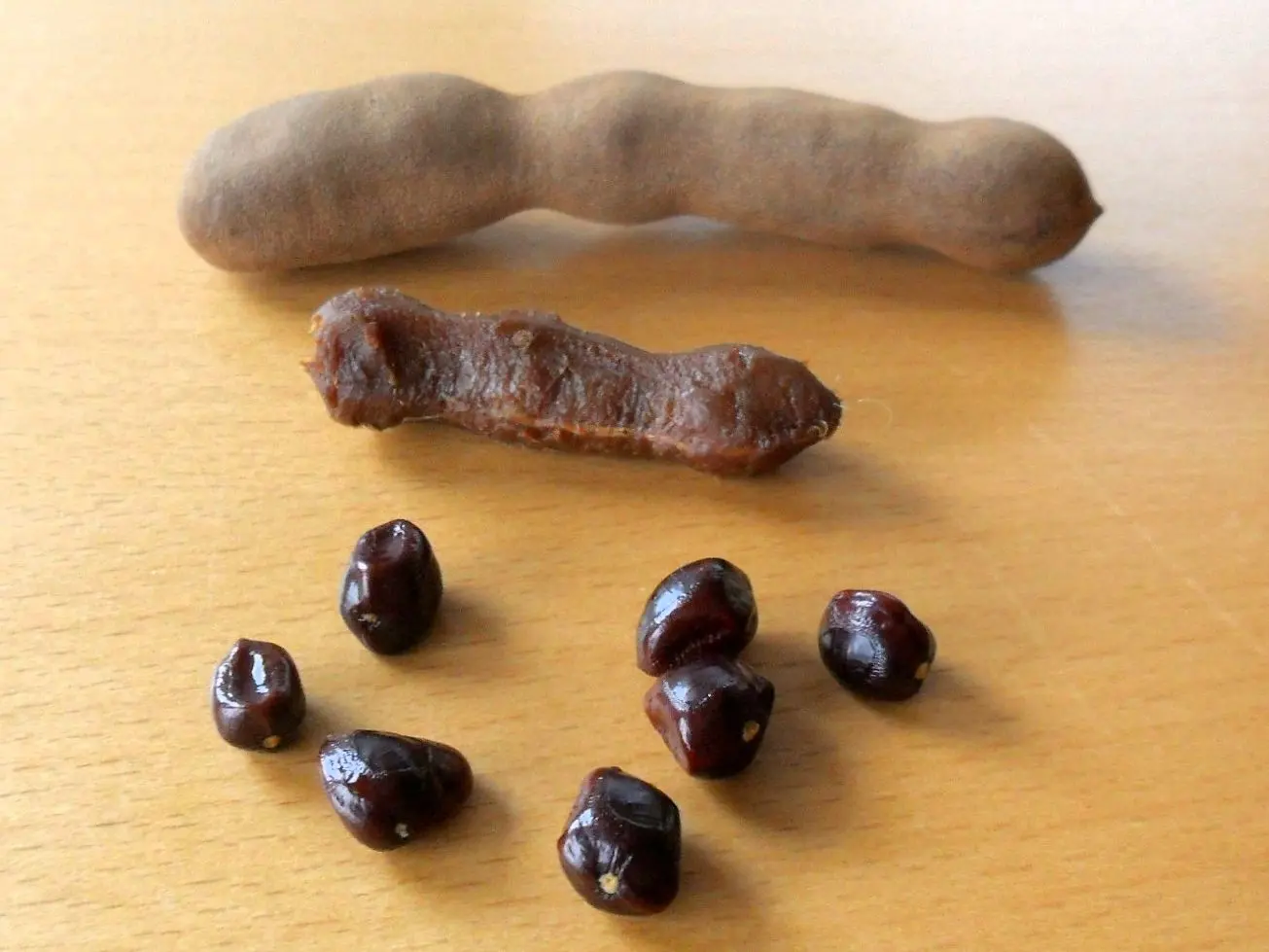
Photo: Jungle Rebel · CC BY-SA 3.0, via Wikimedia Commons
Essential Care Requirements
Light
Full sun
Watering
Low
Water young trees weekly in the dry season. Mature trees are very drought tolerant.
Soil
Deep, well-drained soil of almost any type; pH 5.5–8.0.
Temperature and humidity
5–47 °C · Low humidity
Feeding
Light feeding with compost once a year.
Pruning and propagation
Propagate by seed, grafting, air layering
Shape young trees to a single trunk and strong branches. Little pruning is needed later.
The pulp is safe for people. Like grapes, tamarind may cause kidney problems in dogs and should not be fed to them.
Top Cultivation Tips
Seedlings fruit in 8–10 years; grafted trees in 4–5.
Plant well away from buildings.
Harvest pods when brittle and brown.
Young leaves and flowers are also eaten.
Common problems
Fruit flies
Flies that lay eggs inside ripening fruit; the maggots rot the fruit from within.
How to treat it →PestMealybugs
White, cottony insects that hide in leaf joints and under leaves, weakening plants and spreading easily to neighbours.
How to treat it →PestScale insects
Immobile, shell-covered insects that cling to stems and leaves, draining sap and weakening trees and houseplants.
How to treat it →