Tayberry
Rubus fruticosus x idaeus
The tayberry is a hybrid of blackberry and raspberry, producing large, deep red-purple, sweet and aromatic berries in midsummer. It needs a sunny, sheltered spot and a sturdy support, and it has thorny but easily trained canes.
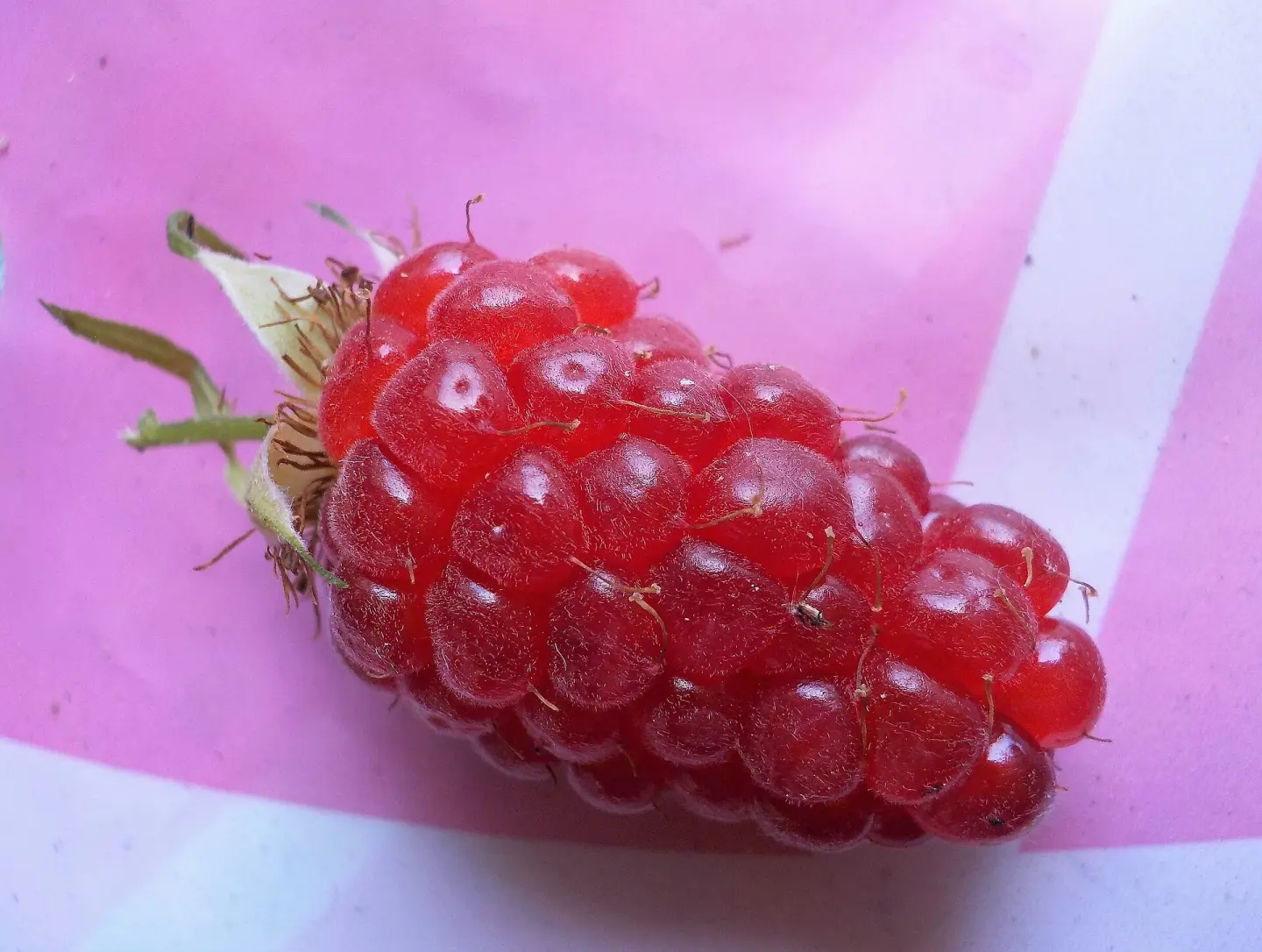
Photo: Albarubescens · CC BY-SA 4.0, via Wikimedia Commons
Essential Care Requirements
Light
Full sun, Partial sun
Watering
Moderate
Water regularly in dry weather, particularly when fruit is forming.
Soil
Fertile, well-drained soil with plenty of organic matter; pH 6.0 to 7.0.
Temperature and humidity
-20–30 °C · Moderate humidity
Feeding
Feed with a balanced fertilizer in spring and mulch with compost.
Pruning and propagation
Propagate by layering
After fruiting, cut the fruited canes to the ground and tie in the new canes for next year.
Non-toxic. Thorns can scratch.
Top Cultivation Tips
Tie canes onto horizontal wires with a fan or rope pattern.
Tip layer the cane ends in summer to produce new plants.
Pick berries when fully dark and soft.
Protect blossom from late frost.
Common problems
Aphids
Small, soft-bodied insects that cluster on new shoots and buds, sucking sap and leaving sticky honeydew behind.
How to treat it →DiseaseGrey mould
A fungal rot that covers flowers, fruit and soft stems with fuzzy grey mould in cool, damp conditions.
How to treat it →PestRaspberry beetle
Small beetle whose creamy white grubs feed inside raspberries, blackberries and loganberries, leaving fruit shrivelled and unusable.
How to treat it →DiseaseRaspberry cane blight
A fungal disease that kills raspberry canes, which become brittle and break at ground level in summer.
How to treat it →