Whitecurrant
Ribes rubrum
Whitecurrants are a sweeter, milder cousin of the redcurrant, bearing translucent, pearly strings of berries in midsummer. They are easy to grow in sun or partial shade and are among the best fruit for small gardens, cordons and fans.
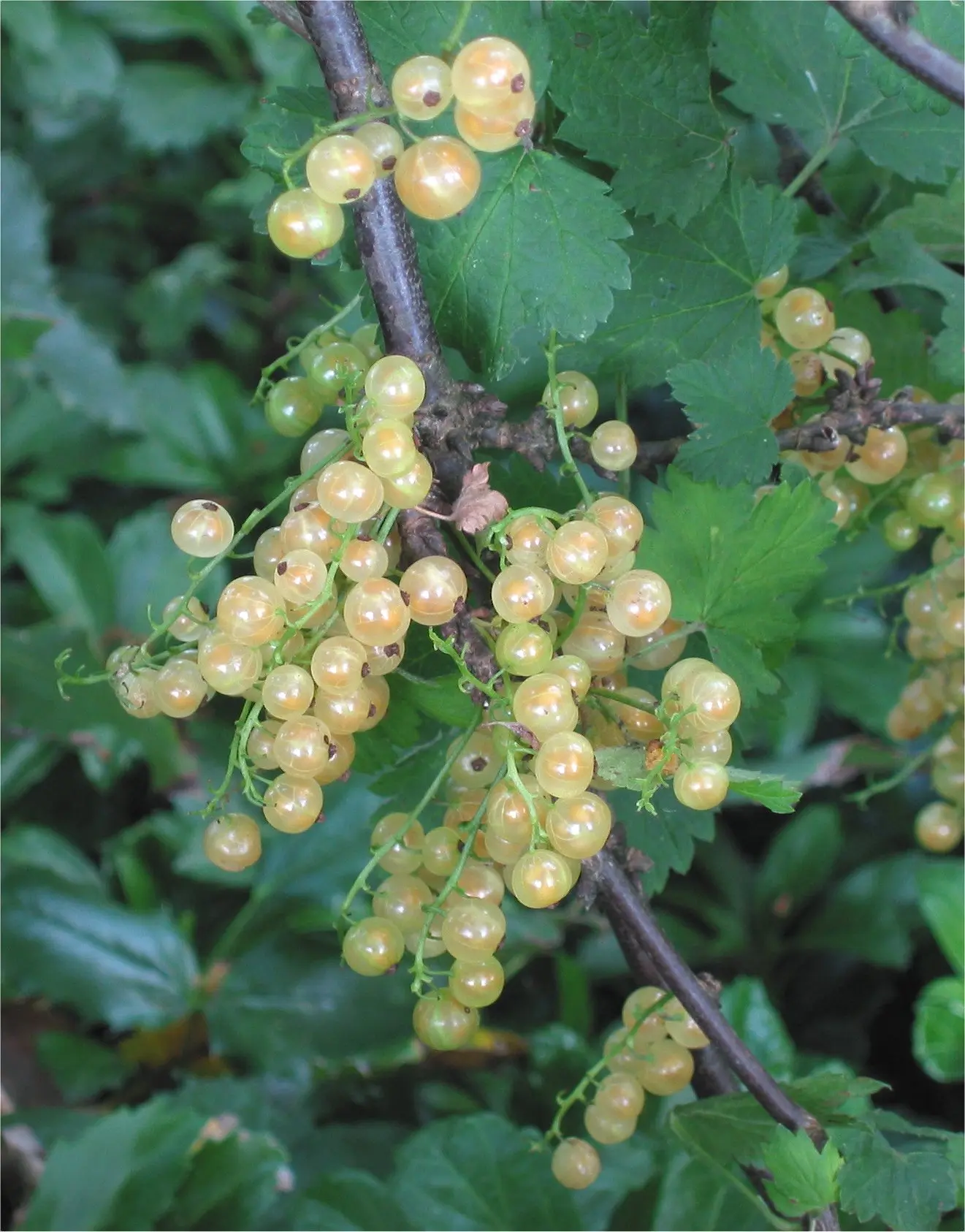
Photo: Rasbak · CC BY-SA 3.0, via Wikimedia Commons
Essential Care Requirements
Light
Full sun, Partial sun
Watering
Moderate
Water regularly in dry spells, especially while fruit is swelling.
Soil
Moisture-retentive, well-drained soil rich in organic matter; pH 6.0 to 7.0.
Temperature and humidity
-25–30 °C · Moderate humidity
Feeding
Feed with potash-rich fertilizer in spring and mulch with compost.
Pruning and propagation
Propagate by stem cuttings
Prune in winter, shortening side shoots to two buds, and removing old, weak and crossing branches to keep the bush open.
Non-toxic.
Top Cultivation Tips
Take hardwood cuttings in autumn to make new plants.
Net bushes as fruit ripens to protect from birds.
Cut whole strings of fruit rather than picking berries individually.
Plant a cordon against a fence to save space.
Common problems
Aphids
Small, soft-bodied insects that cluster on new shoots and buds, sucking sap and leaving sticky honeydew behind.
How to treat it →PestBirds pecking fruit
Birds that peck at ripening soft fruit, taking bites or whole berries just as they are ready to pick.
How to treat it →PestGooseberry sawfly
Green caterpillar-like larvae that can strip a gooseberry bush of leaves within days in spring.
How to treat it →DiseaseGrey mould
A fungal rot that covers flowers, fruit and soft stems with fuzzy grey mould in cool, damp conditions.
How to treat it →