Yam
Dioscorea alata
The greater yam is a twining climber with heart-shaped leaves that forms large underground tubers, white or purple inside. It is planted before the monsoon, climbs a support through the rains, and is harvested in winter.
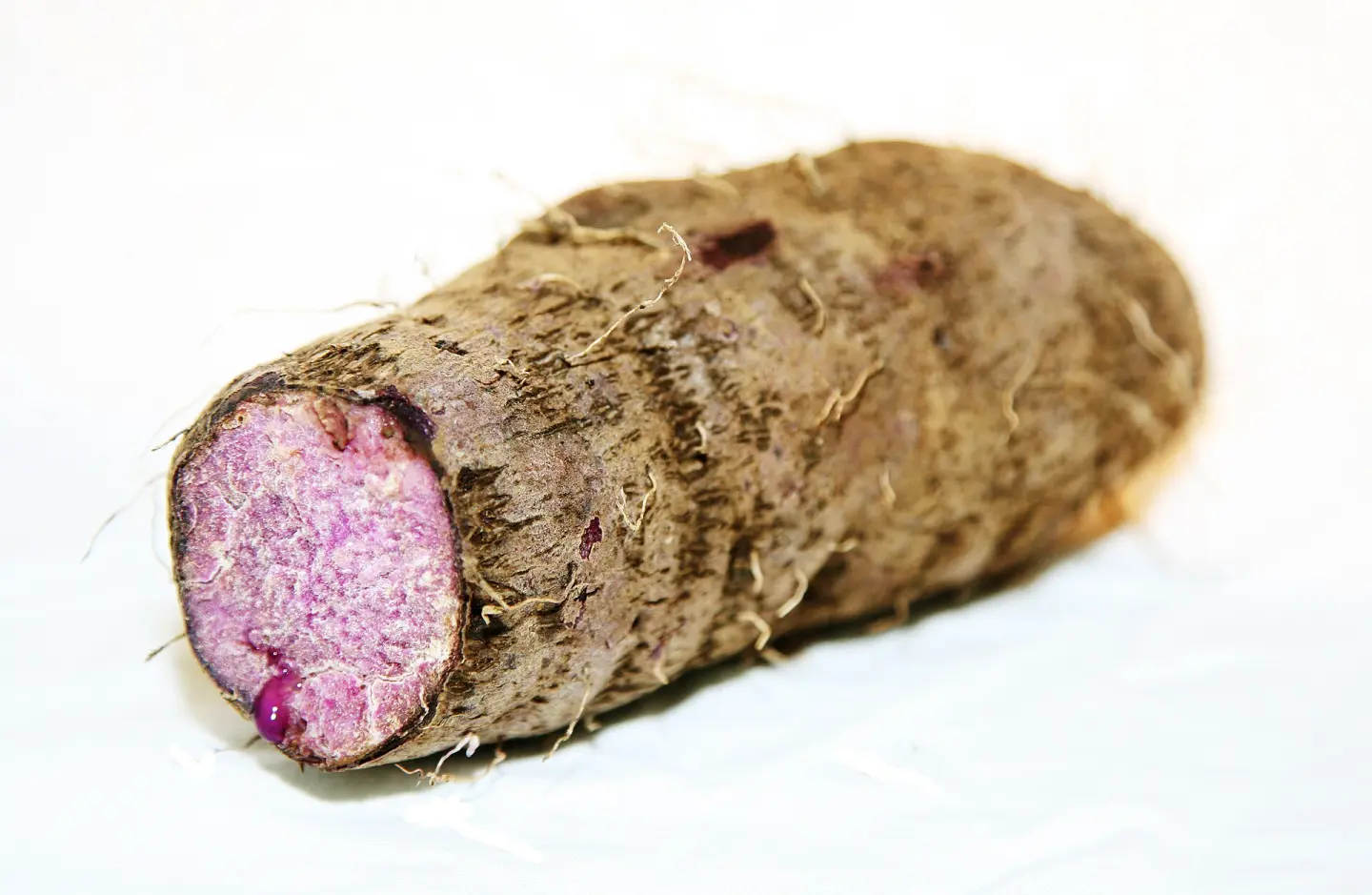
Photo: Remi Tournebize · CC BY-SA 3.0, via Wikimedia Commons
Essential Care Requirements
Light
Full sun, Partial sun
Watering
Moderate
Rain usually provides enough water; water in dry spells. Stop watering when the vines die back.
Soil
Deep, loose, well-drained soil rich in organic matter; pH 5.5–7.0.
Temperature and humidity
18–38 °C · High humidity
Feeding
Mix compost or manure into the planting pit and top-dress after two months.
Pruning and propagation
Propagate by division
No pruning needed. Give vines a tall stake or fence.
Cultivated yams are safe once peeled and cooked; raw yam can irritate the mouth and skin.
Top Cultivation Tips
Plant tuber pieces of 100–200 g with skin.
Use a deep grow bag or a mound of loose soil.
Small aerial bulbils can be planted too.
Wear gloves when peeling.
Common problems
Anthracnose
A fungal disease that causes dark, sunken spots on leaves, flowers and fruit, especially mango, chilli and papaya.
How to treat it →DiseaseLeaf spot
Fungal or bacterial infections that cause brown, black or purple spots on leaves, often with a yellow halo, leading to early leaf drop.
How to treat it →PestScale insects
Immobile, shell-covered insects that cling to stems and leaves, draining sap and weakening trees and houseplants.
How to treat it →