African Violet
Streptocarpus ionanthus (syn. Saintpaulia)
African violets are compact houseplants with velvety leaves and clusters of purple, pink, blue or white flowers that can bloom almost all year on a bright windowsill.
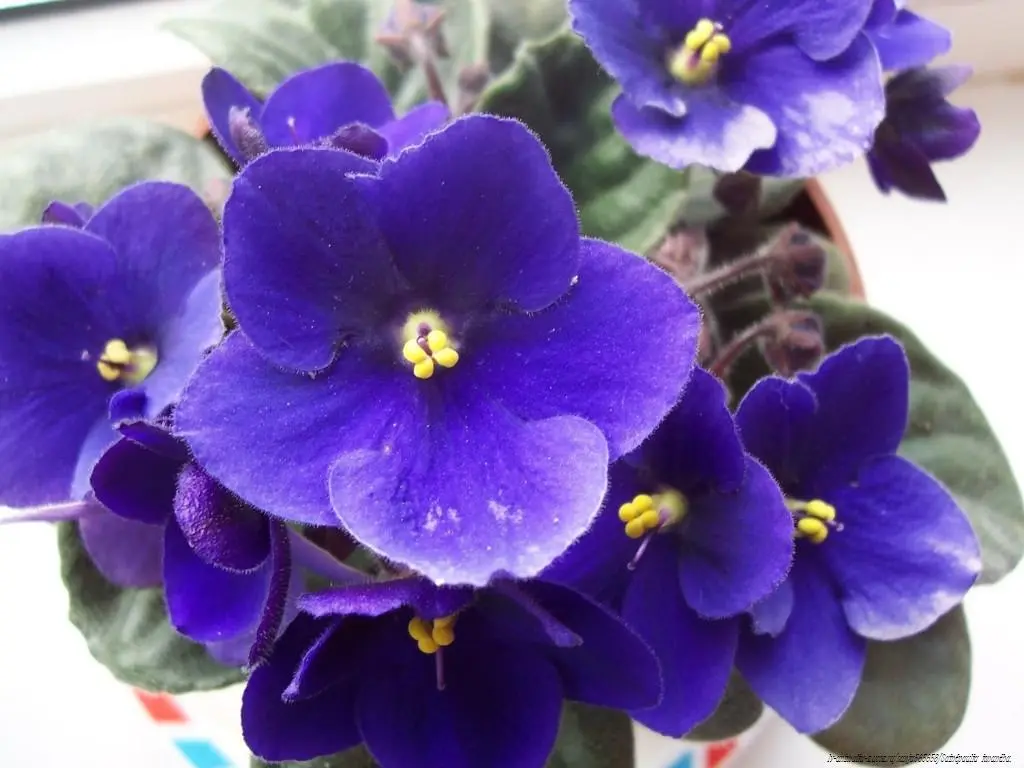
Photo: Sanja565658 · CC BY-SA 3.0, via Wikimedia Commons
Essential Care Requirements
Light
Bright indirect light
Watering
Moderate
Water from below with room-temperature water when the top of the soil is dry; cold water spots the leaves.
Soil
Light, airy African violet mix with perlite; pH 6.0–6.5.
Temperature and humidity
16–28 °C · Moderate humidity
Feeding
Feed every two weeks with a diluted African violet fertilizer.
Pruning and propagation
Propagate by leaf cuttings, division
Remove faded flowers and old outer leaves.
African violets are not toxic to people, cats or dogs.
Top Cultivation Tips
Keep water off the leaves.
Root a leaf with its stalk in moist mix.
Use small pots; they flower better slightly root-bound.
Remove side shoots to keep one rosette.
Common problems
Broad mites
Microscopic mites that cause twisted, hardened, bronzed leaves and stunted growth on peppers, aubergines and many ornamentals.
How to treat it →DiseaseLow light problems
Slow, weak growth, pale or fading leaf colour and leaf drop in plants kept in a spot that is too dim for them.
How to treat it →PestMealybugs
White, cottony insects that hide in leaf joints and under leaves, weakening plants and spreading easily to neighbours.
How to treat it →DiseasePowdery mildew
A fungal disease that coats leaves, buds and young shoots with a white, flour-like dust, weakening the plant and spoiling flowers and fruit.
How to treat it →DiseaseRoot rot
Roots decay in waterlogged soil, so the plant wilts and yellows even though the soil is wet.
How to treat it →