Amaryllis
Hippeastrum hybrids
Amaryllis grows from a large bulb and produces tall stems topped with huge trumpet flowers in red, white, pink or striped forms. Bulbs flower readily in pots and can be kept for many years.
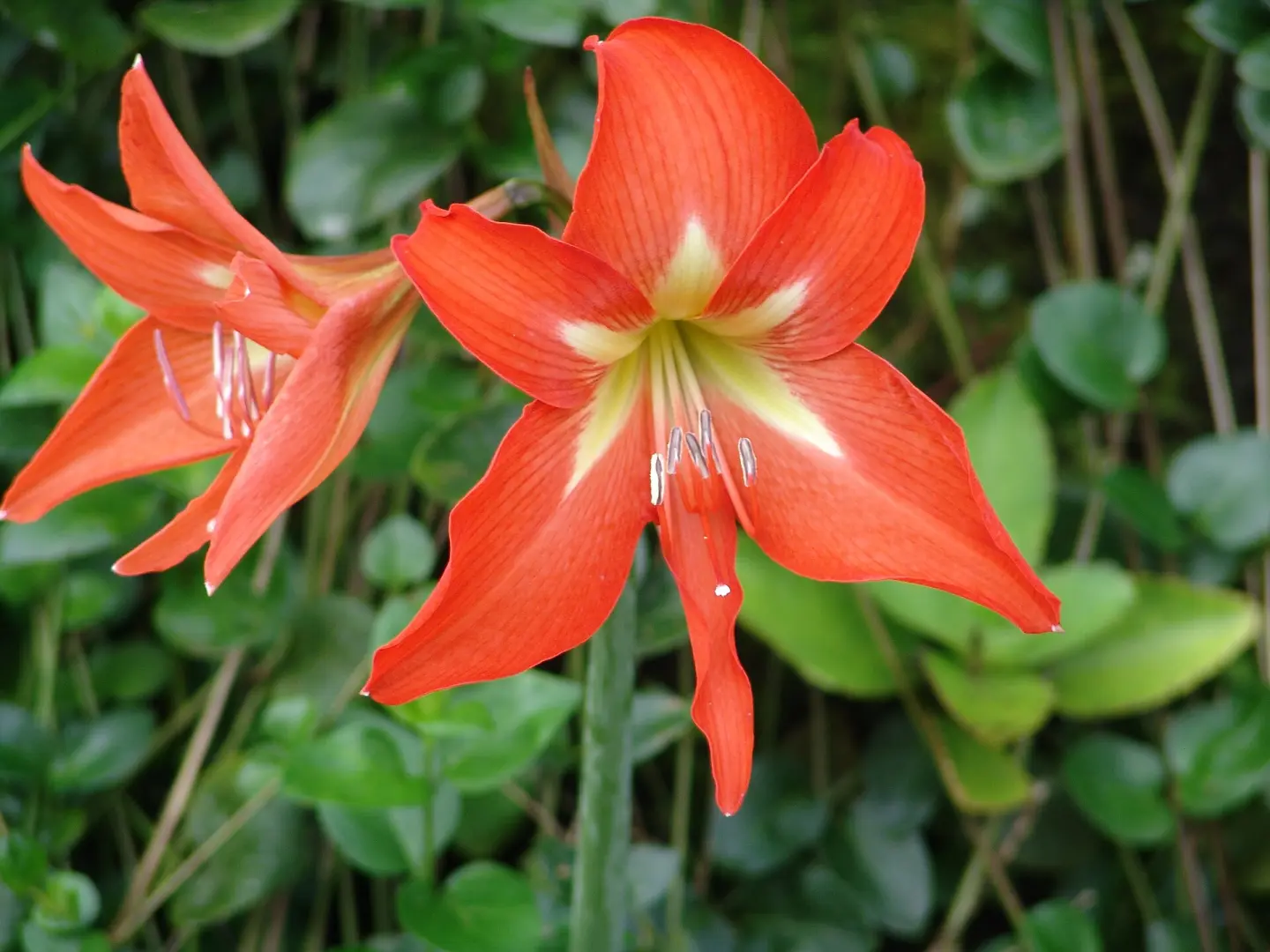
Photo: Drew Avery · CC BY 2.0, via Wikimedia Commons
Essential Care Requirements
Light
Full sun, Bright indirect light
Watering
Moderate
Water sparingly until growth starts, then regularly. Stop watering for 8–10 weeks after the leaves yellow so the bulb can rest.
Soil
Well-drained potting mix with compost; pH 6.0–7.0.
Temperature and humidity
10–32 °C · Moderate humidity
Feeding
Feed every two weeks with a potassium-rich fertilizer after flowering while leaves grow.
Pruning and propagation
Propagate by offsets, seed
Cut the flower stem once flowers fade, but keep the leaves to feed the bulb.
The bulbs especially are toxic if eaten and can cause vomiting in people and pets.
Top Cultivation Tips
Plant with the top third of the bulb above the soil.
Use a pot just 3–5 cm wider than the bulb.
Turn the pot as the stem grows to keep it straight.
Separate bulblets when repotting.
Common problems
Leaf spot
Fungal or bacterial infections that cause brown, black or purple spots on leaves, often with a yellow halo, leading to early leaf drop.
How to treat it →DiseaseRoot rot
Roots decay in waterlogged soil, so the plant wilts and yellows even though the soil is wet.
How to treat it →PestThrips
Tiny, slender insects that rasp leaf and flower surfaces, leaving silvery streaks, curled leaves and distorted flowers.
How to treat it →