Rose
Rosa spp.
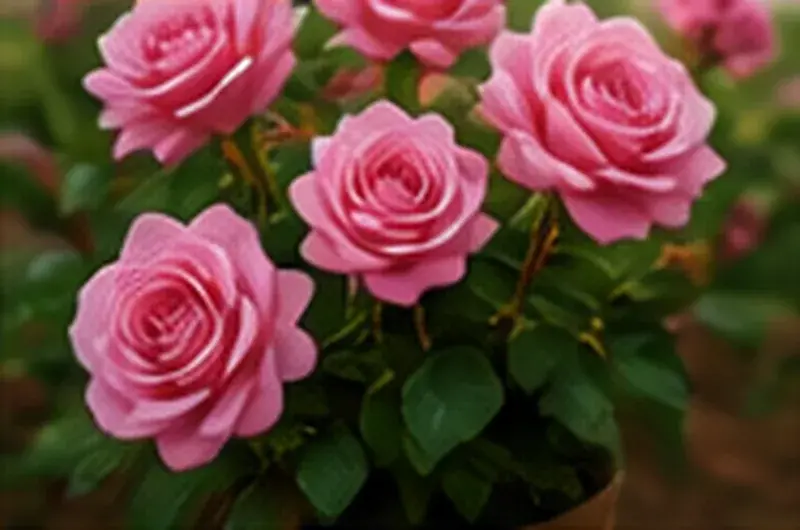
Roses are flowering shrubs grown for their fragrant blooms in almost every colour. Hybrid teas give large single flowers, floribundas produce clusters, and miniature roses suit small pots. In warm climates, roses flower best through the cooler months.
Essential Care Requirements
Light
Full sun
Watering
Moderate
Water deeply at the base when the top 3–5 cm of soil is dry, ideally in the morning. Keep water off the leaves to reduce black spot and powdery mildew.
Soil
Rich, well-drained loam with plenty of compost and a pH of 6.0–7.0. In pots, use a deep container (at least 30 cm) with a mix of soil, compost and sand.
Temperature and humidity
5–35 °C · Moderate humidity
Feeding
Feed every two to three weeks during the flowering season with a rose or potassium-rich fertilizer, and add a handful of bone meal and compost after the main prune.
Pruning and propagation
Propagate by stem cuttings, grafting, layering
Do the main prune at the end of the monsoon or in early winter: cut back by a third to a half, just above outward-facing buds, and remove weak or dead canes. Deadhead faded flowers throughout the season.
Roses are not toxic, but the thorns can cause injuries to pets and people.
Top Cultivation Tips
Six hours of sun is the minimum for good flowering.
Remove fallen leaves to break the black spot cycle.
Mulch to keep roots cool in summer.
Spray neem oil weekly in humid spells to prevent fungal disease.
Common problems
Ants on plants
Ants rarely damage plants themselves, but they protect sap-sucking pests for their honeydew and may nest in pots, drying out the roots.
How to treat it →PestAphids
Small, soft-bodied insects that cluster on new shoots and buds, sucking sap and leaving sticky honeydew behind.
How to treat it →PestBagworms
Caterpillars that live inside spindle-shaped silk bags covered with bits of leaf and strip evergreens and other shrubs of their foliage.
How to treat it →DiseaseBlack spot
A common fungal disease of roses that causes black spots with feathery edges on leaves, followed by yellowing and leaf drop.
How to treat it →PestCaterpillars
The larvae of moths and butterflies, which chew holes in leaves, flowers and fruit and can strip a plant in days.
How to treat it →DiseaseCrown gall
A bacterial disease that forms rough, woody, tumour-like swellings at the base of the stem and on roots of many fruit and ornamental plants.
How to treat it →PestDeer and rabbit damage
Deer and rabbits browse leaves, buds and bark, causing ragged stems, missing shoots and girdled trunks.
How to treat it →DiseaseDowny mildew
A water-mould disease that causes yellow patches on top of leaves and grey-purple fuzz underneath, spreading fast in cool, wet weather.
How to treat it →PestEarwigs
Brown, pincer-tailed insects that hide by day and chew holes in petals, soft leaves and ripe fruit at night, but also eat aphids.
How to treat it →DiseaseFertilizer burn
Brown, scorched leaf edges and damaged roots caused by too much fertilizer or a build-up of salts in the soil.
How to treat it →DiseaseGrey mould
A fungal rot that covers flowers, fruit and soft stems with fuzzy grey mould in cool, damp conditions.
How to treat it →DiseaseIron chlorosis
Young leaves turn yellow while the veins stay green, usually because alkaline soil stops the plant taking up iron.
How to treat it →PestJapanese beetle
Metallic green and copper beetles that skeletonise leaves and devour flowers in summer, while their grubs feed on lawn roots.
How to treat it →DiseaseLeaf spot
Fungal or bacterial infections that cause brown, black or purple spots on leaves, often with a yellow halo, leading to early leaf drop.
How to treat it →DiseaseMagnesium deficiency
Older leaves turn yellow between the veins while the veins stay green, often with reddish or purple tints.
How to treat it →DiseasePhosphorus deficiency
Slow growth with dull, dark green leaves that develop purple or reddish tints, and poor rooting and flowering.
How to treat it →PestPocket gophers
Burrowing rodents that eat roots, bulbs and tubers from below, leaving crescent-shaped soil mounds and plants that wilt or vanish.
How to treat it →DiseasePotassium deficiency
Older leaves develop yellow and then brown, scorched edges, and fruit is small and poorly coloured.
How to treat it →DiseasePowdery mildew
A fungal disease that coats leaves, buds and young shoots with a white, flour-like dust, weakening the plant and spoiling flowers and fruit.
How to treat it →DiseaseRust
A fungal disease that forms orange, brown or yellow powdery pustules, mainly on leaf undersides.
How to treat it →DiseaseSalt damage
Leaf burn and stunted growth caused by too much salt in the soil or water, from sea spray, road salt, hard water or heavy fertiliser use.
How to treat it →PestSawfly larvae
Caterpillar-like larvae of sawflies that can strip gooseberries, currants and roses of their leaves in days.
How to treat it →PestSpider mites
Tiny sap-sucking mites that thrive in hot, dry conditions, causing speckled, dull leaves and fine webbing.
How to treat it →PestStem borers
Caterpillars and grubs that tunnel inside stems and shoots, causing wilting, dead growing tips and broken stems.
How to treat it →DiseaseStem canker
Sunken, dead patches of bark on stems and branches caused by fungi or bacteria, which can girdle and kill the shoot above them.
How to treat it →PestThrips
Tiny, slender insects that rasp leaf and flower surfaces, leaving silvery streaks, curled leaves and distorted flowers.
How to treat it →DiseaseTransplant shock
Wilting, leaf drop and stalled growth after a plant is moved or repotted, while the roots recover and re-establish.
How to treat it →DiseaseYellow leaves
A common sign of a problem rather than a disease in itself, where leaves lose their green colour because of watering, light, nutrient or root problems.
How to treat it →